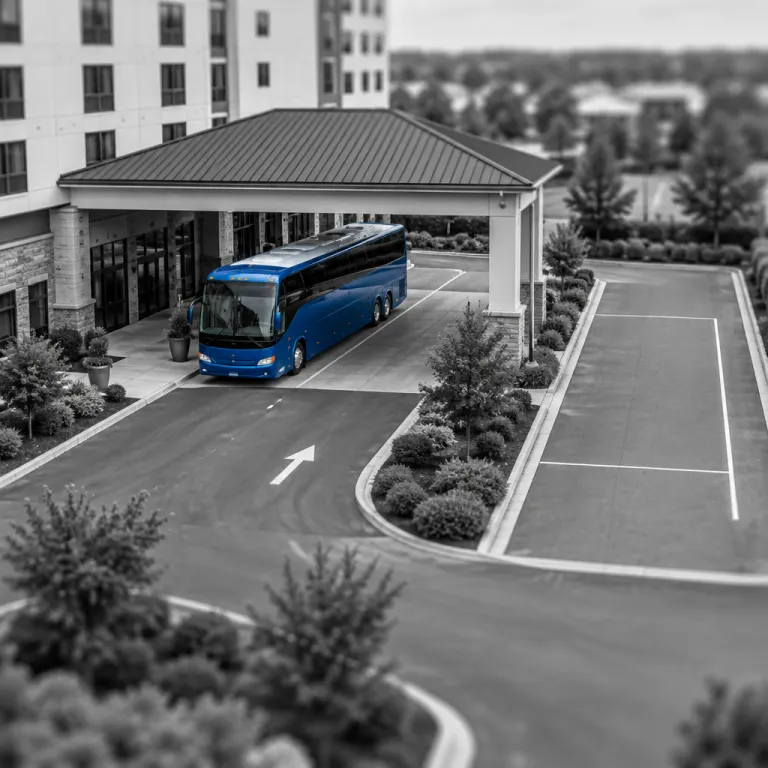
Why the 40 passenger bus is the strategic backbone of hotel transfers
A well specified 40 passenger bus sits at the sweet spot between intimacy and scale. For airlines, rail operators, and hotels, this vehicle size balances operational efficiency with a premium guest experience for airport to hotel transport and city to resort trips. It offers enough capacity for medium group movements while remaining agile in dense urban traffic and constrained curbside areas, where full size touring coaches can struggle.
In practice, a 40 passenger bus typically provides seating for up to 39 passengers plus a professional driver, which aligns closely with many aircraft cabin zones and rail car segments. This mid size configuration allows travel managers to consolidate several individual taxis into one comfortable coach while still preserving short dwell times at terminals and hotel porte cochères. When specified as a passenger coach rather than a basic shuttle, the same vehicle can serve both scheduled shuttle service and higher yield charter operations for meetings and incentives, improving utilisation across weekday and weekend trips.
From an infrastructure perspective, a 40 foot coach bus or passenger bus can access most hotel driveways that would be challenging for full length touring coaches. Typical gross vehicle weight ratings in this segment keep the coach compatible with many city bridge and tunnel restrictions, which matters for airport to downtown routes. For operators planning long distance charter bus services, this size coach also offers enough underfloor or rear luggage capacity to handle both passengers and their equipment without resorting to extra freight vehicles, especially when compared with smaller shuttle buses or repurposed school buses.
Designing shuttle and shared mobility around mid size coaches
Shared shuttle services between hubs and hotels work best when the vehicle size is tightly matched to demand patterns. A 40 passenger bus in mid size coach configuration allows airlines and railways to run high frequency shuttle buses while keeping load factors healthy and wait times low for passengers. This balance is crucial for irregular operations when disrupted flights or trains suddenly generate large groups needing rapid ground transport to contracted hotels and overflow properties across the city.
For corporate travel managers, the same mid size passenger coach can be deployed as an employee shuttle during the week and as a leisure oriented hotel shuttle on weekends. This dual use approach improves the ROI of bus rental contracts and reduces empty repositioning trips across the city. It also supports resilient hospitality operations, as outlined in analyses of rethinking employee shuttles for seamless hotel access, where flexible shuttle service design is shown to protect both guest satisfaction and staff punctuality while keeping charter bus costs predictable.
Rail operators and mobility platforms increasingly integrate coach buses into multimodal apps, allowing passengers to book a through ticket from station to hotel in one transaction. In this context, the 40 passenger bus becomes a predictable asset class with standard seating layouts, reclining seats, and luggage space that can be modeled in algorithms. When shuttle buses are scheduled at fixed intervals and supported by real time data, passengers perceive the service as an extension of the train or aircraft cabin rather than a separate, uncertain leg of the journey, which raises the perceived value of the overall transport service.
Guest experience inside the 40 passenger coach bus
From a hospitality perspective, the interior of a 40 passenger bus is not just a vehicle cabin; it is the first and last touchpoint of the hotel stay. Specifying comfortable seating with generous pitch, reclining seats, and a clear front viewing area changes how passengers feel after a long flight or rail journey. When the panoramic front viewing window is combined with large side glazing, guests can orient themselves to the city and begin their stay before they even reach the lobby, turning a routine transfer into a curated arrival experience.
Many modern coach buses in this segment are built on widely used commercial chassis platforms, such as Freightliner based mid size coaches, that support amenities such as a DVD player for hosted content, Wi‑Fi, and USB charging, which airlines and hotels can use to extend their brand storytelling during transport. For event planners managing group trips, a curated welcome video on the coach bus DVD player can align expectations and share practical information about check in, meeting times, and local etiquette, while on screen safety messages reinforce duty of care.
Specialist manufacturers have elevated the 40 passenger coach bus into a premium hospitality product, with high quality finishes, overhead luggage racks, and optional rear luggage holds. When travel managers choose a passenger coach with a raised floor and large viewing window, they create a sense of arrival comparable to a boutique hotel lobby. Detailed guidance on configuring such an event shuttle service is available in resources about designing seamless event shuttle service for hotel bound travellers, which emphasize how vehicle interiors, lighting, and seating layouts can reinforce the overall guest journey.
Operational engineering : matching fleet, safety, and licensing to hotel demand
Behind every elegant 40 passenger bus transfer lies rigorous operational engineering. A typical 40 foot passenger bus used for hotel transport requires a driver holding a commercial licence, and regulators in many markets are explicit that carrying 16 or more passengers triggers commercial licensing requirements. In the United States, for example, Federal Motor Carrier Safety Administration rules require a commercial driver’s licence with a passenger endorsement for this type of coach bus. For airlines and railways contracting ground transport, verifying that each operator respects this rule is a non negotiable element of duty of care.
Fleet composition also matters. A mix of mid size coach buses and smaller shuttle buses allows operators to right size capacity to fluctuating hotel demand, from late night crew transfers to peak convention arrivals. Some fleets include school buses repurposed for basic staff shuttles, while reserving higher specification charter bus vehicles with reclining seats and climate control for premium passenger movements. This layered approach to vehicle size and specification helps keep costs under control while still meeting brand standards.
Technical specifications influence both safety and comfort. A 40 passenger coach bus with a wheelbase optimized for city manoeuvrability can still offer a rear luggage compartment and overhead racks, which is essential for airport hotel routes. Low floor variants with wheelchair lifts improve accessibility, aligning with hotel brand commitments to inclusivity and enabling seamless boarding for all passengers without ad hoc workarounds at the curb. Operators should also track parts service availability and maintenance intervals, as these factors directly affect reliability during peak hotel check in waves.
Commercial models : from charter bus rental to long term hotel contracts
For mobility platforms and hotels, the 40 passenger bus is a flexible asset that can be procured through several commercial models. Short term bus rental for specific events or airline disruptions offers agility, while multi year charter contracts provide price stability and guaranteed capacity. Travel managers often negotiate a blended model, combining fixed route shuttle service with on demand charter bus options for irregular operations and VIP groups, and specifying whether the operator will supply a mid size passenger coach or a larger touring vehicle.
When evaluating bus rental proposals, stakeholders should look beyond the headline quote and analyse total cost per occupied seat kilometre. Detailed breakdowns, such as those discussed in analyses of what you really pay when renting a coach for hotel ground transport, show how factors like deadhead kilometres, driver standby time, and parts service support can significantly affect the real price. A transparent request for quote process should specify vehicle size coach category, luggage capacity, accessibility features, and whether amenities such as a DVD player or Wi‑Fi are included, so that competing offers can be compared on a like for like basis.
Bus sales and buses sale markets also influence availability and pricing. Operators investing in new passenger bus fleets from established coach bus builders can amortise costs over long term hotel and airline contracts. Those acquiring used coach buses or school buses for conversion must budget for refurbishment, parts service, and potential downtime, which can impact reliability during peak hotel check in waves. In both cases, the residual value of a well maintained 40 passenger coach bus can be an important factor in long term fleet planning.
Data driven planning for city hotel corridors and group movements
Strategic deployment of 40 passenger buses along airport hotel corridors depends on robust data. Airlines, rail operators, and hotels increasingly share anonymised booking and arrival data to forecast how many passengers will require ground transport in each time band. This enables precise scheduling of mid size passenger coach units, reducing both overcrowding and underutilised trips and helping operators choose the right mix of shuttle buses and larger charter vehicles.
In dense city environments, curb space is a scarce resource. A single 40 passenger bus replacing ten or more individual taxis reduces congestion, emissions, and check in bottlenecks at major hotels. When several buses are needed, staggered arrival times and clear front viewing signage help staff identify each group quickly, improving both safety and guest satisfaction. Simple measures such as numbered coach buses and colour coded boarding groups can further streamline the process.
Group travel for conferences and incentives benefits especially from this approach. Travel managers can allocate one 40 passenger coach bus per flight or rail arrival, aligning seating plans with rooming lists and meeting agendas. Over time, analysing load factors, dwell times, and feedback about comfortable seating or panoramic front views allows mobility teams to refine fleet mix, choosing the optimal combination of shuttle buses, charter buses, and occasional school buses for staff or crew rotations while keeping overall transport costs under control.
Key figures for 40 passenger bus hotel transport
- A typical 40 passenger bus in this segment measures around 12 metres in length, which allows access to most urban hotel forecourts while still providing substantial luggage and seating capacity for medium groups.
- Gross vehicle weight ratings for many 40 passenger coach models place them just below heavy touring coach thresholds in some jurisdictions, which can simplify permitting while still requiring full commercial licensing for drivers. Local regulations vary, so operators should confirm GVWR limits and axle load rules with city authorities.
- Regulatory thresholds in the United States and many other markets define commercial licensing at 16 or more passengers, meaning any 40 passenger bus used for hotel transfers must be operated by a professionally trained driver with a commercial licence and appropriate passenger endorsement.
- Compared with individual taxis, one fully loaded 40 passenger coach can remove the equivalent of 15 to 20 smaller vehicles from airport hotel corridors, significantly easing congestion and reducing emissions per passenger kilometre, according to typical mode shift estimates used in urban transport planning.
- For event movements, three 40 passenger buses can typically handle the arrivals from a narrow body aircraft or a half train car of delegates, enabling hotels to clear their lobby and check in queues within a single 30 to 40 minute window when supported by pre assigned seating and efficient baggage handling.
FAQ : 40 passenger bus operations for hotel ground transport
Do you need a special licence to drive a 40 passenger bus for hotel transfers ?
Yes, operating a 40 passenger bus for hotel or airport shuttle service generally requires a commercial driving licence, because the vehicle carries more than 16 passengers including the driver. This ensures that the driver is trained in handling a large coach, managing passenger safety, and complying with regulations specific to buses. Airlines, rail operators, and hotels should always verify licence class, passenger endorsements, and training as part of their supplier audits, and confirm any jurisdiction specific requirements.
What luggage capacity should a 40 passenger coach have for airport hotel routes ?
For typical leisure and corporate travellers, a 40 passenger coach bus should offer either a rear luggage compartment or underfloor bays plus overhead racks. This configuration comfortably accommodates one large suitcase and one cabin bag per passenger on most airport hotel routes. When groups travel with equipment such as trade show materials, operators may need to allocate extra vehicles, reduce the number of passengers per trip, or arrange a separate freightliner style cargo vehicle for oversize items.
How comfortable is a 40 passenger bus compared with larger touring coaches ?
A well specified 40 passenger bus can match the comfort of many full size touring coaches, especially when fitted with reclining seats, climate control, and a smooth riding chassis. The slightly shorter length can even improve ride quality on tight city streets and hotel access roads. For premium hotel contracts, specifying a passenger coach from a recognised coach bus manufacturer can elevate the onboard experience further through upgraded seating, lighting, and entertainment systems.
Is a 40 passenger bus suitable for both hotel shuttles and long distance charters ?
Yes, the 40 passenger bus is versatile enough for short hotel shuttle loops and longer intercity charter trips, provided the vehicle includes appropriate seating, rest stops, and amenities. Operators often use the same mid size coach for daily hotel shuttles and weekend group excursions, maximising utilisation. Travel managers should confirm features such as restrooms, DVD player availability, Wi‑Fi, and luggage capacity when planning longer journeys, and specify these requirements clearly in the request quote documents.
What should travel managers check before contracting 40 passenger buses for events ?
Before signing contracts, travel managers should verify seat count including the driver, confirm accessibility features such as wheelchair lifts, and inspect luggage capacity relative to expected baggage volumes. They should also review maintenance and parts service records, insurance coverage, and contingency plans for breakdowns or traffic disruptions. A structured request for quote process that specifies vehicle size, coach category, and service standards helps align expectations between airlines, rail operators, mobility platforms, and hotels, and reduces the risk of last minute surprises on event days.
References
- American Bus Association – industry guidelines on motorcoach safety, fleet standards, and passenger operations, including recommended practices for charter bus and shuttle bus services.
- Federal Motor Carrier Safety Administration (FMCSA) – regulations on commercial driver licensing, passenger carrier compliance, and gross vehicle weight rating thresholds in the United States.
- Representative technical specifications from established coach bus manufacturers – reference data on 40 foot coach dimensions, seating layouts, and gross vehicle weight ratings for mid size passenger bus models.