Waymo’s rider-only launch reshapes las vegas hotel transport
Waymo’s move to rider-only operations on the Las Vegas Strip turns autonomous mobility from pilot curiosity into core Las Vegas hotel transport infrastructure. The company has begun running fully driverless rides for employees across the greater Las Vegas area, including the Strip corridor, with public access expected within months based on Waymo’s stated Las Vegas rollout plans[1]. Hotel operators now face concrete decisions on curb design, guest communication, and airport transportation strategy. For airlines, rail operators, mobility providers, and travel managers, this shift means that ground transportation options between Harry Reid International Airport and major properties can no longer rely only on the traditional taxi, bus, or hotel shuttle mix.
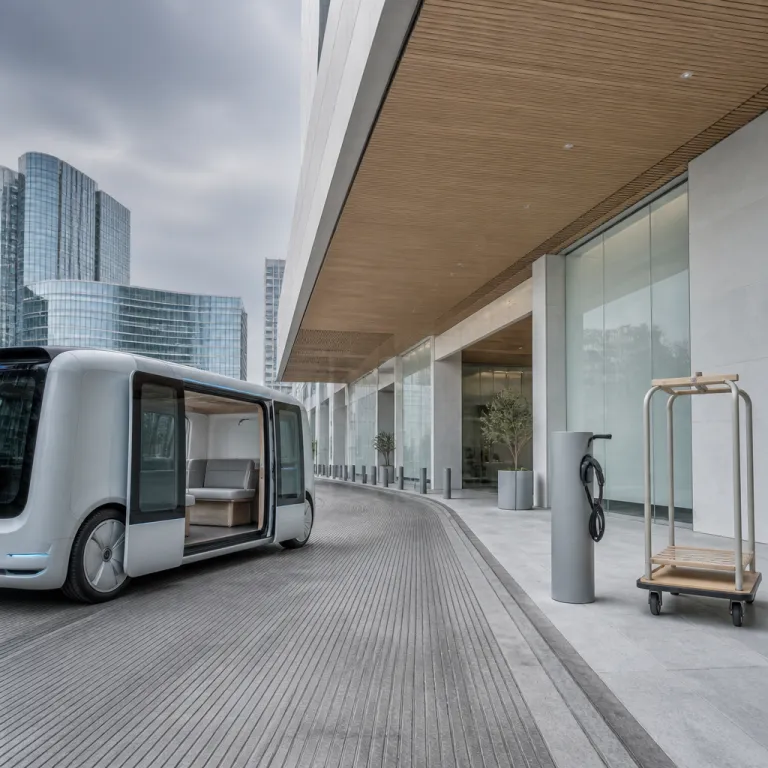
The new Waymo Olli/Ojai-style vehicles that Waymo is deploying in Las Vegas feature elevator-like doors and an expansive cabin, which changes how guests board and how porte cochère staff manage rides[2]. These autonomous vehicles integrate custom chips and improved lidar that can keep driving safely even in heavy rain, and Waymo reports 94% fewer crashes causing serious or fatal injuries compared with human drivers over hundreds of millions of autonomous miles, according to its published safety data[3]. This safety profile is a talking point that hotel GMs can confidently highlight in pre-arrival messaging and on property. As Las Vegas evolves into a multi-operator autonomous ride-hailing market, with Motional already partnering with Uber and other players testing services, hotels near the Las Vegas Convention Center, Westgate properties, and resorts along the Strip must map where each designated pickup zone sits relative to their entrances and valet areas.
For airport transportation, the question is no longer whether guests will request a Waymo ride from Harry Reid International Airport, but how quickly they will expect it to be the default option for Las Vegas hotel transport. The international airport already funnels visitors into a dense transportation ecosystem of taxi queues, ride-hailing zones, bus services, and private car transfers, and autonomous rides will add another layer that needs clear signage and digital guidance. Hotel teams should audit every touchpoint where guests currently book rides, from the concierge desk to the brand app, and decide where to position autonomous ride services alongside existing Las Vegas Monorail links, Vegas Loop access, and legacy shuttle services. A simple internal map can help: mark the main lobby, valet, and side entrances, then overlay the nearest Waymo pickup points, taxi ranks, and shuttle stops so staff can give consistent directions.
From strip curbside to convention center: redesigning the guest journey
Waymo’s rider-only deployment on the Las Vegas Strip forces hotels to rethink the full door-to-door journey, not just the last five minutes of curbside chaos. At the Las Vegas Convention Center, where the Vegas Loop already moves attendees underground, autonomous rides on the surface will compete with the monorail, shuttle bus fleets, and premium chauffeur services, so travel managers must decide which transportation options to promote for which guest profile. For large events, airlines and rail operators coordinating with hoteliers will need clear playbooks that explain when to direct guests to a Waymo ride, when to use a contracted taxi or car service, and when to lean on the Las Vegas Monorail for predictable station access and crowd management.
Operationally, the absence of a human driver at pickup changes everything from luggage handling to complaint resolution. Waymo’s own guidance is explicit for guests who use the app: “Verify pickup/drop-off locations. Use designated rideshare zones. Check app for service availability.” This means concierges must be trained to walk less tech-savvy travelers through each step, including how to download the app and how to interpret sign updates in complex curbside areas. A basic concierge script helps: “Open the Waymo app, confirm ‘Harry Reid International Airport’ as pickup, select the terminal rideshare zone, then look for the Autonomous Rides sign by the taxi and rideshare lanes.” For properties that already work with Uber’s autonomous partners in markets like San Francisco or San Diego, the learning curve will be shorter, especially if they have followed analyses of robotaxi readiness such as what hotel groups should know before robotaxis arrive.
Inside the hotel, guest communication needs to treat autonomous Las Vegas hotel transport as a standard amenity, not an exotic experiment. Pre-stay emails can position driverless rides as one of several options for getting from Harry Reid International Airport to the Strip, alongside classic taxi rides, private car transfers, the Vegas Loop where available, and the Las Vegas Monorail for guests comfortable with rail. On property, digital signage in the lobby and near the porte cochère should show walking times in minutes to the nearest pickup area, clarify which rideshare station supports which operator, and explain how autonomous rides integrate with existing bus routes and hotel shuttles. Sample copy might read: “Waymo and other autonomous ride services pick up at the Main Rideshare Zone, a 3-minute walk from the lobby. Follow signs for ‘Rideshare & Autonomous Vehicles’ and use your preferred app to request a car.”
Revenue, partnerships and the future mix of hotel transportation las
For hotel GMs, the strategic question is whether autonomous rides will cannibalize or complement existing airport transportation revenue. Properties that currently run their own bus or van fleets between Harry Reid International and the Las Vegas Strip must model scenarios where a portion of guests shift to booking a Waymo ride directly in the app, bypassing hotel-controlled transport but still relying on hotel staff for guidance. In markets like San Francisco and San Diego, where ride-hailing has already eroded some shuttle demand, the hotels that have performed best are those that repositioned their vehicles as flexible assets for high-value segments rather than trying to compete on every standard ride.
Partnership strategy will matter as much as curb design. Some luxury properties may double down on high-touch chauffeur service, using insights from analyses of premium transfer integrations such as what Blacklane style integrations mean for high end hotel transfers, while still embracing autonomous Las Vegas hotel transport as the efficient backbone for midscale and corporate guests. Others, especially convention hotels near Westgate and the Las Vegas Convention Center, may negotiate preferred digital placement within the Waymo app, ensuring their properties appear prominently when guests request rides in the area. A simple internal template can guide these decisions: list all transport modes serving the hotel, note their typical guest segments and price points, then assign each a primary role (e.g., “Waymo: airport and Strip point-to-point,” “hotel shuttle: group movements,” “chauffeur: VIP and suites”).
Across the portfolio, mobility leaders should benchmark Las Vegas against other resort markets where multimodal systems already blend monorail-style links, loop concepts, and hotel shuttles, such as the Lowcountry corridor analysed in this piece on rethinking hotel shuttles and shared mobility. The goal is a coherent ecosystem where autonomous vehicles, traditional taxi services, private car fleets, and scheduled bus routes each have a clear role in the guest journey and in the P&L. Waymo’s safety data, including tens of millions of rider-only miles and a substantial reduction in injury-reported crashes compared with human driving, gives hotel brands the confidence to integrate these vehicles visibly into their marketing while still maintaining space for premium, human-led experiences at the very top end of the market.
Hotel checklist for autonomous Las Vegas hotel transport
- Map all pickup zones relative to each entrance, valet, and shuttle stop.
- Update curbside and lobby signage to include clear “Autonomous Rides” directions.
- Train concierge and front-desk teams on a simple Waymo app walkthrough.
- Refresh pre-arrival emails to present driverless rides alongside taxis, shuttles, monorail, and the Vegas Loop.
- Review shuttle and car fleet usage data to redefine target segments and pricing.
Notes: [1] Based on Waymo’s public announcements about expanding fully autonomous service in Las Vegas. [2] Vehicle interior and door configuration drawn from Waymo’s published imagery and descriptions of its next-generation robotaxi. [3] Safety comparison derived from Waymo’s reported crash and injury data versus human driving benchmarks.