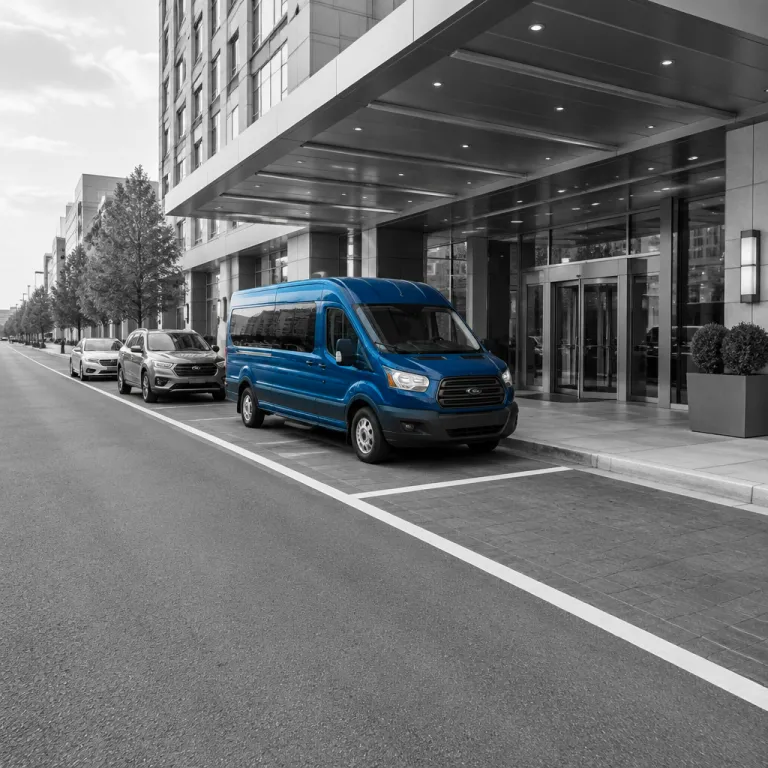
Why the hotel curb became the smallest, riskiest asset on the property
The hotel curb is now the most contested zone on many urban properties. Ride hail, airline crew shuttles, rail transfers, valet, food delivery and micro mobility all converge on the same narrow area, and that unmanaged convergence quietly erodes guest experience and safety. For a VP looking at portfolio performance, that 20 feet of curbside is no longer a detail of transportation logistics, it is a strategic asset that demands a real management plan.
Across dense city cores, curb space has not grown, but transportation demands have multiplied with ride hail growth and e commerce delivery. U.S. cities such as Seattle, San Francisco and Boston have documented how unmanaged curb usage leads to double parking, blocked bike lanes and slower transit, and the same patterns now play out in front of flagship hotels. When a window opens in the arrival flow and three vehicles try to occupy the same area, the result is friction, not welcome, and hotel curb management must treat that moment as a designed system rather than a daily improvisation.
Urban transportation departments now treat the curb as infrastructure, yet many hotel groups still see it as a painted line and a doorman. Policy studies on curb space allocation show that when multiple users compete for the same 20 feet of curb, only active curb management and clear zoning rules will help maintain safe operations. For hospitality leaders, aligning property level practices with city policy is no longer optional, because municipal curbside management decisions upstream can either help manage arrivals or block curb access for your highest value guests.
Recent urban planning initiatives in U.S. cities have focused on allocating curb space among competing uses to improve traffic flow and safety. These projects aim to serve the highest priority users efficiently, which for hotels often means passenger loading and shuttle operations rather than long term parking. When hotel executives engage early in this planning, they can influence how the existing curb is zoned and ensure that the arrival area is recognized as critical transportation infrastructure, not leftover space between bike lanes and freight loading.
In practice, that means understanding how flex zones, passenger loading zones and delivery bays interact along the frontage of each property. A Dallas curb management policy, for example, recommends a minimum length of 20 feet for loading zones, which aligns uncomfortably well with the typical hotel porte cochère that already feels too tight at peak times. When your management tools treat those 20 feet as a dynamic asset, not a static strip of asphalt, you can start to apply demand management, curb pricing discussions with the city and data driven adjustments to dwell times.
For travel managers and airline or rail partners, the arrival zone is now part of the end to end journey design. A well run curbside management system reduces missed pick ups, shortens transfer times and lowers stress for crews and premium guests, which in turn supports loyalty metrics and transportation contracts. When curb demands are mapped and shared as data with mobility partners, the hotel can coordinate schedules, avoid block curb situations and align service level agreements with real world curb performance.
Hotel executives often ask whether they can meaningfully influence a curb that sits on municipal right of way. The answer is yes, but only if they approach curb management as a shared infrastructure problem with the city, ride hail operators and delivery services, not as a private valet issue. Cities and municipalities act as regulators that set curb policies and zoning rules, while ride hail and delivery services are demand drivers that rely on that same space, so community engagement around the arrival area becomes a core leadership task, not a side project for the concierge.
When you treat the arrival zone as a measurable asset, you can finally link curbside performance to review scores and safety incidents. A blocked curb that forces guests to cross an active traffic lane with luggage is not just a nuisance, it is a liability and a brand problem. For a portfolio level view, the most frequently asked question should be simple yet powerful : which properties have curb usage aligned with their positioning, and which are silently losing loyalty because the first and last 20 metres of the stay are chaotic.
Designing the 20 feet: dwell time, zoning and the new arrival choreography
Once you accept that the curb is infrastructure, the next step is design, not improvisation. The 20 foot arrival zone must be broken into functional sub zones with clear rules for dwell time, vehicle type and operating hours, and those rules must be visible in both signage and digital instructions to drivers. A hotel curb management strategy that combines physical design, digital geofencing and staff choreography will help manage peak loads without sacrificing elegance.
Urban studies on passenger loading zones show that dedicated areas for pick ups and drop offs reduce double parking and improve safety for pedestrians and cyclists. In Seattle, an expansion of passenger loading zones in the South Lake Union district by 274 feet led to an observed occupancy of around 20 percent, which indicates that right sized curb space can absorb demand without constant saturation. For hotels, the lesson is clear : a management plan that right sizes the loading area and coordinates with nearby flex zones can transform chaotic curb demands into predictable flows.
Design principles start with separating short dwell passenger activity from longer dwell parking or freight loading. A high performing arrival system typically reserves the closest curb space for two to three minute drop offs, while directing valet staging, ride hail waiting and delivery vans to secondary zones slightly away from the front door. When the city allows, flex zones that shift from crew shuttle loading in the early morning to ride hail focus in the evening can match seasonal and hourly patterns of transportation demand.
Geofencing is now a core tool in curbside management for hotels that rely heavily on ride hail. By working with transportation network companies to define a precise pick up and drop off point, you can prevent drivers from stopping in bus lanes or bike lanes and reduce the temptation to block curb access for shuttles. City transportation agencies increasingly use digitized curb inventories and enforcement technologies, and hotels that plug into these systems can align their own management tools with municipal enforcement rather than fighting it.
For properties preparing for autonomous vehicle arrivals, the design brief becomes even more exacting. Autonomous shuttles and cars will follow digital instructions precisely, which means that any ambiguity in curb space definition or signage will translate into operational friction. A forward looking mobility policy for general managers, as explored in analyses of why autonomous arrivals will force a GM mobility policy, should treat the curb as a programmable interface where vehicles, guests and staff interact through clear rules.
Inside the hotel organisation, ownership of curb management is often fragmented between rooms, security, engineering and transportation vendors. A more mature model assigns a single executive owner for the arrival area, with a mandate to integrate data collection, staff training and vendor contracts into one coherent management system. That owner can then work directly with city officials, ride hail partners and delivery firms to align curb usage policies and avoid conflicting instructions that confuse drivers and guests.
From a risk perspective, the arrival zone is where near misses and minor collisions cluster, especially when vehicles queue unpredictably. A structured management plan that defines maximum dwell times, clear no stopping segments and safe pedestrian paths reduces both insurance exposure and reputational risk. When these rules are communicated through pre arrival emails, airline crew briefings and rail transfer instructions, guests arrive with realistic expectations about where their vehicle will stop and how they will move through the space.
Many hotel leaders worry about the cost and complexity of curb management technology, particularly for mid scale properties. In practice, a phased approach that starts with low cost signage, painted zones and manual data collection can already improve performance, and only later do you layer in digital dispatch systems and integrated sensors. The key is to treat the curb as a living prototype, where each season you test adjustments to zoning, pricing discussions with the city and staff deployment, then refine based on observed curb usage and guest feedback.
From nuisance to KPI: measuring curb performance and monetizing movement
What gets measured gets managed, and the curb has long escaped serious measurement in hospitality. To change that, hotel curb management needs a concise set of KPIs that link curbside performance to guest satisfaction, transportation efficiency and even ancillary revenue, rather than treating the arrival area as a cost centre. When you frame the curb as a mobility asset that can generate both loyalty lift and new revenue streams, investment in better management tools becomes easier to defend at the board level.
Start with basic data collection on dwell times, queue lengths and vehicle mix across different times of day and seasons. Even manual sampling over several weeks can reveal patterns, such as recurring block curb incidents when airline crew shuttles and conference coaches arrive simultaneously, or chronic under use of a side street zone that could absorb overflow. These données, once structured, support demand management decisions such as reallocating curb space between valet, ride hail and delivery during peak check in windows.
Next, link curbside metrics to guest experience indicators and transportation contracts. For example, you can correlate arrival time from airport to room with review scores for business travellers, or track how often premium guests wait more than five minutes at the curb for a pre booked transfer. Analyses on measuring loyalty lift from mobility perks show that when mobility benefits are integrated into the stay, they can materially influence retention, and a smooth arrival zone is the physical foundation for those perks.
Revenue strategy teams should also examine how curb pricing and monetization models used by cities might translate, carefully, into hotel contexts. While you cannot unilaterally impose curb pricing on public right of way, you can structure differentiated fees for valet, premium transfer staging or guaranteed front door access for certain partners, always in alignment with municipal policy. Case studies on hotels that monetize movement argue that urban properties should sell mobility, not just rooms, and the curb is where that proposition becomes tangible.
To operationalise this, build a simple management dashboard that surfaces real time and historical curb usage. The system does not need to be complex at first ; a shared spreadsheet that tracks peak arrival conflicts, frequently asked guest complaints about pick ups and missed transfers can already guide better planning. Over time, integrating sensor data, ride hail APIs and shuttle GPS feeds will help manage the arrival area with the same sophistication you apply to revenue management or energy optimisation.
Communication is another underused lever in curbside management. Clear pre arrival messages that explain where the vehicle will stop, how long it may wait and which entrance to use reduce confusion and shorten dwell times, especially for airline crews and rail passengers on tight schedules. When guests can view posts or maps that show the exact curb zone and walking path, they are less likely to wander into unsafe areas or delay other vehicles by loading slowly.
For mobility partners, transparent curb performance data can strengthen commercial relationships. Airlines and rail operators care about on time performance and crew duty time, and a congested hotel curb can quietly erode both, so sharing curbside KPIs can support renegotiations of transfer contracts. Mobility platforms and transfer services, in turn, can adjust their own dispatch algorithms to avoid sending multiple vehicles into the same narrow space at once, which will help stabilise operations for everyone.
Finally, treat the curb as part of your broader mobility strategy, not an isolated operational headache. When you evaluate new partnerships, such as EV shuttle providers or autonomous vehicle pilots, include explicit criteria about curb space requirements, charging dwell times and integration with existing zones. A property that can demonstrate disciplined curb usage, clear policies and robust data will be a more attractive test bed for innovative mobility services, turning the arrival area into a competitive advantage rather than a daily firefight.
Governing the shared curb: policy, partnerships and community engagement
The hardest truth for hotel executives is that they rarely own the curb they depend on most. In many city contexts, the arrival zone sits on municipal right of way, which means that curb management is as much about policy influence and community engagement as it is about internal operations. To win the fight for those 20 feet, hotels must become sophisticated actors in local transportation governance, not just passive users of public space.
Cities and municipalities, acting through transportation or public works departments, set the rules that define curb space, from loading zone hours to no parking segments and enforcement priorities. Recent policy studies have focused on using flex zones, dynamic pricing and geofencing to balance competing curb demands from ride hail, freight and transit, with the stated goals of reducing double parking and improving multimodal safety. Hotels that engage early in these processes can advocate for passenger loading zones near their entrances and ensure that curbside management policies recognise the economic value of efficient guest access.
Partnerships with ride hail and delivery operators are equally critical. Transportation network companies respond well to clear, data backed requests, such as geofencing a specific pick up point or limiting the number of vehicles allowed to queue in front of a property at once, and these measures directly help manage congestion. Delivery and freight services can be steered toward designated loading bays on side streets, freeing the prime arrival area for guests while still respecting their operational needs.
Community engagement around the curb often feels abstract, but it becomes concrete when neighbours complain about honking, idling or blocked driveways. A hotel that convenes regular meetings with nearby residents, businesses and city officials to review curb usage data and proposed adjustments can build trust and avoid reactive restrictions that might block curb access at critical times. Sharing transparent information about seasonal peaks, planned events and mitigation measures shows that the property treats the curb as shared infrastructure, not a private driveway.
Internally, governance of the arrival zone should be formalised through a written curb management plan that aligns with city policy. This document can define roles for security, valet, front office and third party transportation providers, specify escalation procedures when the curb is saturated and outline communication protocols with municipal enforcement. When regulators see that a property has such a plan and uses management tools responsibly, they are more likely to support requests for tailored zoning or experimental flex space.
Training is the final, often overlooked, pillar of effective curb management. Staff at the door need to understand not only hotel procedures but also the logic of city regulations, such as why certain segments must remain clear for transit or emergency access, and this knowledge empowers them to negotiate with drivers confidently. Regular refreshers that incorporate frequently asked operational questions, incident reviews and updates on policy changes keep the curbside team aligned with both guest expectations and regulatory realities.
Looking ahead, the arrival zone will only grow more complex as EV charging queues, micro mobility docks and autonomous vehicles join the mix. Hotels that treat the curb as a governed, data rich asset, embedded in citywide mobility systems, will be better positioned to adapt to these shifts without constant disruption. Those that cling to ad hoc practices risk finding their most valuable frontage constrained by external decisions they never tried to influence.
Ultimately, the fight for the curb is not about winning exclusive control over a strip of asphalt. It is about securing reliable, safe and elegant access for guests, crews and partners in a dense urban fabric where every metre of space is contested, and that requires strategic engagement with policy, partnerships and community expectations. When hotel leaders step into that role with confidence and expertise, the arrival zone stops being a daily bottleneck and becomes a visible expression of the brand’s mobility intelligence.
Key figures shaping hotel arrival and curb strategy
- Urban curb allocation projects in dense U.S. districts have expanded passenger loading zones by around 274 feet in some corridors, such as Seattle’s South Lake Union, illustrating how modest increases in designated space can significantly ease competition for the same 20 feet of frontage (Seattle Department of Transportation study).
- After these expansions, observed occupancy of the new loading zones has been reported at roughly 20 percent during measurement periods, suggesting that right sized curb space can absorb peak demand without constant saturation and reduce double parking (Seattle Department of Transportation study).
- Some municipal curb management policies, including guidance from Dallas, recommend a minimum loading zone length of 20 feet, which aligns closely with the typical hotel arrival frontage and underscores how little physical room exists to separate guest drop offs, valet and shuttles (City of Dallas curb management policy).
References
- Seattle Department of Transportation – Curbspace management and South Lake Union passenger loading zone studies.
- City of Dallas – Curb management policy and loading zone design guidelines.
- National Association of City Transportation Officials (NACTO) – Curb management and urban street design resources.