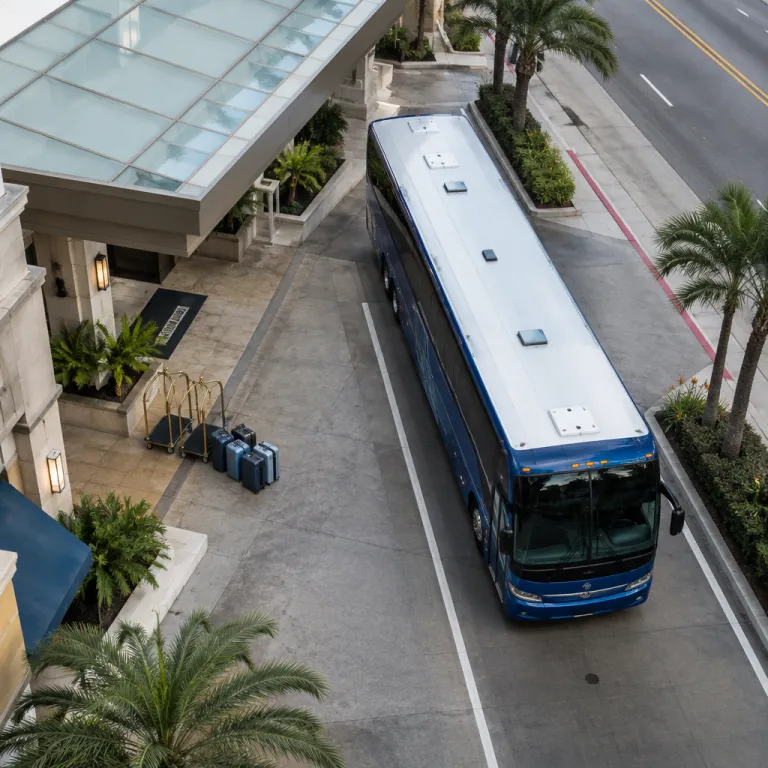
Why charter bus rental in Los Angeles is reshaping hotel ground transportation
For airlines, rail operators, and hoteliers, the way a guest reaches the hotel defines the first real travel experience. In a sprawling city like Los Angeles, a well planned charter bus rental in Los Angeles can transform fragmented transfers into a single orchestrated flow that protects on time performance and guest satisfaction. When a bus company aligns its charter transportation operations with flight schedules, rail arrivals, and hotel check in windows, every minute and every hour between airport and lobby becomes a managed asset.
Los Angeles is not a simple city for group transportation, because congestion, venue rules, and scattered hotel clusters complicate every trip. Coordinated charter buses and mini coaches allow airlines and travel managers to move large groups of passengers between LAX, downtown, Hollywood, Beverly Hills, and Santa Monica without relying on unpredictable individual taxis or ride hailing services. For hotel focused mobility actors, a scalable bus rental strategy also supports recurring shuttle services for events, cruise turnarounds, and corporate group travel where group size can change at short notice.
Special occasions, irregular operations, and major events in Los Angeles California create sharp peaks in demand that strain fragmented transfer models. By pre contracting charter bus rentals with operators such as Buslane, Metropolitan Shuttle, or TCS Bus, travel managers can secure capacity bands, predictable cost per trip, and guaranteed buses even during prom season or award nights in Hollywood. In one recent example, a downtown convention hotel partnered with a Los Angeles charter operator to move 600 guests from LAX using a mix of full size coaches and mini buses, cutting average transfer time by 20 percent compared with ad hoc ride hailing. This approach lets airlines and hotels offer integrated rental service options, from full size charter buses to mini buses and party buses, while keeping a single set of service level agreements and a unified quote process.
Designing shuttle and shared mobility from airport or station to hotel
Building an efficient shuttle network starts with mapping every arrival pattern before choosing any charter bus. Airlines and rail companies should analyse flight banks, train timetables, and typical group size to decide whether they need frequent mini buses, fewer large buses, or a mix of charter buses and party buses for incentive groups. When these patterns are clear, a charter bus rental in Los Angeles can be tailored to match each peak hour with the right number of seats and the right type of rental service.
For hotel corridors between LAX, Union Station, and key districts such as downtown Los Angeles, Hollywood, Beverly Hills, and Santa Monica, shared group transportation can reduce both cost and curbside congestion. Instead of dozens of small vehicles, a coordinated fleet of charter buses and mini coaches can move passengers in waves, with clear trip details and pre assigned hotel stops. This model is particularly effective for sports teams and delegations, and resources such as this guide on designing seamless sports team transportation from airport to hotel show how to align transfer windows, luggage handling, and hotel check in processes.
Travel managers should define service tiers for every bus rental, from basic shuttles to premium charter transportation with Wi Fi, reclining seats, and on board restrooms. For corporate events or high value groups, a party bus or high spec mini coach can be positioned as an upgrade that still benefits from the economies of group travel. Clear communication of pick up points, travel time expectations, and emergency back up buses is essential, because passengers judge the entire trip experience on how well the first and last kilometres between terminal and hotel are handled.
Strategic partnerships with Los Angeles charter operators for hotel centric mobility
Long term reliability in charter bus rental in Los Angeles depends on structured partnerships rather than ad hoc bookings. Airlines, rail operators, and hotel groups gain leverage when they aggregate their group transportation needs and negotiate framework agreements with a small panel of vetted bus company partners. In Los Angeles California, actors such as Buslane, Metropolitan Shuttle, and TCS Bus illustrate how tiered pricing by vehicle capacity can align with predictable demand from airport hotel corridors.
These partnerships should specify hourly and daily cost models, minimum hour commitments, and clear rules for multi day trip details. For example, full size charter buses for 50 to 56 passengers often sit in a band around 150 to 275 dollars per hour, with minimums of about five hours, while mini buses for 24 to 35 passengers are typically priced in the lower half of that range but follow similar minimums. These rate bands reflect aggregated quotes from Los Angeles charter operators as of early 2024 and will vary by season, fuel cost, and vehicle specification. When travel managers understand these structures, they can choose between one large charter bus or several mini buses for each group size, balancing cost, flexibility, and curbside constraints at each city venue.
Strategic leasing or long term rental service contracts can also stabilise capacity for hotel shuttles and recurring events. Guidance such as this analysis on strategic bus leasing for seamless hotel transfers and shared mobility shows how to blend owned, leased, and chartered buses into a single operational plan. For mobility platforms and transfer marketplaces, integrating these Los Angeles charter partners through APIs and unified quote tools allows them to present consistent bus rental and bus rentals options to travel managers, while still drawing on multiple fleets of charter buses, party buses, and mini coaches across the Greater Los Angeles area.
Cost structures, quote processes, and risk management for hotel transfers
Financial predictability is a central concern for any airline, rail operator, or hotel planning group travel by bus. A transparent charter bus rental in Los Angeles should break down base hourly or daily cost, mileage, parking, tolls, gratuities, and any driver lodging required for overnight trip details. When travel managers compare quote options, they should insist on itemised rental service proposals that show how each hour and each kilometre contributes to the final invoice.
Industry benchmarks indicate that a full size charter bus for 50 to 56 passengers in Los Angeles California typically ranges between about 150 and 275 dollars per hour, with a minimum booking window of around five hours. Mini buses for 24 to 35 passengers are usually quoted in the lower portion of that band, again with similar minimums, which means that partially filled large buses can be less efficient than right sized mini coaches. These figures are based on compiled operator rate cards and sample quotes from early 2024 and should be treated as planning assumptions rather than fixed tariffs. The dataset also highlights that weekend and prom season rates spike, and that there is often a pricing gap for groups of 36 to 49 people, which travel managers must address either by splitting groups or accepting a larger vehicle.
To manage these variables, airlines and hotels should standardise a digital quote form that captures group size, luggage volume, accessibility needs, and precise pick up and drop off locations in the city. This quote form should be shared with preferred bus company partners so that every bus rental or bus rentals request is evaluated on the same basis, whether it concerns a simple airport shuttle, a Hollywood studio tour, or special occasions requiring a party bus. For a deeper breakdown of hidden fees and total cost of ownership in coach transportation, mobility stakeholders can consult this detailed analysis on what you really pay when renting a coach for hotel ground transport, which explains how venue fees, layover time, and repositioning can affect the final bill.
Operational design for multi stop hotel routes across Los Angeles
Operational excellence in charter bus rental in Los Angeles starts with route design that respects both passenger comfort and urban constraints. Multi stop hotel shuttles serving downtown, Hollywood, Beverly Hills, and Santa Monica must account for traffic peaks, loading zones, and the time required for passengers to board and disembark safely. When airlines and hotels coordinate their group transportation plans with venue staging authorities and airport ground handlers, they can reduce dwell time and avoid fines or operational disruptions.
Each route should be modelled with realistic travel time buffers, especially during high congestion periods in the city. For example, a charter bus leaving LAX for a sequence of hotels in Beverly Hills and Hollywood may require more than one hour during evening peaks, which affects how many trips a single vehicle can complete in a shift. By simulating different patterns of group size and luggage loads, planners can decide when to deploy full size charter buses, when to rely on mini buses, and when a party bus configuration is justified for incentive or entertainment groups.
Clear passenger communication is as important as the physical buses. Airlines and hotels should provide digital boarding passes or QR codes that indicate bus number, scheduled hour of departure, and expected arrival time at each hotel, which reduces confusion and speeds up boarding. When irregular operations occur, such as delayed flights or rail disruptions, having spare charter buses or flexible bus rentals on standby allows mobility platforms and travel managers to re route passengers quickly, preserving the overall travel experience even under stress.
From data to guest experience: measuring performance of hotel ground transport
Once a charter bus rental in Los Angeles program is in place, continuous measurement turns transportation from a cost centre into a competitive advantage. Airlines, rail operators, and hotels should track key indicators such as on time departure rate, average transfer time per city corridor, load factor per bus, and cost per passenger for each route. These data points allow mobility actors to compare the performance of different bus company partners, vehicle types, and service patterns, from standard charter buses to premium party buses used for special occasions.
Passenger feedback is equally important, because it reveals how guests perceive the overall travel experience beyond pure punctuality. Short surveys can ask travellers to rate comfort, cleanliness, driver professionalism, and clarity of trip details, with separate questions for mini buses, full size buses, and party bus formats. When this qualitative data is combined with operational metrics, travel managers can refine their rental service mix, perhaps shifting some group travel from taxis to group transportation by bus rental, or adjusting the balance between fixed shuttles and on demand buses.
Regulatory compliance and safety performance must also be monitored systematically. Stakeholders should confirm that every Los Angeles charter operator maintains valid California Public Utilities Commission (CPUC) Transportation Charter Party (TCP) authority, up to date insurance, and robust driver training programmes, especially for night operations and long hour shifts. As one industry FAQ summarises based on early 2024 market data, “How much is a full-size charter bus per hour? About $150-$275/hr for a 50-56 seat coach” and “What size bus for 30 passengers? Use a 24-35 seat minibus or full coach if needing one vehicle” and “What hidden fees should I expect? Parking, tolls, gratuity, driver lodging on multi-day trips”, and these points underline why transparent communication and careful planning are essential for trustworthy hotel ground transport in Los Angeles California.
Key figures for charter bus based hotel transfers in Los Angeles
- Full size charter buses with 50 to 56 seats in Los Angeles typically cost between about 150 and 275 dollars per hour, according to operators such as Buslane and Metropolitan Shuttle, which means that a five hour minimum can represent a baseline investment of 750 to more than 1 300 dollars per vehicle.
- Mini buses with 24 to 35 seats are generally quoted in the lower portion of that range with similar minimum hour requirements, making them more cost efficient for mid sized groups where a full coach would run below optimal load factor.
- Most Los Angeles charter operators apply minimum booking windows of approximately five hours per rental, so travel managers planning short hotel transfers must consider how deadhead time and layovers will be billed within that duration.
- Peak demand periods such as weekends and prom seasons can trigger rate spikes for both charter buses and party buses, which encourages airlines and hotels to book at least four to eight weeks in advance for major events and high profile special occasions.
- Venue related charges, including parking fees at hotels, stadiums, and convention centres, are often billed separately from the base bus rental cost, so total project budgets should include these items alongside tolls, gratuities, and any driver lodging for multi day trips.
FAQ about charter bus rental in Los Angeles for hotel ground transport
How far in advance should I book charter buses for large groups ?
For standard group travel in Los Angeles, booking charter buses two to three weeks in advance usually secures availability and stable pricing. When planning major events, city wide conventions, or peak season operations, airlines, rail operators, and hotels should extend this window to four to eight weeks. Early booking is especially important for party buses and high capacity fleets that may be in high demand across Hollywood, Beverly Hills, and Santa Monica.
What type of bus is best for 30 passengers with luggage ?
For around 30 passengers, a mini bus with 24 to 35 seats is often the most efficient choice, especially when luggage space is required. Some travel managers still prefer a full size charter bus for a single vehicle solution, particularly when the group carries sports equipment or bulky conference materials. The final decision should balance cost per hour, hotel curbside space, and the comfort expectations of the passengers.
Which hidden costs should I anticipate beyond the base rental rate ?
Beyond the advertised hourly or daily rate for bus rental, operators in Los Angeles typically charge for parking, tolls, and driver gratuities, with additional costs for driver lodging on multi day trips. Venue access fees at hotels, stadiums, and convention centres may also be billed separately, especially when staging areas or marshals are required. Travel managers should request itemised quotes that clearly separate these elements from the core rental service.
How can airlines and hotels ensure safety and compliance for charter operations ?
Safety begins with selecting Los Angeles charter operators that hold valid CPUC TCP authority, adequate insurance, and documented maintenance programmes for their buses. Airlines, rail companies, and hotels should request proof of these credentials annually and include compliance clauses in their contracts. Regular audits of driver hours, training records, and incident reports help maintain a high standard of safety across all group transportation services.
Is shared shuttle service always cheaper than individual transfers for guests ?
Shared shuttle models using charter buses or mini buses usually reduce cost per passenger compared with individual taxis or ride hailing, especially for large groups travelling between the airport and hotel clusters. However, the economics depend on load factor, route design, and minimum hour requirements for each bus company. When shuttles are well filled and routes are optimised, they offer both financial savings and a more consistent guest experience.