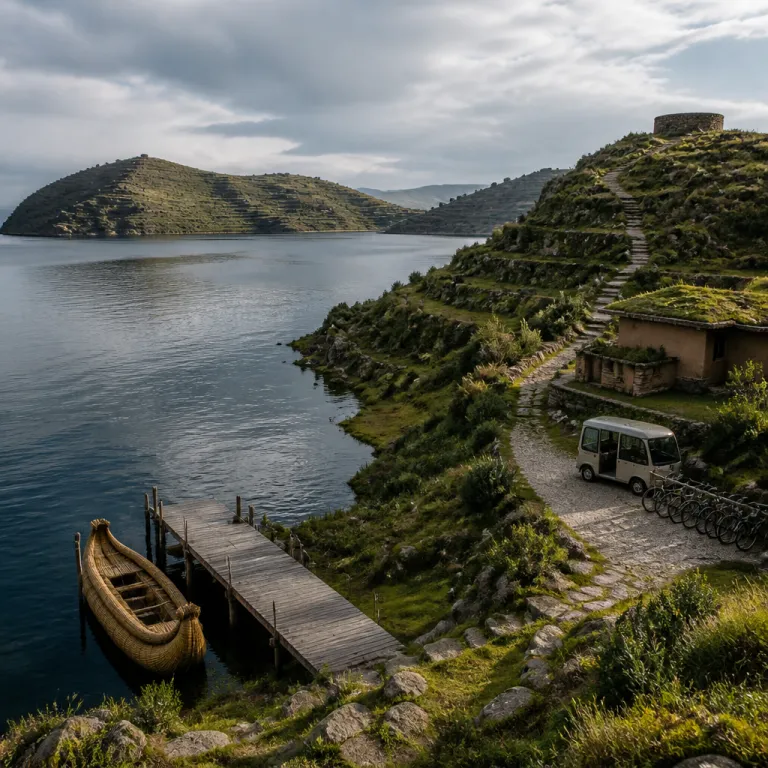
From airport or station to lake Titicaca: orchestrating a quieter spiritual journey
For airlines, rail operators and mobility platforms, the lago Titicaca Amantani Taquile spiritual experience less crowded starts long before travellers see the water. The end to end journey must connect the airport or station seamlessly with Puno, then with each island, while preserving the sense of calm and cultural depth that makes this Peru itinerary unique. A refined mobility strategy can turn a simple transfer into the first chapter of a meaningful cultural immersion.
Guests flying into Juliaca or arriving by train expect the same quality of care they receive on board to continue on the road to Puno and lake Titicaca. When travel managers curate a Peru trip that combines Machu Picchu, the Inca Trail and a quieter stay on an island, they need predictable timings, coordinated ticketing and clear communication across all mobility actors. This is where airlines, rail companies and hotel partners can jointly design multimodal corridors that respect both operational constraints and the fragile rhythm of local communities.
Positioning this lake Titicaca, Amantani and Taquile itinerary as a premium yet responsible product requires precise segmentation. Some guests will prioritise a fast day tour to the Uros floating islands and Taquile island, while others will choose an Amantani homestay with a host family for a full day and night. Both profiles need different transfer patterns, different boat schedules and different levels of interaction with local Quechua families, yet all expect reliability and safety from the first kilometre.
Aligning air and rail schedules with lake departures
To protect the feeling of a hidden gem, capacity must be managed from the moment a ticket is booked. Airlines and rail companies can share arrival data with Puno based tour operators so that boat departures to the islands Uros, Amantani island and Taquile amantani are staggered rather than bunched. This reduces pressure on the port, shortens waiting time and keeps each boat ride more intimate.
On the ground, integrated planning tools allow travel managers to build itineraries where a guest lands, clears formalities and boards a transfer within a predictable window of three hours. That same logic should extend to the pier, where boat transportation to each island is timed to avoid overcrowding on the lake and on the floating islands. When this orchestration works, the lago Titicaca Amantani Taquile spiritual experience less crowded becomes a tangible service promise, not just a marketing phrase.
Rail operators serving Puno can also play a decisive role by aligning arrival times with morning departures for a day Uros and Taquile tour or with afternoon boats for guests heading directly to an Amantani homestay. Clear communication in booking engines about lake Titicaca connections, including whether a tour guide is included and how long each leg of the boat ride lasts, reduces friction and supports informed choices. This level of transparency builds trust with both guests and local partners who depend on steady, not chaotic, visitor flows.
Designing transfers that respect altitude, culture and community rhythms
Lake Titicaca sits at roughly 3 800 metres, and Amantani island shares this altitude, which shapes every aspect of mobility design. Transfer times that look short on a map can feel very different for guests adjusting to thin air, especially after a long flight or an intense Inca Trail trek. Hospitality and mobility actors must therefore balance efficiency with health, comfort and cultural sensitivity.
For example, a direct transfer from Juliaca to Puno followed by an immediate full day tour to the Uros floating islands and Taquile island may be too demanding for some travellers. A more thoughtful itinerary might schedule a gentle afternoon in Puno city, then a slower paced day Uros and Amantani route that allows more rest on the boat and more time with a host family. This approach keeps the lake Titicaca island experience quieter while also reducing medical incidents and guest dissatisfaction.
Local Quechua families who provide homestays on Amantani and Taquile have their own daily rhythms, ceremonies and agricultural work. Mobility plans that push late arrivals or very early departures can disrupt these patterns and erode the authenticity of the cultural immersion. By co designing schedules with these families and with tour operators, airlines and travel managers can ensure that each homestay, each cultural experience and each boat transfer respects both guest expectations and community wellbeing.
Learning from other curated transfer corridors
International examples of curated transfer corridors can inspire better design around lake Titicaca. The way some hotels structure premium overland links between two iconic cities, as seen in case studies on elevated hotel transfers between heritage destinations, shows how narrative, comfort and timing can be woven into a single mobility product. A similar mindset can be applied to the route between Puno, the Uros floating islands, Amantani island and Taquile island.
Instead of selling isolated legs, mobility actors around lake Titicaca can package the entire journey as a coherent story. The first day might focus on a gentle cultural experience with the Uros taquile circuit, visiting the Uros floating islands in the morning and reaching Taquile island by mid afternoon. The second day could then emphasise deeper cultural immersion on Amantani, with a carefully timed boat ride that arrives before dusk so guests can meet their host family and settle into the homestay.
Such structuring allows airlines, rail companies and hotels to align their own services with clear anchor points. It also makes it easier to communicate to guests how much time each segment will take, from the three hours on the lake between Puno and Amantani to the shorter hops between the islands. When expectations are precise and realistic, the lago Titicaca Amantani Taquile spiritual experience less crowded feels both serene and professionally managed.
Integrating hotel, mobility and tour operators into one service layer
For hoteliers, the transfer to and from lake Titicaca is no longer a peripheral service; it is a core part of the guest promise. A guest who books a boutique property in Puno and an Amantani homestay with a local family expects the hotel to coordinate with tour operators, boat captains and even airlines. This is where a shared mobility platform can transform fragmented services into a single, coherent end to end experience.
By integrating hotel systems with mobility partners through APIs, travel managers can see real time data on arrivals, departures and lake conditions. That information can then be used to adjust pick up times, rebook a boat ride between the islands Uros and Taquile amantani, or extend a full day tour into a slower paced two day itinerary. Such agility is essential when working at high altitude, where weather, health and community events can all affect the flow of travel.
Revenue sharing models also matter. When hotels and mobility providers structure joint offers, as explored in analyses of hotel and mobility partnership revenue sharing, they can create packages that include transfers, lake tours and even extensions to Machu Picchu. This allows the lake Titicaca, Amantani and Taquile circuit to be sold as a premium, margin rich product that still channels fair income to local communities on each island.
Curating the guest journey across multiple touchpoints
From the first email confirmation, guests should see a clear map of their Peru trip, including how they will move between Puno, lake Titicaca and each island. Visual timelines that show when they will visit the Uros floating islands, when they will reach Taquile island and when they will arrive at their Amantani homestay help reduce anxiety. They also allow travel managers to highlight quieter time slots and less crowded departures.
On the operational side, a shared service layer can standardise quality across different providers. Whether a guest is stepping into a private car in Juliaca, a shuttle in Puno or a traditional boat on the lake, they should encounter consistent safety standards, language support and information about altitude. This consistency reinforces the perception that the overall lake Titicaca journey is carefully curated rather than improvised.
Feedback loops are equally important. Hotels and mobility actors should collect structured comments about each leg of the journey, from the comfort of the boat ride to the clarity of instructions at the pier. Over time, this data can guide adjustments in departure times, group sizes and even the balance between day tours and overnight stays, always with the goal of preserving both guest satisfaction and the cultural integrity of the islands.
Designing lake segments: boats, timing and capacity for less crowded stays
Once guests reach Puno, the lake segments become the backbone of the experience. Boat transportation is not just a transfer mode; it is the stage on which the lago Titicaca Amantani Taquile spiritual experience less crowded unfolds. Designing these segments with precision is therefore a strategic task for mobility platforms and tour operators.
Typical itineraries follow a two day pattern, with day one leaving Puno for the Uros floating islands before continuing to Amantani island. Day two usually focuses on Taquile island before returning to Puno by late afternoon, completing a full day on the water and on land. Within this framework, capacity management is crucial to avoid overcrowding on any single island or boat.
Tour operators can, for example, cap group sizes for each boat ride and stagger departures so that only a limited number of visitors are present on the Uros floating islands at any given time. Smaller groups also make it easier for a tour guide to facilitate genuine cultural immersion, whether explaining traditional reed construction or introducing guests to a host family. This approach keeps the lake Titicaca island circuit less crowded while enhancing both safety and guest engagement.
Balancing speed, comfort and authenticity on the water
There is a natural temptation to shorten travel time on the lake by using faster boats. Yet the three hours typically needed to reach Amantani from Puno can be reframed as a meditative transition, especially for guests seeking a spiritual or reflective journey. Comfortable seating, warm blankets and clear storytelling from the tour guide can transform this segment into a highlight rather than a hurdle.
At the same time, operators must ensure that boats meet safety standards and that crews are trained to handle altitude related issues. Simple measures such as offering warm drinks, monitoring guest wellbeing and providing information about the 3 800 metre elevation of Amantani island can make a significant difference. These details reinforce the perception that mobility actors understand both the physical and emotional dimensions of the journey.
Authenticity also depends on the type of vessel used. While some guests may appreciate a more modern boat, others will value a traditional style craft that aligns with the cultural context of lake Titicaca. Offering a choice, and clearly communicating the implications for speed, comfort and environmental impact, allows travel managers to match the right product to each segment of their audience.
Embedding cultural immersion and homestays into mobility design
On Amantani and Taquile, mobility is inseparable from cultural experience. Paths are walked, not driven, and the most meaningful moments often occur between formal activities, as guests move with their host family through daily routines. For mobility planners, this means that the design of transfers must leave space for unhurried cultural immersion.
Community based tourism on these islands is built around homestays with local Quechua families. These Amantani homestay arrangements provide simple accommodation, shared meals and participation in traditional activities, from farming to dance. The quote “Are there accommodations on Amantani? Yes, homestays with local families are available.” captures the essence of this model and underlines why timing and group size matter so much.
When a boat arrives too late, guests may miss key cultural moments such as evening gatherings or sunrise walks to local viewpoints. Conversely, when departures are scheduled too early, there is little time for meaningful exchange or for visiting small ruins and community spaces. Mobility actors should therefore work backwards from the desired cultural outcomes, designing boat schedules and walking routes that prioritise depth over speed.
Training guides and aligning narratives across the journey
Tour guides are the human interface between mobility logistics and cultural storytelling. A well trained guide can connect the dots between a guest’s earlier visit to Machu Picchu, their hike on the Inca Trail and their current stay on an island in lake Titicaca. This narrative continuity reinforces the sense that the Peru trip is a coherent journey rather than a series of disconnected excursions.
Guides should also be equipped to explain how community based tourism supports local economies and helps preserve Quechua traditions. Clear messages about why group sizes are limited, why certain areas of the islands are off limits and why the lake Titicaca, Amantani and Taquile experience is intentionally kept less crowded help manage expectations. When guests understand the rationale, they are more likely to respect guidelines and appreciate the quieter atmosphere.
Finally, mobility planners should ensure that information shared on board planes, trains and transfer vehicles aligns with what guides say on the lake. Consistent messaging about altitude, cultural norms and environmental practices builds trust and reduces confusion. This alignment is a hallmark of mature, guest centric mobility ecosystems.
Scaling demand while keeping lake Titicaca and its islands less crowded
Interest in authentic cultural experiences and community based tourism has grown steadily, and lake Titicaca is no exception. For airlines, rail operators and hotels, this represents a clear commercial opportunity, especially when combined with high demand for Machu Picchu and the Inca Trail. The challenge is to scale responsibly so that the lago Titicaca Amantani Taquile spiritual experience less crowded remains genuinely tranquil.
One lever is temporal dispersion. By promoting shoulder season travel and offering pricing incentives for midweek stays, mobility actors can spread demand more evenly across the calendar. This reduces peak pressure on Puno, on each island and on the Uros floating islands, while giving local families a more stable income throughout the year.
Another lever is spatial dispersion across different islands and communities. Carefully curated itineraries can alternate between the islands Uros, Taquile island and Amantani island, ensuring that no single community bears the brunt of visitor numbers. This approach also enriches the Peru trip by exposing guests to a wider range of cultural expressions and landscapes.
Using data and partnerships to refine the end to end corridor
Data sharing between airlines, rail operators, hotels and tour agencies is essential to manage flows intelligently. Simple metrics such as average group size per boat, occupancy rates for each homestay and the proportion of guests choosing a full day tour versus an overnight stay can guide capacity planning. Over time, these insights help refine the balance between access and preservation.
Partnerships with local authorities and community leaders are equally important. Mobility actors should involve them in decisions about new routes, additional departures or changes to the standard two day itinerary that links Puno, the Uros floating islands, Amantani and Taquile. This collaborative governance model ensures that economic benefits are shared and that cultural and environmental thresholds are respected.
Lessons from other long distance corridors, such as the structured planning of seamless hotel and mobility journeys between major cities, show that integrated planning can enhance both guest satisfaction and operational efficiency. Applied thoughtfully, similar principles can keep the lake Titicaca, Amantani and Taquile route peaceful while still making it accessible to a global audience.
Key figures for mobility and cultural immersion around lake Titicaca
- The population of Amantani is 3 557 people according to the most recent Peruvian census, which highlights the small scale of the community hosting international guests.
- Amantani island sits at approximately 3 800 metres above sea level, a factor that should shape transfer pacing, health information and contingency planning.
- Standard itineraries typically run as two day tours from Puno, with day one covering the Uros floating islands and Amantani, and day two focusing on Taquile before returning to the mainland.
- The boat journey from Puno to Amantani often takes around three hours according to local operator timetables, which should be considered a core experiential segment rather than a simple transfer.
- Community based tourism models on lake Titicaca aim to support local economies while promoting cultural exchange, aligning commercial mobility strategies with long term social impact.
FAQ about end to end mobility for lake Titicaca, Amantani and Taquile
What is the altitude of Amantani island and how does it affect transfers ?
Amantani island is located at roughly 3 800 metres above sea level, similar to much of lake Titicaca. This altitude means transfers should be paced to allow acclimatisation, with gentle first days and clear health information provided by airlines, rail operators and tour guides. Mobility plans that respect altitude help reduce fatigue and improve the overall guest experience.
Are there accommodations on Amantani suitable for organised tours ?
Yes, Amantani offers homestays with local Quechua families that are well suited to small, organised groups. These homestays provide simple rooms, shared meals and access to traditional activities, making them ideal for cultural immersion. Tour operators and travel managers should coordinate arrival and departure times closely with host families to avoid disruption.
How do guests typically reach Amantani and Taquile from Puno ?
Most guests travel by boat from the port of Puno, often as part of a two day tour that includes the Uros floating islands. The first day usually covers Uros and Amantani, while the second day focuses on Taquile before returning to Puno. Airlines and rail operators can enhance this journey by aligning their schedules with morning or early afternoon boat departures.
Can the lake Titicaca, Amantani and Taquile itinerary be combined with Machu Picchu and the Inca Trail ?
Yes, many Peru itineraries combine Machu Picchu, the Inca Trail and a stay on lake Titicaca. Travel managers often route guests through Cusco and then onward to Puno by rail or road before continuing to the islands. Coordinated planning across these segments is essential to maintain a coherent, less crowded and culturally rich journey.
What role do local communities play in shaping mobility strategies on the islands ?
Local communities on Amantani, Taquile and the Uros floating islands are central partners in any sustainable mobility strategy. They host guests in homestays, guide cultural activities and help define acceptable group sizes and visit timings. Mobility actors who involve these communities in planning are better positioned to offer authentic experiences while protecting local ways of life.
