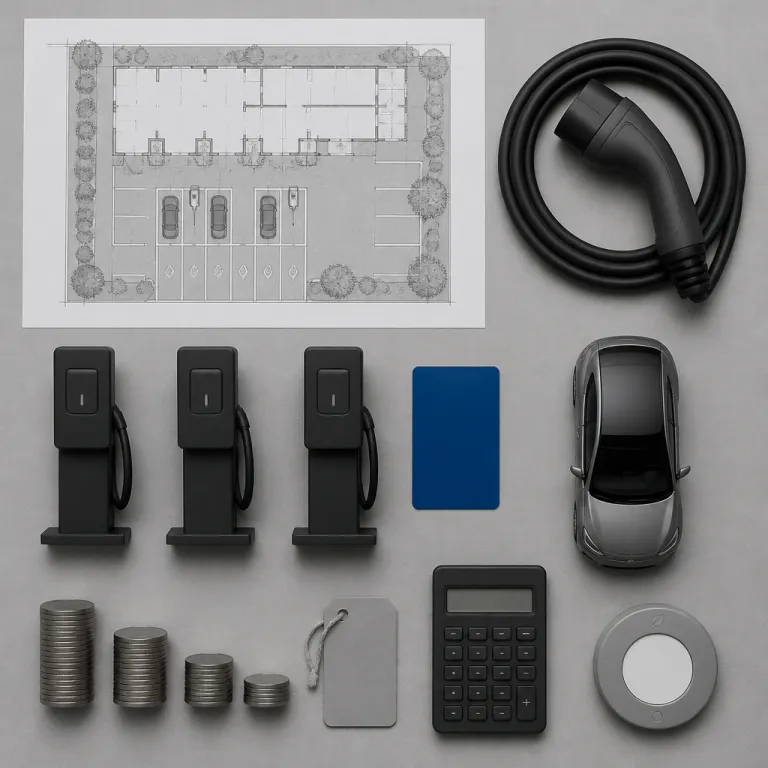
The shift from free charging to a strategic revenue line
For many hotels, electric vehicle charging started as a quiet sustainability perk. As EV adoption accelerates and charging costs rise, that same hotel charging offer now sits at the crossroads of guest experience, revenue management, and mobility partnerships. The decision to move from free charging to paid vehicle charging will shape how travelers perceive your brand, how your parking infrastructure is used, and how much commercial charging revenue you can realistically bank each year.
Early adopter hotels treated every charging station as a marketing expense, not a business asset. That worked when only a handful of eco conscious guests arrived with one electric vehicle and happily shared a couple of slow level chargers overnight. Once electric vehicles reach double digit share in your parking mix, unmanaged free charging creates queuing, charger blocking, and opaque energy costs that your finance équipe can no longer ignore.
For airport hotels, rail station properties, and transfer hubs, the pressure is sharper. These hotels charging clusters sit on prime mobility corridors where charging hotels compete directly with public charging stations and fast chargers at nearby retail parks. A clear hotel EV charging pricing strategy becomes essential, because your charging infrastructure is no longer a side amenity ; it is part of the core arrival journey for high value guests and corporate travelers.
Understanding your charging infrastructure, energy costs, and competitive set
Before setting any pricing, a hotel must understand its charging infrastructure profile and true energy costs. Map every charging station and charger type on property, from basic level charging points in underground garages to fast charging bays near the porte cochère. Distinguish between AC level chargers that suit overnight guests and DC fast chargers that serve short stay travelers, airport shuttles, and ride hail fleets.
Energy tariffs, demand charges, and grid constraints will dictate the floor for any sustainable based pricing model. Properties with multiple fast chargers often face higher peak power costs than hotels relying on slower level charging stations, which means a flat session fee that looks generous on paper can quietly erode revenue. Technical guidance on DC fast charging at hotels and utility demand charges is explored in depth in this analysis on fast charging at hotels and demand charge management, and every commercial charging decision should be anchored in those realities.
Your competitive set now includes more than neighboring hotels. Guests compare your charging hotel rates with public charging stations at supermarkets, highway rest areas, and especially Tesla Superchargers that line major corridors. If your charging stations are priced significantly above nearby public options, many electric vehicle drivers will bypass hotel charging entirely, undermining both guest experience and potential revenue from charging hotels that invested heavily in infrastructure.
Pricing models: from transparent metering to bundled charging offers
There are five dominant models for hotel EV charging pricing strategy, each with distinct trade offs. Per kilowatt hour pricing is the most transparent for an electric vehicle guest, because they pay directly for the energy they consume at the charging station. This metered approach aligns costs and revenue cleanly, but it requires compliant hardware, clear communication, and sometimes complex billing integration with your property management system.
Flat session fees and time based pricing remain popular because they are simple to explain at check in and easy for front office teams to manage. A flat fee per charge works well for overnight level charging when most guests plug in once and leave the vehicle until morning, but it can penalize short stay travelers who only need a partial charge. Time based pricing, especially when combined with idle fees, discourages guests from occupying chargers all day and can keep limited charging infrastructure turning over during peak arrival waves.
Some hotels bundle vehicle charging into parking or premium room categories, effectively hiding the charging costs inside a higher overall rate. This approach can enhance perceived guest experience for loyalty members or suites, but it risks under monetizing heavy users of fast chargers. When planning the mix of level chargers and fast chargers for a 50 to 500 room property, the sizing guidance in this resource on hotel EV charging station planning and charger mix is essential, because your chosen hardware mix will constrain which pricing models are viable.
Segmenting guests and aligning pricing with behavior
Not every guest values electric vehicle charging in the same way, and your pricing should reflect that. Business travelers who expense their stay often treat hotel charging as a functional necessity, focusing more on charger reliability and availability than on marginal pricing differences. Leisure guests, by contrast, benchmark your charging stations against the cost to charge at home, and they are quick to notice when a charging hotel feels opportunistic rather than fair.
Loyalty members and frequent travelers expect preferential access to chargers and sometimes complimentary level charging as part of their status benefits. One effective approach is to offer free or discounted level charging for top tier members while applying standard based pricing to fast chargers and non members, preserving both guest experience and revenue. Eco conscious guests respond well when hotels charging policies are framed around grid friendly behavior, such as lower overnight rates that align with off peak energy and higher daytime pricing that reflects real costs.
Airport and rail station hotels can go further by integrating vehicle charging into transfer products and mobility as a service offers. A prebooked EV shuttle that includes a guaranteed charging station on arrival, or a partnership with ride hail fleets that use your commercial charging bays during low occupancy hours, can turn underused chargers into a new business line. Strategic control of this mobility layer, rather than outsourcing it entirely to aggregators, is explored in this perspective on why hotels should own their mobility layer instead of renting it, and the same logic applies to hotel charging economics.
Utilization, time of use pricing, and revenue modeling
Once the hardware is in the ground, the real work begins with utilization management and revenue forecasting. A robust hotel EV charging pricing strategy links time of use tariffs, occupancy patterns, and charger turnover into a coherent based pricing grid that operations teams can execute. For example, lower overnight rates on level chargers encourage guests to plug in after dinner, while higher daytime pricing on fast chargers keeps bays available for short stay travelers and airport transfers.
Idle fees, clearly communicated at the charging station and in pre arrival emails, are essential to prevent charger hogging and to keep charging hotels functioning smoothly at high EV penetration. These fees should start after a reasonable grace period once the electric vehicle reaches the desired charge level, and they must be enforced consistently to maintain credibility. When guests understand that idle fees protect everyone’s access to chargers, they are more likely to move their vehicle promptly and rate the guest experience positively.
Revenue modeling for charging infrastructure should be as rigorous as for meeting space or ancillary F&B outlets. Start with expected occupancy, estimate the percentage of guests arriving with electric vehicles, and apply realistic utilization rates for each charging station type to project annual revenue. Sensitivity analyses that test different pricing levels, energy costs, and adoption scenarios will help revenue leaders decide when to add more chargers, when to introduce fast charging, and how to balance guest satisfaction with long term business performance.
FAQ
How should hotels decide when to start charging for EV charging ?
Hotels should move from free to paid charging when utilization regularly exceeds available chargers, when energy costs become material in the P&L, or when nearby public charging stations already charge market rates. At that point, a structured hotel EV charging pricing strategy protects guest access, funds maintenance of the charging infrastructure, and aligns with broader commercial charging practices. The transition works best when communicated early, with clear explanations of pricing, benefits for loyalty members, and any remaining complimentary level charging options.
What is the most guest friendly pricing model for hotel EV charging ?
Per kilowatt hour pricing is usually perceived as the fairest model because guests pay directly for the energy they use at the charging station. When that is not feasible, a hybrid approach that combines a modest flat session fee for overnight level charging with time based pricing and idle fees for fast chargers can balance simplicity and fairness. Whatever model you choose, transparency at booking, at check in, and at the charger itself is more important for guest experience than the exact rate.
How can hotels prevent guests from blocking chargers all day ?
Time based pricing and idle fees are the most effective tools to prevent charger blocking. Hotels can set a reasonable maximum charging duration for each charger type, then apply an escalating fee once the electric vehicle remains plugged in beyond that time. Clear signage at the charging station, automated notifications through charging apps, and front desk reminders at check in all help guests respect the shared nature of the charging infrastructure.
How should hotel charging prices compare to public charging networks ?
Hotel charging rates should sit within a reasonable band of nearby public charging stations, with a slight premium justified by convenience and security. If your charging hotel prices are significantly higher than local fast charging networks or Tesla Superchargers, many travelers will choose to charge off property, reducing both utilization and potential revenue. Benchmarking should be updated regularly, because energy tariffs, network promotions, and new stations hotels can shift the competitive landscape quickly.
Can EV charging become a meaningful revenue stream for hotels ?
EV charging can evolve from a cost center into a measurable ancillary revenue line when utilization is high, pricing reflects true energy and infrastructure costs, and chargers are integrated into broader mobility products. For urban and airport hotels with strong EV demand, commercial charging for fleets, ride hail drivers, and day visitors can generate revenue even when room occupancy is soft. The key is to treat every charging station as a managed asset, with clear KPIs for utilization, revenue per charger, and guest satisfaction rather than as a static sustainability gesture.