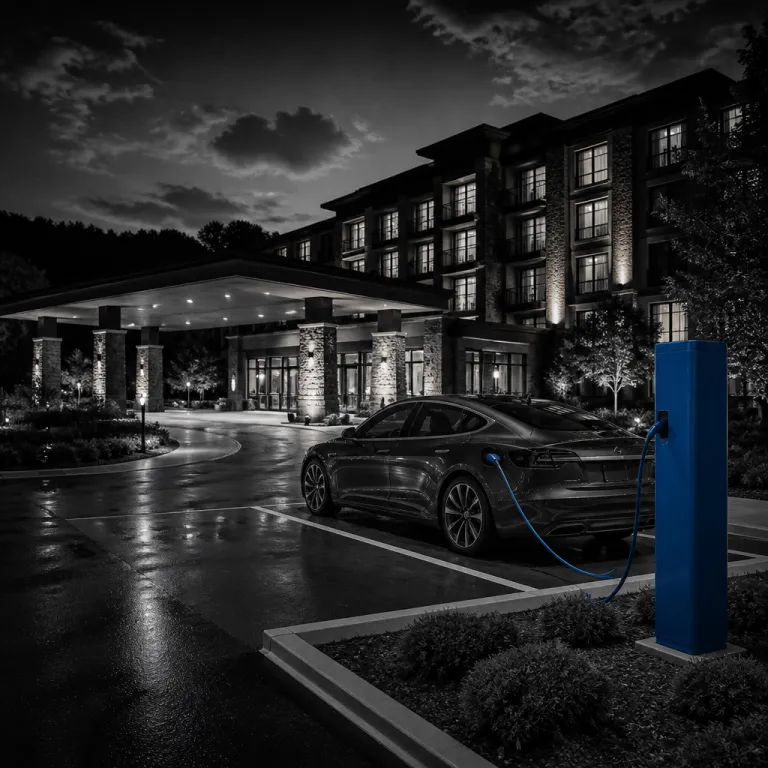
Why EV guest hotel spending is rewriting the arrival playbook
Electric vehicle drivers are no longer a niche curiosity at the porte cochère. They are a 100K plus income segment whose EV guest hotel spending quietly outperforms the average hotel guest on room, ancillary revenue and length of stay. For airlines, rail operators and transfer platforms, this premium cohort is reshaping how mobility and hospitality properties coordinate the journey from gate to hotel charging bay.
Survey data from the Boutique Luxury Lodging Association shows that 91 % of EV drivers prefer hotels with chargers, and 73 % are willing to pay more for charging as an amenity. That willingness to pay translates into measurable revenue when charging infrastructure is positioned as part of a seamless guest experience rather than a back of house utility. For commercial leaders, the question is no longer whether to invest in charging stations, but how to design the charging experience so EV guest hotel spending lifts ADR, ancillary capture and long term guest satisfaction.
EV owners typically travel more frequently for both business and leisure, and they plan their booking decisions around charging availability with almost surgical precision. Many guests will filter hotels charging options before they even look at room photos, treating a charging hotel as a non negotiable baseline rather than a nice to have feature. When stations at hotels are integrated into airline apps, rail booking flows and mobility as a service platforms, the charging experience becomes a quiet but powerful signal that the hospitality industry understands the full door to door journey.
Profiling the 100K plus EV driver and their on property behavior
EV drivers skew affluent, urban and digitally fluent, and they are disproportionately represented in airline loyalty tiers and rail subscription programs. These electric vehicle travelers often combine high frequency flying or high speed rail with car rentals or their own electric vehicles for the last 50 km to the hotel. For hoteliers and mobility partners, this means EV guest hotel spending is concentrated among guests who already value time, reliability and a frictionless arrival experience.
Once on site, the EV hotel guest behaves differently from the average transient traveler. They are more likely to extend their stay by a night to ensure a full battery, especially when level charging is available overnight at well lit, secure charging stations close to the lobby. They also show higher spend on food and beverage, spa and premium room categories when hotel charging is clearly communicated during booking and reinforced by staff who understand the charging equipment basics.
For airlines and rail companies, this profile matters because it shapes partnership strategy with charging hotels and transfer providers. A charging hotel that can guarantee reliable stations and transparent costs becomes a preferred partner for premium cabin passengers who expect their electric vehicles to be treated with the same care as their luggage. Mobility actors looking at autonomous shuttles and EV fleets, such as those explored in bold autonomous hospitality bets analysed by Accor, Citroën and JCDecaux, can use this affluent EV segment as the first cohort to test integrated charging infrastructure and on demand transfer services that start at the arrivals curb and end at the charging bay.
From amenity to profit center: measuring the revenue impact of EV charging
EV charging started as a sustainability talking point, but it is rapidly becoming a revenue engine. Hilton has publicly stated that EV chargers are the highest converting feature on its direct booking platform, which underlines how central charging has become to EV guest hotel spending decisions. When a charging hotel appears in filtered search results, it often jumps straight to the top of the shortlist, lifting both occupancy and achievable rate.
To attribute revenue correctly, commercial teams need to track several layers of impact from installing charging infrastructure. First, measure ADR uplift on stays that include use of charging stations compared with similar segments without charging, using clear data on room type, length of stay and spend on amenities such as free breakfast or late checkout. Second, analyse ancillary revenue from bars, restaurants and meeting spaces during the hours when guests leave their electric vehicles connected to chargers, since many will choose to dine or work on property while their cars draw energy.
Third, model the payback period for installing charging by combining capital expenditure on charging equipment and installation with incremental revenue from both usage fees and higher EV guest hotel spending. Case studies from properties that have recouped six figure investments in under two years show that charging hotels can move EV infrastructure from cost center to profit center when pricing, bay allocation and marketing are aligned. For mobility partners and transfer platforms, these numbers justify integrating charging stations into route planning and upselling hotel charging as part of premium transfer bundles.
Designing a seamless charging experience across the door to door journey
For the EV traveler, the journey does not start at the hotel driveway ; it begins when they check range on their electric vehicle before leaving home or the office. Airlines, rail operators and ride hail fleets that surface real time charging infrastructure data in their apps can influence both booking choices and perceived hospitality quality long before check in. When a guest can see available charging stations at hotels, estimated energy delivered during dinner and the exact bay reserved for their arrival, anxiety disappears and EV guest hotel spending shifts from risk management to indulgence.
Hospitality properties that treat charging as a core amenity, on par with Wi Fi and breakfast, design the entire charging experience with service choreography in mind. That means clear wayfinding from the arrivals lane, trained drivers and valets who understand different chargers and connector types, and proactive communication about level charging speeds and expected costs. It also means aligning charging hotel operations with airline delay patterns and rail disruption data, so that late arriving guests still find a reserved bay and perhaps a flexible free breakfast window the next morning.
Digital integration is the next frontier, where mobility as a service platforms and hotel guest apps merge into a single journey layer. Embedding mobility options and EV bay reservations directly inside the guest app, rather than pushing travelers to a standalone transport platform, allows hotels charging services to be bundled with room upgrades, spa slots and late checkout. This kind of integrated charging hotels strategy turns the charging station into a quiet anchor for guest experience design, where every kilowatt hour supports higher spend and stronger loyalty.
Pricing, partnerships and smart segmentation for EV charging revenue
Once the infrastructure is in place, the commercial question becomes how to price and package charging without eroding guest satisfaction. Some hotels charge extra for EV charging ; policies vary by hotel, and the most successful models balance transparent tariffs with targeted perks for high value guests. A common strategy is to offer a limited amount of free energy per stay, then apply a fair per kilowatt hour fee that reflects local electricity costs and grid constraints.
For airlines and rail operators, co branded offers with charging hotels can turn airport or station transfers into a curated premium experience. Bundling a guaranteed charging bay, priority check in and perhaps a complimentary free breakfast into a single fare class or rail pass tier signals that the hospitality industry understands the full lifestyle of electric vehicles owners. Transfer platforms and mobility actors can go further by training drivers to handle basic charging equipment tasks, so that the guest steps out of the car and walks straight to the lobby while the driver plugs in at stations hotels.
Segmentation is where EV guest hotel spending can be most precisely targeted. Use booking data, loyalty profiles and vehicle registration information, where permitted, to identify both individual guest and corporate accounts with high EV adoption, then tailor offers that highlight charging infrastructure, level charging options and guaranteed bays during peak arrival windows. Industry associations such as the Boutique Luxury Lodging Association and solution providers like the El Monde EV Platform can support benchmarking on costs, charger mix and revenue performance, helping hospitality properties refine their charging hotel strategies as adoption accelerates.
Operational realities: infrastructure, installation and cross sector coordination
Behind every elegant charging bay photo lies a complex web of infrastructure decisions, permits and grid negotiations. Installing charging at scale requires early coordination between hotel owners, asset managers, utilities and specialist providers who understand both hospitality operations and electric vehicles technology. For multi property portfolios, standardising charging equipment specifications and signage reduces maintenance costs and simplifies training for staff and drivers across regions.
Location planning is critical, especially for airport hotels, rail adjacent properties and resorts that rely on long distance drive markets. Charging stations should be positioned where guests naturally pass during arrival and departure, with a mix of fast chargers for short dwell times and slower level charging for overnight stays. Stations at hotels that serve airline crews, rail staff and transfer drivers can also be reserved during off peak hours, turning underused bays into a staff benefit that supports internal mobility policies and sustainability targets.
Finally, operational excellence in charging hotels depends on reliable uptime, clear communication and responsive support. Guests should be encouraged to verify hotel charging availability before booking and to confirm charger compatibility with their EV model, especially in markets with diverse connector standards. When hospitality properties treat charging infrastructure as a living system rather than a one off project, they create a resilient platform where EV guest hotel spending, mobility partnerships and guest experience all reinforce one another over time.
FAQ
How much more do EV guests typically spend at hotels ?
Affluent EV guests often generate higher ADR and ancillary revenue because they prioritise properties with reliable charging and then choose premium room types, on site dining and wellness services while their vehicles charge. Hotels that track spend by charging usage usually see a clear uplift compared with similar non EV segments. The exact amount varies by market, but the pattern of higher EV guest hotel spending is consistent across upscale and luxury properties.
Should hotels charge for EV charging or keep it complimentary ?
Both models can work if they are transparent and aligned with positioning. Upscale and luxury hotels often include a basic amount of free energy per stay, then apply a reasonable fee for extended charging sessions to manage costs and bay availability. Midscale properties more frequently use paid charging with clear per kilowatt hour pricing, sometimes bundling credits into loyalty tiers or corporate contracts.
Are hotel EV chargers compatible with all electric vehicles ?
Most modern hotel chargers support widely used connector standards, but compatibility is not universal, especially in regions with mixed legacy hardware. This is why guests should be encouraged to confirm charger compatibility with their EV model before finalising a booking. Hotels can reduce friction by listing connector types, power levels and any adapter requirements clearly on their websites and in pre arrival communications.
What data should revenue teams track to measure EV charging performance ?
Revenue and commercial leaders should monitor utilisation rates by bay and time of day, ADR and total spend for stays that include charging, and the share of bookings where charging availability influenced the decision. They should also track maintenance costs, energy costs and any grid demand charges to understand true profitability. Over time, comparing properties with and without charging infrastructure in similar markets provides a clean view of the incremental value from EV guest hotel spending.
How can airlines and rail operators benefit from hotel EV charging investments ?
Airlines and rail companies can integrate hotel charging availability into their booking flows and loyalty programmes, steering high value EV drivers toward partner properties. By coordinating transfer services that include guaranteed charging bays, they enhance the end to end journey and increase perceived value of premium fares or passes. This cross sector approach deepens partnerships with hotels while improving satisfaction for a lucrative, sustainability minded traveler segment.