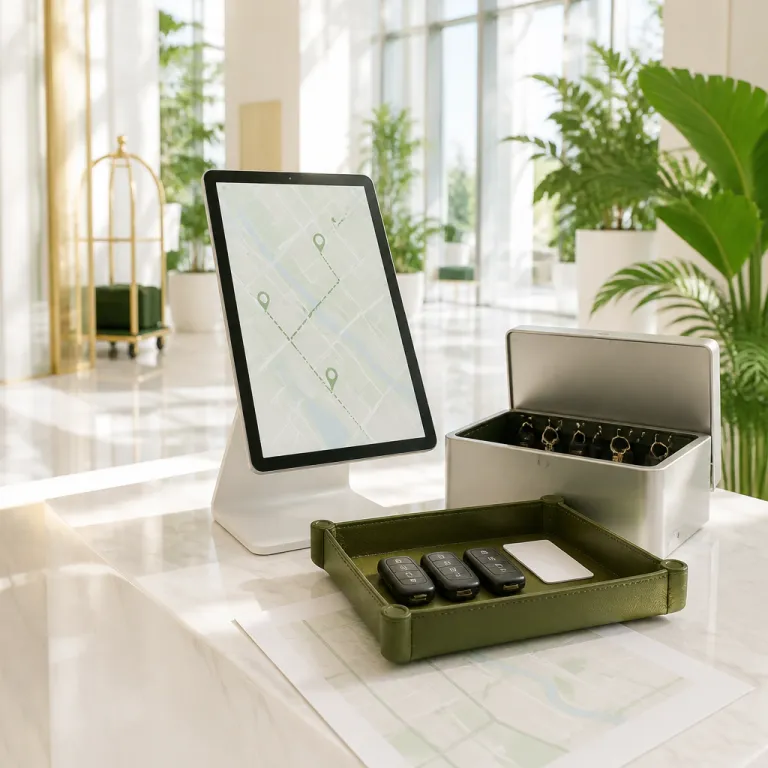
Hotel ride booking platform integration: convenience that quietly shifts power
The new wave of hotel ride booking platform integration looks deceptively simple. A guest taps a button in the property management app, a car appears in real time, and the fare posts directly to the folio without friction. Behind that elegant ride booking screen, however, the balance of power between hotel, platform, and guest will quietly move for the next decade.
The partnership between the Mews platform and Uber is the clearest signal of this shift, embedding ride booking, real time tracking, and integrated billing inside the Mews operating system that already runs thousands of hotels. For a hotel executive, this feels like textbook hotel tech progress, because the same operating system that orchestrates housekeeping, payments, and property management now extends to airport transfers and city rides. Yet the strategic question is whether this form of hotel ride booking platform integration strengthens the hotel’s mobility strategy or simply deepens dependency on a single ride hailing platform.
Most hotels already see that guests spend meaningful amounts on transportation during each stay. Industry reporting from travel management companies and card issuers indicates that a typical guest will spend around 50 US dollars per stay on ground transport, and one operator notes that roughly 80 percent of guests use third party services such as Uber rides instead of hotel shuttles. When hotels let those rides flow only through external apps, they lose both ancillary revenue and visibility on the guest journey, while the ride booking platform quietly accumulates data, loyalty, and pricing power.
From PMS integration to mobility ownership
For hoteliers, the operational upside of a native ride booking button inside the management system is undeniable. Front desk teams can arrange Uber rides directly from the PMS, charge them to the room, and reassure guests with real time vehicle tracking that reduces lobby congestion. The Mews–Uber collaboration effectively turns the PMS into a mobility operating system, where ride booking sits alongside check in, late checkout, and payment automation.
Yet this same integration cements Uber for Business as the default mobility layer for thousands of hotels, especially when hotels–Uber partnerships are marketed as the effortless standard. When a hotel relies on one platform for every airport transfer and city ride, the guest experience becomes subtly co branded, and the hotel brand recedes behind the ride hailing app. Over time, the guest may associate the smooth arrival less with the hotel and more with the platform that sent the push notification and loyalty points.
There is a historical echo here that many hotel group executives remember from the early days of online travel agencies. When OTAs embedded booking widgets directly on hotel websites, hotels gained incremental travel demand but lost margin, rate integrity, and direct guest relationships. The risk is that hotel ride booking platform integration inside the PMS becomes the mobility equivalent of that trade, where the property management system is convenient but the ride booking platform quietly owns the guest data and the primary customer relationship.
Why the interface, not just the integration, matters
The real strategic asset in this new landscape is not the API connection between Mews and Uber, but the interface that guests and staff actually touch. If the ride booking journey always starts and ends inside the Uber app, then Uber for Business in EMEA owns the mobility relationship, even when the ride was triggered from the PMS. If the guest instead books through a hotel branded app or web interface that aggregates multiple mobility providers, the hotel retains the primary relationship and can steer demand intelligently.
Hotel tech leaders should therefore separate two concepts that are often blurred in vendor pitches. Integration means the management system can send and receive ride booking data in real time, while interface ownership means the hotel controls the screen, the messaging, and the data model that frames the guest journey. A hotel can integrate deeply with Uber rides, taxis, and local mobility services while still ensuring that the guest always starts with the hotel app, not with a third party platform.
For airlines, rail operators, and transfer platforms that already manage complex mobility flows, this distinction is familiar. They know that the brand that owns the booking interface also owns the upsell, the disruption management, and the loyalty narrative, even when the underlying transport is operated by partners. Hotels should apply the same discipline to ride booking, treating the interface as a core asset of hospitality rather than a convenience feature delegated to whichever app offers the fastest integration.
The Mews–Uber model: operational win, relationship risk
To understand the stakes, look closely at how the Mews–Uber model reshapes daily operations. A front office agent can now open the Mews platform, select a guest profile, and trigger Uber rides directly from the property management screen in seconds. The fare posts automatically to the management system, the guest receives trip details, and the hotel avoids manual reconciliation or paper vouchers.
For busy urban hotels, this is a genuine productivity gain, especially when late night arrivals and early morning airport transfers stack up at the front desk. The Mews operating environment already acts as a hotel operating system, so extending it to ride booking feels like a natural evolution of hotel ride booking platform integration. Staff no longer juggle multiple apps, guests no longer wait for a concierge to call a car, and finance teams see clean, itemized mobility charges in the property management ledger.
Yet the same flow means that every ride, from airport to restaurant, is mediated by Uber for Business rather than by the hotel’s own mobility layer. The guest may tap a button in a hotel app or speak to a concierge, but the underlying relationship, data, and pricing logic sit with the ride hailing company. Over time, this can erode the hotel’s ability to negotiate, differentiate, and personalize mobility services across its portfolio.
Data gravity and the guest journey
Data gravity is the quiet force behind this shift, pulling value toward whichever platform aggregates the most complete picture of the guest journey. When every ride booking flows through Uber, the company learns when guests land, how far they travel, which neighborhoods they visit, and how often they return to the same hotel. That data is immensely valuable for pricing, product design, and cross selling, but it largely remains outside the hotel’s property management environment.
By contrast, a hotel owned mobility interface can log the same ride booking events inside its own management system, even when the underlying ride is fulfilled by Uber rides, taxis, or local mobility partners. The hotel can then correlate transport patterns with room type, rate code, ancillary spend, and loyalty tier, building a richer view of the guest experience. This is the foundation for targeted offers such as bundled airport transfers, late checkout tied to flight delays, or EV shuttle options promoted to high value segments.
For travel managers and corporate buyers, this distinction matters because they increasingly expect consolidated reporting across air, rail, hotel, and ground transport. If the hotel cedes mobility data entirely to external apps, it becomes harder to deliver the integrated dashboards and duty of care reporting that corporate clients demand. A hotel ride booking platform integration that keeps data within the hotel’s management system is better positioned to support these business requirements.
Learning from OTA history before repeating it
The OTA analogy is not a perfect one, but it is instructive for hotel leaders who lived through the first wave of digital distribution. When hotels allowed OTAs to dominate the booking interface, they gained occupancy but lost rate control and direct guest relationships, and clawing back that ground required years of investment in brand.com and loyalty. The same pattern could repeat in mobility if hotels let ride hailing platforms become the default interface for every arrival and departure.
There is another path, where hotels integrate deeply with Uber for Business and other providers while still insisting that the guest starts and ends their mobility journey inside a hotel controlled interface. In this model, the PMS and management system remain the operational backbone, but the guest facing app, web portal, or kiosk is branded, curated, and data rich. The ride hailing platforms become suppliers inside a hotel centric mobility ecosystem, not the other way around.
For mobility partners such as airlines, rail operators, and transfer platforms, this approach also creates cleaner collaboration opportunities. They can plug into a hotel owned mobility layer that respects data sharing agreements, supports multi modal itineraries, and aligns with corporate travel policies, rather than negotiating separately with each ride hailing app. Articles on seamless drive planning, such as guidance on planning the drive to Las Vegas from Phoenix for seamless hotel access, show how ground transport can be orchestrated as part of a broader journey rather than as an isolated ride.
Building a hotel owned mobility layer on top of integrated platforms
Owning the ride booking interface does not mean rejecting integrations with Uber or with the Mews platform. It means designing a hotel ride booking platform integration where the hotel app, website, or kiosk orchestrates multiple providers behind a single, branded mobility screen. The guest sees one coherent experience, while the management system routes each request to Uber rides, local taxis, EV shuttles, or rail connectors based on rules that the hotel controls.
From a tech architecture perspective, this requires treating the PMS and property management tools as the core operating system, and layering a mobility orchestration service on top. That service can connect to Mews–Uber integrations, to other ride hailing APIs, and to transfer platforms, while still exposing a unified interface to guests and staff. The result is a flexible management system that can adapt as mobility markets evolve, without forcing the hotel to redesign its guest journey every time a new provider enters or exits a city.
For hospitality groups with strong loyalty programs, this mobility layer becomes another lever for differentiation and retention. They can offer status based perks such as priority pick up zones, bundled airport transfers, or EV charging access, all surfaced inside the same app that manages room keys and on property services. As explored in analyses of embedded mobility, such as the argument that embedding mobility inside your guest app beats a standalone transport platform, the strategic advantage lies in making transport feel like a native part of hospitality.
Designing the guest journey, not just the ride
When hotels design their own mobility interface, they can choreograph the entire guest journey rather than just the last kilometre. A pre arrival email can invite the guest to pre book airport transfers, with options for shared shuttles, private cars, or EV rides that align with sustainability commitments. The same interface can then surface local mobility options during the stay, from bike sharing to late night ride booking, all tied back to the room folio or corporate account.
For travel managers, this approach simplifies policy compliance and reporting, because the hotel can tag each ride booking with cost centres, traveller profiles, and duty of care flags. The management system can then feed consolidated data back to corporate travel tools, aligning hotel mobility with air and rail reporting. This is particularly valuable for multinational clients who expect consistent mobility standards across regions, even when local ride hailing markets are fragmented.
Airlines and rail operators can also plug into this hotel owned mobility layer to create smoother intermodal experiences. A rail operator might coordinate with a hotel group to offer guaranteed late check in when trains are delayed, with ride booking automatically adjusted to new arrival times. An airline could bundle hotel transfers into premium fare families, with the hotel app handling the last mile while still respecting the airline’s service standards.
Aligning incentives across the mobility ecosystem
For mobility platforms and transfer operators, a hotel controlled interface does not have to be a threat. It can be a distribution channel that respects brand identity while still delivering volume, predictable demand, and cleaner data sharing. The key is to structure partnerships where the hotel’s property management and operating system remain the source of truth for guest identity and preferences.
Ride hailing companies such as Uber for Business can still benefit from deep integrations with PMS vendors like Mews, especially when those integrations reduce friction for drivers and guests. However, they should recognise that hotels need to maintain control over how mobility is presented, priced, and bundled within the broader hospitality experience. A balanced model allows the ride platform to focus on fleet optimisation and pricing, while the hotel focuses on service design and guest relationship management.
For transfer platforms and local mobility operators, aligning with hotel owned interfaces can also unlock new segments. They can be positioned as premium or sustainable options within the hotel app, rather than competing for attention in a crowded marketplace of generic mobility apps. This creates room for differentiated offerings, such as EV shuttles that charge while guests dine, or drivers trained in specific brand service standards.
Strategic governance: who at the hotel group owns mobility decisions ?
Owning the ride booking interface is not just a tech decision, it is a governance question for hotel groups and their partners. Someone at the corporate level must decide whether mobility sits under distribution, operations, guest experience, or a dedicated mobility and transport function. Without clear ownership, hotel ride booking platform integration risks becoming a series of tactical pilots rather than a coherent strategy.
For large hotel groups, the logical home is often a cross functional team that spans digital, operations, and commercial leadership. This team can set standards for how the Mews platform, Uber for Business, and other providers plug into the property management environment, while also defining which data stays on property and which can be shared. They can also coordinate with airlines, rail operators, and corporate travel managers to ensure that hotel mobility policies align with broader travel programmes.
Smaller hotels and independent properties may not have the same organisational depth, but they can still apply the same principles. They can choose PMS vendors and ride booking partners that support white label interfaces, data portability, and multi provider aggregation, rather than locking them into a single platform. They can also lean on industry guidance and benchmarks to evaluate whether a given integration strengthens or weakens their control over the guest journey.
Metrics that matter for mobility ownership
To manage mobility strategically, hotel leaders need clear metrics that go beyond ride volume and commission levels. They should track the share of rides booked through hotel controlled interfaces versus external apps, the incremental revenue per stay from mobility services, and the impact on guest satisfaction scores. They should also monitor how mobility data enriches their understanding of guest behaviour, from arrival patterns to neighbourhood preferences.
Industry data on digital distribution already suggests that hotels can save around ten percent in commissions when they shift bookings from intermediaries to direct channels, and similar dynamics apply to ride booking. When hotels own the interface, they can negotiate better terms with mobility partners, bundle services creatively, and capture more of the value that guests are already willing to spend on transport. Over time, this can turn mobility from a cost centre into a meaningful contributor to ancillary revenue and loyalty.
For mobility partners, transparent metrics also build trust and align incentives. When a ride hailing company can see how hotel driven demand improves driver utilisation, and when a hotel can see how reliable service improves guest satisfaction, both sides have a basis for long term collaboration. This is the kind of data driven partnership that airlines, rail operators, and corporate travel managers already expect in other parts of the travel ecosystem.
Embedding mobility into the broader hospitality strategy
Mobility should sit alongside EV charging, parking, and local transport partnerships as part of a holistic hospitality strategy. Articles on premium traveller behaviour, such as analyses of the EV guest who spends more on property, show how transport amenities can influence both booking decisions and on property spend. The same logic applies to ride booking, where a seamless, branded mobility experience can tip the scales for high value guests choosing between comparable hotels.
For airlines and rail operators, aligning with hotel owned mobility interfaces can also enhance their own premium propositions. A business class ticket that includes a guaranteed, hotel coordinated transfer feels different from a voucher for a generic ride hailing app, because the hotel stands behind the service. This kind of integrated offer requires that the hotel, not the ride platform, controls the interface and the promise made to the traveller.
As hotels, mobility platforms, and travel managers refine their strategies, one principle should guide every decision about integrations and partnerships. The ride booking interface belongs to the hotel, not to the platform, because the last kilometre is not just a transfer but the first and last impression of hospitality. When hotels own that moment, they own the relationship that follows.
Hotel embedded ride platforms: leadership, personalities, and power dynamics
Behind every major hotel ride booking platform integration sit real executives making strategic bets about where value will accrue. In the case of the Mews–Uber collaboration, leaders such as Christophe Peymirat, who has held senior roles in Uber for Business in EMEA, and Mike Coscetta, a former global head of sales at Uber for Business, symbolise how senior figures frame mobility as a growth lever. On the Mews side, the role of the company president is frequently invoked when analysts discuss how a PMS can evolve into a full operating system for hospitality.
These leadership narratives matter because they shape how hotels perceive the trade off between convenience and control. When a president at Mews describes the PMS as a hotel operating system, it encourages hotels to route more guest journey touchpoints, including ride booking, through that single platform. When an Uber for Business EMEA leader such as Christophe Peymirat or a commercial strategist like Mike Coscetta talks about hotels–Uber partnerships, it signals that ride hailing companies see hotels as a core distribution channel, not just another enterprise client.
For hotel groups, the question is whether their own C suite treats mobility with the same strategic weight. If mobility decisions are left to mid level operations teams, the default will often be to accept the easiest integration offered by the PMS or by Uber for Business, even if it means ceding interface control. When mobility is elevated to the same level as distribution, loyalty, and digital experience, hotel leaders are more likely to insist on owning the guest facing layer while still embracing deep integrations.
How leadership choices shape hotel tech architectures
Leadership attitudes toward mobility directly influence how hotel tech stacks evolve over time. A C suite that views the PMS as the unquestioned operating system may push for every new capability, from ride booking to spa reservations, to be delivered as a native module inside that system. This can create short term simplicity but long term rigidity, especially when new mobility providers or regulations emerge in key markets.
By contrast, leaders who see the PMS as one component within a broader management system are more likely to invest in modular architectures. They might still use direct Mews integrations for core property management, while layering a separate mobility orchestration service that can talk to Mews–Uber connections, other ride hailing APIs, and local transport platforms. This approach preserves the ability to switch providers, add new services, and maintain a consistent guest interface even as the underlying mobility landscape shifts.
For airlines, rail operators, and transfer platforms, these architectural choices determine how easily they can plug into hotel systems. A hotel that treats mobility as a first class citizen in its tech roadmap is more likely to support complex intermodal journeys, shared data standards, and joint service recovery protocols. A hotel that treats mobility as a minor PMS feature will struggle to deliver the level of integration that corporate travel managers increasingly expect.
Expert perspectives and industry benchmarks
Industry reference material on hotel owned ride booking interfaces consistently highlights three core objectives. Hotels seek to enhance the guest experience, increase revenue, and maintain brand control when they develop or license their own mobility platforms. They also report that hotels offering direct booking platforms can number in the hundreds globally, with average commission savings around ten percent when they shift transactions from intermediaries to direct channels.
These findings align with practical guidance often given to travellers and corporate buyers. They are encouraged to verify ride booking options with the hotel, compare hotel services with external platforms, and check for exclusive hotel offers that may not appear in generic mobility apps. This advice reflects a broader industry view that hotel owned interfaces can offer tailored services and potential cost savings, while still leveraging the operational strengths of large ride hailing platforms.
As one concise industry FAQ puts it, “Why do hotels prefer their own ride booking interfaces ? To control service quality and increase revenue. How do hotel owned interfaces benefit guests ? Offer tailored services and potential cost savings. Are hotel ride booking services reliable ? Generally, yes ; they aim to enhance guest experience.” For hotel groups, airlines, rail operators, and mobility platforms, these statements are not marketing slogans but operational benchmarks against which future integrations should be measured.
Key figures on hotel controlled ride booking and mobility
- Hotels offering direct ride booking platforms are estimated at around 500 properties worldwide, according to industry reports that track hotel owned mobility initiatives across multiple regions and chain scales.
- Average commission savings for hotels that shift transactions from intermediaries to direct booking channels, including ride booking, are reported at approximately 10 percent in financial analyses comparing distribution and ancillary revenue models.
- Guests spend roughly 50 US dollars per stay on transportation on average, based on aggregated data from travel expense platforms and hospitality benchmarking studies that include ride hailing, taxis, and shuttle services across urban and resort markets.
- One operator cited in sector coverage notes that about 80 percent of guests use third party transport services rather than hotel organised options, highlighting the scale of mobility spend currently flowing through external apps.
- Global PMS and ride hailing integrations now reach tens of thousands of hotels across more than 80 countries, illustrating how quickly hotel ride booking platform integration can scale once embedded in core property management systems.