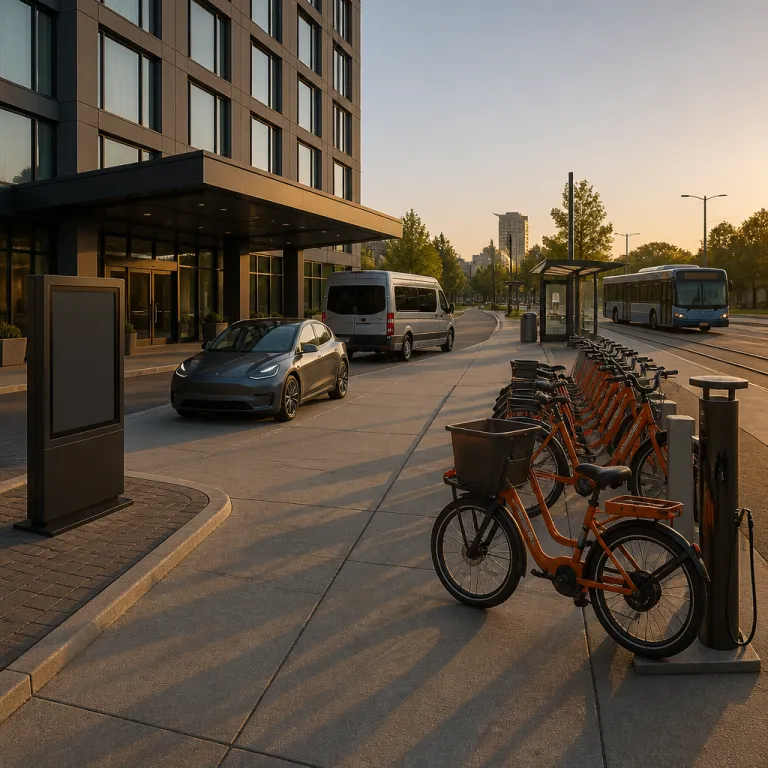
From airport curb to guest room: why a hotel MaaS guest mobility pass changes the arrival game
For a modern hotel, the journey now starts at the airport curb, not at the front desk. When a hotel MaaS guest mobility pass links airport rail, urban transport, and last mile rides, the guest feels the property’s service long before seeing the lobby. That shift turns transport from a fragmented cost center into a branded mobility experience that frames every day of the duration of stay.
Mobility as a Service integrates various transport modes into a single service. In practice, that means a guest can use one digital card or QR code as a mobility ticket for public transport, bike share, and selected ride hail in the city area, with the hotel positioned as the orchestrator rather than a passive referrer. For airlines, rail operators, and plateformes de transfert, this same hotel MaaS guest mobility pass becomes the connective tissue that keeps the traveler inside a curated mobility ecosystem from gate to guest room.
Public transit agencies, private mobility companies, and technology platforms already bundle rides, bikes, and transit into unified subscriptions in several European corridors. Trials such as the Whim MaaS pilot in Helsinki and regional programs in Austria have shown a double digit increase in ridership when MaaS bundles are deployed, and a measurable uplift in ancillary revenue for partners that integrate the pass into their booking flows.1 For hoteliers, that means the ability to sell not just a room but a full guest mobility package that includes public transit, airport rail, and even a pre booked shuttle, all under one transparent mobility fee.
In Salzburg, the model is no longer theoretical. The province of Salzburg and Salzburg Verkehr have built a framework where a mobility ticket can be tied to a Salzburg guest card, giving access to regional public transport and curated cultural offers across the province Salzburg.2 Since 2021, the “Salzburger Verkehrsverbund” has reported steady growth in guest card usage on regional lines, with some routes seeing more than 10 % of leisure ridership linked to these integrated tickets. A hotel in the city center can now receive guests with a pre activated transport ticket that covers the airport trolleybus, regional trains, and local buses, allowing travelers to explore city neighborhoods without friction. That same hotel can position its guest rooms as a basecamp for the wider area, with the integrated mobility pass marketed as the key to the entire province Salzburg rather than just a way to reach the property.
For a 200 room business hotel with a strong meetings segment, the implications are direct. Instead of emailing static directions, the sales team can book guided mobility for conference delegates, bundling public transit and first ride credits into the group rate. Airlines and railways feeding that city can co brand the hotel MaaS guest mobility pass as part of their own premium cabin or loyalty tiers, turning what used to be a generic transport service into a differentiated, revenue generating perk that follows the guest from check in to check out.
How MaaS bundles are priced and structured for hotels and their partners
Behind the elegant guest experience, MaaS bundles are built on clear pricing logic and coverage rules. A typical hotel MaaS guest mobility pass combines unlimited public transport in the city area with a defined number of ride hail or car share credits per day, plus optional airport transfers. The art for hoteliers, airlines, and travel managers lies in matching that structure to the real mobility patterns of their guests, rather than copying a generic city pass.
Most European MaaS platforms use subscription style models, where a mobility fee is charged per day or per stay, and the platform then settles with public transit agencies and private mobility providers. For hotels, that opens three main options: absorb the mobility fee as a value add, pass it through at cost, or mark it up as an ancillary product. Data from early MaaS trials, including Mobility for Travel’s synthesis of European pilots, indicates that “Increase in ridership with MaaS bundles” reached around 15 % and “Revenue growth from MaaS packages” reached approximately 10 %, which gives revenue managers a starting benchmark when modelling their own hotel MaaS guest mobility pass.3
Guest pass design is where hospitality can add real nuance. A city break property might offer a two day mobility ticket that aligns with weekend stays, while a resort in the province Salzburg could tie the pass to the full duration of stay, including regional buses and trains that connect hiking areas. Business hotels near a financial center may instead focus on weekday coverage, bundling public transit and a limited number of premium ride credits for late night returns from client dining. In every case, the hotel MaaS guest mobility pass should be framed as a simple promise: “your transport in this city is handled”.
Pricing strategy needs to reflect both perceived value and operational cost. Guests will pay a premium when the pass clearly replaces multiple separate tickets, airport transfers, and ad hoc taxis, especially if the hotel communicates the total public transit value in the pre stay email. Travel managers, by contrast, look for predictability; a flat mobility fee per guest per day simplifies expense reporting and duty of care, particularly when the hotel MaaS guest mobility pass is integrated into corporate booking tools. For detailed benchmarks on what high performing properties already spend on guest transport per stay, industry leaders can consult this analysis from Mobility for Travel on guest transportation cost benchmarks.4
When hotels, airlines, and rail operators align their incentives, MaaS bundles become a loyalty engine rather than a cost line. A carrier can offer the hotel MaaS guest mobility pass as a tier benefit, while the hotel tracks incremental room nights and ancillary spend from those guests. Over time, the data allows partners to refine the mix of public transport, ride hail, and micro mobility in each pass, ensuring that the mobility ticket remains profitable while still feeling generous enough that guests instinctively book the mobility included rate plan.
For loyalty strategists, this is where transport led retention becomes tangible. By linking the hotel MaaS guest mobility pass to points accrual and targeted offers, brands can create a compounding effect where every ride, tram, or bike trip reinforces the relationship with the hotel and its airline or rail partners. Detailed frameworks for this kind of transport led loyalty strategy are outlined in Mobility for Travel’s guide on building a transport led loyalty strategy, which many revenue and marketing teams now use as a reference when designing their own guest mobility products.5
Designing the hotel MaaS guest mobility pass as a branded service layer
Once the commercial model is set, the next challenge is service design. A hotel MaaS guest mobility pass only becomes a differentiator when it feels like a natural extension of the hotel’s brand, not a generic city card handed over at check in. That means aligning every touchpoint, from pre arrival messaging to in room information, with the same narrative: “we take care of your mobility so you can focus on your stay”.
Start with the booking journey. When guests book a room on the hotel website or through a corporate channel, the mobility included option should be presented as a clear, premium choice, not a confusing add on. Airlines and railways can mirror this by offering a co branded hotel MaaS guest mobility pass during seat selection or after ticket purchase, positioning it as the logical next step after choosing the flight or train, especially for Salzburg guest segments arriving into the province Salzburg for events or festivals.
On arrival, the physical and digital artefacts matter. Some properties issue a sleek contactless card that doubles as room key and mobility ticket, while others rely on QR codes in the hotel app that unlock public transport, bike share, and partner ride hail. In Salzburg, several hotels already integrate the Salzburg Verkehr systems so that a Salzburg guest can use the same credential for regional buses and trains, then tap into partner museums or dining offers in the city center, turning the hotel MaaS guest mobility pass into a lifestyle assistant rather than a simple transport ticket.
Inside the property, the pass should be woven into the guest experience. Front office teams can explain how to explore city districts using public transit, highlighting the nearest tram stop or bus line on a simple map in the guest room and in the business center. Concierge staff can book guided excursions that include transport services, such as a wine tour where the coach is covered by the mobility ticket and the return leg uses public transit, with the hotel MaaS guest mobility pass handling the entire chain. When guests head to private dining events or the fitness center in partner venues across the city area, the same pass should cover their late night return, reinforcing the sense of a seamless, safe network.
Partnerships with mobility brands can deepen the story. A hotel with a royal heritage might brand its premium ride hail tier as a “royal transfer”, while a design led property could focus on e bikes and trams as the most sustainable way to explore city neighborhoods. Cross branding with airlines, rail operators, and platforms like Uber or local ride hail services can be anchored in real loyalty bridges, as seen in initiatives such as Accor’s collaboration with Uber, documented by Mobility for Travel in its case study on linking hotel loyalty to every ride.6 In each case, the hotel MaaS guest mobility pass becomes the visible symbol of a wider mobility partnership strategy that guests can feel every time they move through the city.
Technology, operations, and training behind a seamless guest mobility experience
Elegant guest facing design only works when the technology stack and operations are equally robust. A hotel MaaS guest mobility pass depends on reliable integration between the hotel’s property management system, the MaaS platform, and the various transport operators that actually move the guest. Without that backbone, even the best branded card or app will fail at the moment of boarding a tram or scanning into a bike dock.
Most MaaS implementations rely on mobile applications, secure payment gateways, and data analytics platforms that sit between public transit agencies, private mobility providers, and the hotel. The integrator handles tokenization of the mobility ticket, settlement of the mobility fee, and real time validation when a guest taps into public transport or books a ride. For airlines, railways, and transfer platforms, the same API connections can extend the hotel MaaS guest mobility pass into their own apps, allowing a traveler to move from boarding pass to mobility pass without juggling multiple logins.
Operationally, the front office and concierge teams carry much of the weight. Staff need clear scripts on how to explain the hotel MaaS guest mobility pass, including which zones of the city area are covered, how many ride credits are included per day, and what happens if a guest loses their card or phone. Training should also cover edge cases: late night arrivals when public transit is limited, guests with reduced mobility who need adapted transport services, or business travelers rushing from the guest room to a meeting in the financial center with no time to decode a new app.
Back of house, revenue management and finance teams must align on how to track the performance of the pass. That means tagging bookings that include the hotel MaaS guest mobility pass, monitoring usage data from the MaaS platform, and comparing ancillary revenue against the cost of the mobility fee paid to transport partners. Over time, this allows the hotel to refine the mix of public transit, ride hail, and micro mobility in each package, perhaps offering a free charge for EV shuttles during off peak hours or adding a special late night bus option for guests returning from dining districts.
For properties in Salzburg and similar markets, integration with local operators like Salzburg Verkehr is critical. Hotels must ensure that the mobility ticket encoded on the guest’s card or app is recognized across the province Salzburg network, from airport buses to regional trains serving ski areas and lakeside towns. When this works, a Salzburg guest can step out of the guest room, tap into public transport, attend a meeting in the business center of a nearby corporate hub, then head to private dining in the old town, all on the same hotel MaaS guest mobility pass without ever queuing for a separate transport ticket.
To make this operationally manageable, many general managers use a simple internal checklist: (1) confirm PMS and MaaS platform integration in a test environment, (2) train front office and concierge teams with clear FAQs, (3) define escalation paths for lost passes or app failures, (4) set up weekly reporting on usage and cost, and (5) review guest feedback monthly to refine coverage rules.
Measuring profitability and long term impact of mobility partnerships
For a general manager, the key question is simple: does a hotel MaaS guest mobility pass actually make money while improving guest satisfaction. Answering that requires a disciplined approach to measurement, not just anecdotal feedback from the front desk. The good news is that MaaS platforms and transport partners now provide enough data to build a clear profitability picture over time.
Start with direct financial metrics. Track incremental revenue from mobility included room packages, commissions on external bookings where guests book guided tours that use the pass, and any revenue share from partners such as ride hail or bike share operators. Against that, set the total mobility fee paid to public transit agencies, private mobility companies, and the technology platform, plus any operational costs such as staff training or marketing the hotel MaaS guest mobility pass.
Then layer in guest behavior and satisfaction. Monitor whether guests with a hotel MaaS guest mobility pass stay longer, use more on property dining, or book higher category guest rooms compared with those on standard rates. In Salzburg, for example, properties that promote the ability to explore city districts and the wider province Salzburg using a single mobility ticket often see higher uptake of spa, fitness center, and private dining services, because guests feel confident they can return to the hotel easily via public transit or partner shuttles.
Partnership impact is the third dimension. Airlines and rail operators will look at whether the hotel MaaS guest mobility pass drives higher attachment of hotel bookings to their transport tickets, or improves Net Promoter Scores for end to end journeys. Public transit agencies and Salzburg Verkehr will focus on ridership and revenue stability, especially in contexts where MaaS bundles are used to counter declining public transport usage. For hotels, the strategic value lies in being at the center of this ecosystem, positioned as the place where the guest’s entire mobility experience is coordinated.
Finally, consider the long term brand effect. A hotel that reliably receives guests with a ready to use mobility ticket, clear instructions on how to explore city neighborhoods, and a simple promise that transport is handled, builds a reputation that goes beyond room size or breakfast quality. Over several years, that can translate into higher repeat rates, stronger corporate contracts, and a more resilient ancillary revenue base anchored in the hotel MaaS guest mobility pass. As MaaS adoption grows and public private partnerships deepen, the properties that treat mobility as a core part of their service, not an afterthought, will be the ones that turn transport from a cost into a competitive advantage.
To keep this measurable, many hotel managers track a focused set of KPIs: (1) attachment rate of mobility included packages, (2) average ancillary revenue per guest with a pass, (3) net margin after mobility fees, (4) change in average length of stay for pass users, and (5) satisfaction scores related to transport in post stay surveys. Together, these indicators show whether the mobility program is truly strengthening both profitability and guest loyalty.
FAQ
What is a hotel MaaS guest mobility pass in practical terms ?
A hotel MaaS guest mobility pass is a bundled mobility product that gives hotel guests access to multiple transport modes with a single credential. In most European cities, this means unlimited public transport within a defined zone, plus credits for ride hail, car share, or bike share. The pass is usually linked to the duration of stay and can be delivered as a physical card, a QR code, or an app based ticket.
How do MaaS packages benefit hotel guests and corporate travel programs ?
MaaS packages simplify the transport experience by replacing multiple separate tickets and receipts with one integrated pass. Guests gain predictable, often lower, mobility costs and a clearer way to explore city districts without worrying about fare rules or payment methods. Corporate travel managers benefit from a fixed mobility fee per day or per stay, which improves budget control and duty of care reporting.
Are MaaS based guest mobility passes available in every city ?
Availability varies by destination and the maturity of local public transit agencies and mobility platforms. Some regions, such as the province Salzburg with Salzburg Verkehr, already offer integrated mobility tickets that hotels can embed into their guest experience. In other cities, hotels may need to work with private mobility companies and technology providers to build a custom hotel MaaS guest mobility pass that combines public transit where possible with ride hail and shuttle services.
What operational changes does a hotel need to implement to support a MaaS pass ?
Hotels need to integrate their booking and property management systems with the chosen MaaS platform, so that passes can be issued, activated, and deactivated automatically. Front office and concierge teams require training on how the mobility ticket works, which transport services are included, and how to assist guests with edge cases such as late arrivals or lost phones. Revenue management and finance teams must also adapt their reporting to track the profitability of the hotel MaaS guest mobility pass as a distinct product line.
How should hotels choose the right partners for a guest mobility program ?
Effective programs usually involve a mix of public transit agencies, private mobility companies, and a technology platform that can integrate services into a single pass. Hotels should evaluate partners based on network coverage in the city area, reliability of operations, data sharing capabilities, and alignment with the property’s brand positioning. For airport and rail connected properties, coordination with airlines, rail operators, and transfer platforms is also essential to ensure the hotel MaaS guest mobility pass covers the full journey from arrival to check out.
Sources: 1. Whim MaaS pilot reporting for Helsinki region; 2. Salzburger Verkehrsverbund guest card and mobility ticket usage summaries; 3–5. Mobility for Travel analyses of European MaaS pilots, guest transportation cost benchmarks, and transport led loyalty strategy; 6. Mobility for Travel case study on Accor–Uber loyalty collaboration.