Why a V4 sustainable mobility pipeline to the hotel matters now
Airlines, rail operators, and hoteliers are converging around one shared priority. A V4 sustainable mobility pipeline to the hotel is emerging as a practical framework that aligns operational efficiency, guest experience, and climate objectives. This end-to-end chain connects air and rail transport with first and last kilometre solutions, then with hotel operations, in one measurable and accountable journey.
For compagnies aériennes and ferroviaires, this V4 pipeline approach reframes the trip as a single multimodal product rather than fragmented legs. It allows them to integrate low emission airport rail links, shared shuttles, and micro mobility into bundled offers that can be priced, marketed, and reported as one coherent service. Hoteliers and mobility platforms gain a structured way to plug into this chain, ensuring that transfers to the hotel are not an afterthought but a core part of the sustainable travel promise.
Travel managers see this integrated mobility pipeline as a governance tool that can standardize policies across markets. Instead of negotiating isolated transfer contracts, they can define a hierarchy of preferred modes, from high speed rail to electric shuttles, and embed it into booking tools and duty of care frameworks. For mobility actors and transfer platforms, the model clarifies roles, data flows, and performance indicators, which is essential when corporate clients demand transparent emissions reporting and reliable service levels.
- Align air, rail, and hotel transfers into one low carbon journey
- Standardize policies and reporting for corporate travel programs
- Improve guest experience while cutting door-to-hotel emissions
Designing sustainability initiatives across air and rail within the V4 pipeline
Building a credible V4 sustainable mobility pipeline starts with air and rail, because these modes anchor most long distance itineraries. Airlines are expanding sustainable aviation fuel (SAF) programs and modernizing fleets, while rail operators invest in high speed corridors and electrification to shift demand from short haul flights. The challenge for both is to translate these investments into integrated offers that visibly reduce the footprint of the full door to hotel journey.
Joint air rail products are a powerful lever when embedded in a V4 pipeline architecture. Lufthansa and Deutsche Bahn, for example, already sell Rail&Fly tickets that replace feeder flights with rail segments, and similar models exist between Air France and SNCF on key French routes. When these products are linked to hotel transfers and reported as one chain, travel managers can compare emissions scenarios and steer travellers toward the lowest carbon combinations using a single policy rule.
To make this work at scale, stakeholders need harmonized carbon accounting across the pipeline, from aircraft to train to shuttle. Airlines and railways can align their methodologies with standards such as the GHG Protocol and emerging European regulations, then feed consistent data into corporate dashboards and booking tools. For practical guidance on how hospitality players can measure and report their transportation carbon footprint within such a V4 sustainable mobility pipeline, many stakeholders now rely on specialized frameworks such as the ones presented in this dedicated resource on green mobility and carbon footprint reporting for hospitality transport.
Extending the pipeline to first and last kilometre hotel transfers
The most fragile part of any V4 sustainable mobility pipeline is the first and last kilometre, where fragmentation and legacy habits still dominate. Guests often default to private taxis or ride hailing, even when efficient rail links or shared shuttles exist, because information is scattered and incentives are weak. For hoteliers and transfer platforms, this is where sustainability initiatives can most visibly touch the guest experience.
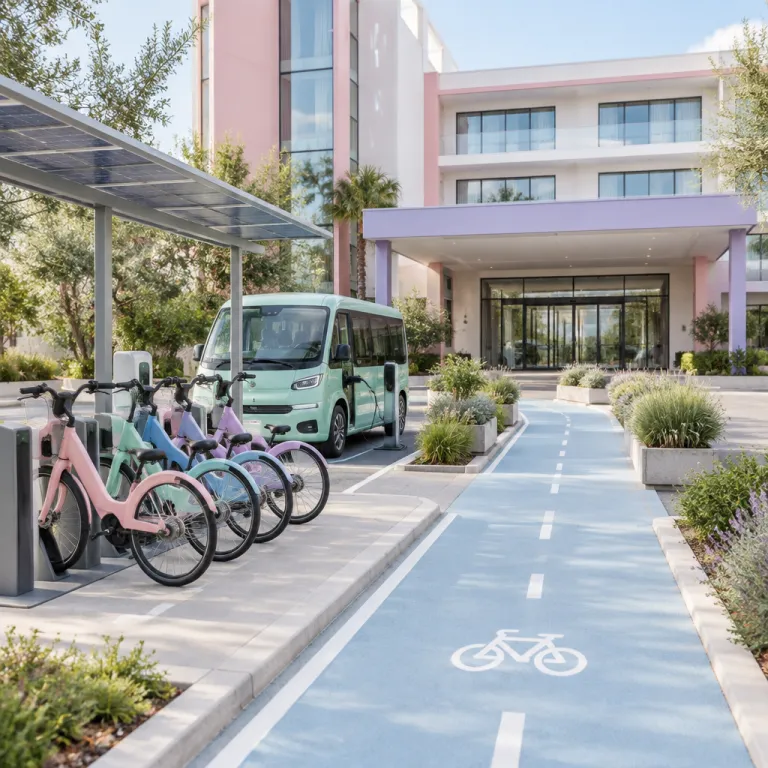
Electric shuttles, demand responsive minibuses, and integrated airport rail tickets can all sit inside a V4 pipeline if they are curated and branded as part of the same journey. A hotel near Amsterdam Schiphol, for instance, can promote the airport train plus a short electric shuttle as its default transfer, rather than a stand alone taxi option. When this is combined with clear emissions comparisons and transparent pricing, travellers are more likely to accept a slightly longer route in exchange for a lower carbon footprint and predictable service.
Transfer platforms and mobility actors can further strengthen the V4 sustainable mobility pipeline by standardizing service quality and data sharing. Service level agreements can include maximum waiting times, guaranteed vehicle types, and accessibility criteria, all reported back to airlines, rail operators, and travel managers. For hospitality stakeholders seeking operational examples of how sustainable transfers can be embedded into guest journeys, case studies on eco friendly transport to hotel and sustainable mobility for hospitality offer concrete reference points.
Data, interoperability, and governance in a V4 mobility pipeline
No V4 sustainable mobility pipeline can function without robust data flows and clear governance between partners. Airlines, railways, mobility platforms, and hotels each hold partial information about the traveller, the itinerary, and the emissions profile. The strategic task is to connect these datasets in ways that respect privacy while enabling real time decision making and accurate reporting.
Interoperable APIs between booking systems, global distribution systems, and mobility platforms allow the V4 pipeline to behave like a single product. When a flight delay occurs, for example, the system can automatically rebook the rail segment and notify the hotel shuttle provider, reducing stress for the traveller and operational friction for partners. Travel managers benefit from consolidated dashboards that show not only costs and punctuality, but also emissions per trip and per supplier, which supports more informed sourcing decisions.
Governance structures should formalize how this multimodal pipeline is managed across markets and seasons. Joint steering committees between compagnies aériennes, ferroviaires, and key hotel groups can set shared targets for modal shift, emissions reduction, and customer satisfaction. Mobility actors and transfer platforms then align their service design and capacity planning with these targets, creating a feedback loop where performance data continuously refines the pipeline.
Guest experience, duty of care, and inclusive mobility
A V4 sustainable mobility pipeline only succeeds if travellers perceive it as safer, smoother, and more intuitive than legacy options. Sustainability alone rarely changes behaviour; convenience, reliability, and perceived value do. That is why guest experience design must sit at the heart of every mobility initiative that connects air, rail, and hotel transfers.
For travel managers, the V4 pipeline is an opportunity to align duty of care with environmental goals. Standardized routes, vetted transfer partners, and real time tracking can reduce risk while also nudging travellers toward lower emission modes. Airlines and rail operators can co brand these multimodal journeys with hotels, turning what used to be a stressful transfer into a curated experience with clear wayfinding, multilingual support, and guaranteed connection times.
Inclusive mobility is another critical dimension of the V4 sustainable mobility pipeline, especially for guests with reduced mobility or specific needs. Accessible vehicles, trained drivers, and step free rail access must be guaranteed across the chain, not just at one node. For operators seeking practical guidance on how to integrate such requirements into everyday operations, resources on seamless and guest centric transport to hotels illustrate how detailed service design can reconcile comfort, safety, and sustainability.
Financing, partnerships, and scaling the V4 pipeline model
Scaling a V4 sustainable mobility pipeline from pilot to network level requires capital, long term partnerships, and clear value sharing. Airlines and railways often carry the heaviest infrastructure costs, while hotels and mobility actors invest in vehicles, charging, and digital tools. Structuring these investments so that each party sees a fair return is essential for durability.
Public policy can accelerate the V4 pipeline by supporting multimodal hubs, integrated ticketing, and low emission zones around airports and major stations. When cities and regions prioritize rail access and shared mobility over private cars, hotel districts become natural extensions of sustainable corridors. This alignment reduces congestion, improves local air quality, and strengthens the business case for electric shuttles, bike sharing, and pedestrian friendly design around properties.
Commercially, joint marketing and loyalty integration can make the V4 sustainable mobility pipeline visible to travellers and corporate buyers. Shared loyalty accrual across air, rail, and hotel segments, bundled corporate contracts, and co branded sustainability reports all reinforce the perception of one coherent product. Over time, the most successful partnerships will be those that treat the pipeline as a living system, continuously adjusting capacity, pricing, and service design in response to data and guest feedback.
Key statistics shaping sustainable mobility to the hotel
- According to the International Energy Agency’s report Aviation (IEA, updated 2022, section “CO2 emissions from aviation”), aviation accounts for roughly 2 percent of global energy-related CO2 emissions, but its share of transport emissions is closer to 12 percent, which makes shifting short haul trips to high speed rail within a V4 sustainable mobility pipeline particularly impactful.
- Eurostat data for the European Union in the publication Energy, transport and environment statistics — 2021 edition (Eurostat, 2021, chapter 4, figure 4.5) show that rail transport emits around 14 grams of CO2 per passenger kilometre on average, compared with more than 150 grams for short haul flights, highlighting the emissions savings available when air rail products replace feeder flights in the pipeline.
- The Global Business Travel Association’s study GBTA BTI™ Outlook – Annual Global Report & Forecast (GBTA, 2022, section on sustainability policies) reports that a growing share of corporate travel programs now include explicit modal shift targets, with some large companies aiming to cut air travel emissions by up to 30 percent over several years by favouring rail and shared mobility, which aligns directly with the objectives of a V4 sustainable mobility pipeline.
- Urban mobility studies from major hubs such as Amsterdam, Zurich, and Copenhagen, including the European Commission’s Urban Mobility Report (latest consolidated edition 2020, case study sections on airport access), indicate that more than 40 percent of hotel guests already arrive by public transport or shared mobility when high quality options are available, suggesting that well designed first and last kilometre solutions can rapidly gain traction within the pipeline.
FAQ about sustainable air and rail mobility to hotels
How does a V4 sustainable mobility pipeline change the role of airlines and railways ?
Airlines and railways move from selling isolated segments to offering integrated door to hotel journeys, which requires deeper collaboration with mobility platforms and hotels. They must share data, align schedules, and co design products that include transfers and emissions reporting. This shift also positions them as strategic partners for corporate travel programs focused on sustainability.
What can hotels do today to join a V4 pipeline en cours ?
Hotels can start by mapping current guest arrival patterns and identifying low emission alternatives for each major origin. They should then formalize partnerships with rail linked shuttles, electric transfer providers, and mobility platforms that can integrate with airline and rail offers. Clear communication on booking pages and pre arrival emails helps position these options as the default choice.
How do travel managers measure the impact of such a pipeline on emissions ?
Travel managers need consistent emissions data from airlines, rail operators, and transfer providers, ideally based on recognized standards. They can then consolidate this information in reporting tools that compare different routing scenarios and track progress against corporate targets. Over time, these insights inform sourcing decisions and policy updates that favour the most efficient combinations.
Are sustainable hotel transfers always more expensive than traditional options ?
Costs vary by market, but shared and rail based solutions are often competitive or cheaper than private taxis, especially during peak periods. When total journey costs are considered, including time savings from avoiding congestion, the business case can be strong. Corporate contracts and volume based agreements can further narrow any remaining price gaps.
How can mobility actors and transfer platforms stand out in this new ecosystem ?
Mobility actors that offer reliable low emission fleets, robust data sharing, and consistent service standards will be preferred partners in a V4 sustainable mobility pipeline. They should invest in API connectivity, transparent emissions reporting, and training for drivers and support staff. Strong performance on punctuality, safety, and accessibility will differentiate them in negotiations with airlines, railways, and hotel groups.