From cost center to curbside profit engine
Urban hotel entrances sit on some of the most valuable mobility real estate in the hospitality industry. Yet most properties still treat curb access, driveways, and parking spaces as operational necessities rather than as structured mobility assets with clear revenue potential. The result is that platforms and mobility operators quietly capture the monetization upside while the hotel absorbs the congestion, the complaints, and the liability.
For revenue and commercial directors, hotel mobility monetization should now sit alongside RevPAR and total revenue per available room as a core strategic lever. When hotels monetize movement, they turn guest arrivals, departures, and in-stay trips into a curated guest experience that also generates measurable revenue based on transparent contracts with mobility partners. This shift helps hotels move from ad hoc transfer desks and unused parking space to a portfolio of mobility products that business travelers, leisure guests, and local users can actually book, rate, and pay for.
The dataset on hotels offering mobility services suggests that only a modest share of properties have formalized this approach, even though “Hotels offering mobility services” already represent a growing minority of the market. Industry reference material is clear on the fundamentals; “What are hotel mobility services? Transportation options provided by hotels.” and “Why do hotels offer mobility services? To enhance guest convenience and revenue.” and “How do hotel mobility services work? Through partnerships and on-site options.” Urban hotel groups that internalize this logic start to treat their front desk, their property management systems, and their loyalty programs as a mobility platform, not just a room allocation engine.
Once mobility is framed as a sellable product, the conversation about guest data and management systems changes. Instead of simply logging a taxi request at the front desk, hotels offer curated options on their own platforms, capture guest data with consent, and use that information to refine pricing, time slots, and capacity in real time. This approach helps hotels boost revenue without adding more rooms, because they finally monetize the movement that already flows through their spaces every day.
For airlines, rail operators, and transfer platforms, this new mindset at the hotel creates a more sophisticated B2B counterpart. Rather than negotiating generic commission deals, mobility actors can co-design revenue-based models that align with hotel mobility monetization objectives and with their own network optimization. The winners will be those who understand that the hotel is no longer just a destination at the end of the journey, but a node in the mobility network with its own pricing power, its own users, and its own data-driven expectations.
Undermonetized assets: curb access, parking structures, and lobby flows
Walk outside any central business district hotel at 08:30 and you will see the problem. Ride-hail vehicles double park, airport shuttles idle, and private transfers circle the block while the front desk team tries to manage guest experiences with little more than radios and goodwill. The hotel pays for the space, the security, and the staff, but the monetization of that movement largely accrues to external platforms.
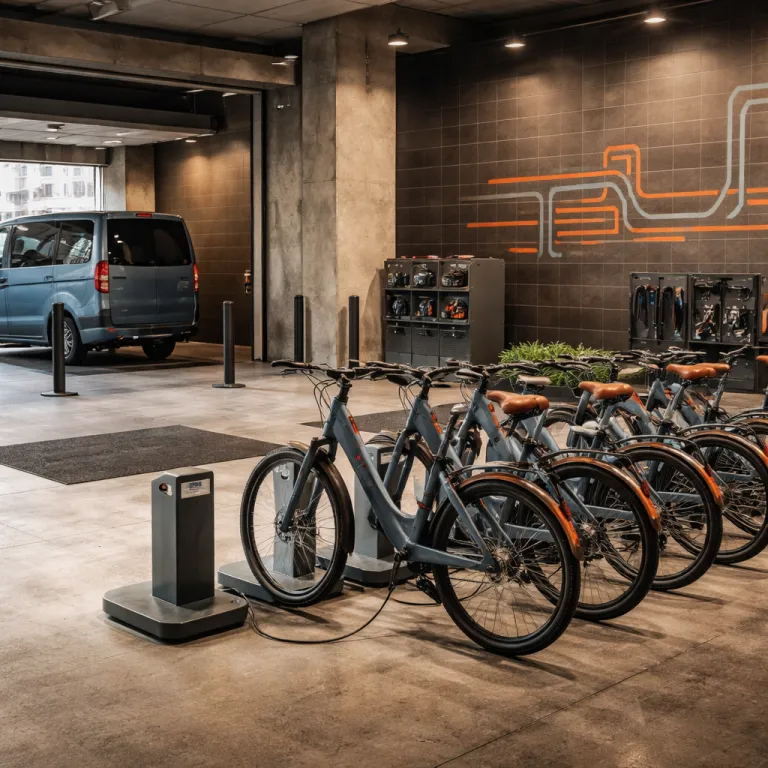
Hotel mobility monetization starts by mapping every movement-related asset on property and around it. Curb access, porte cochère lanes, underground parking spaces, EV charging bays, micromobility docking areas, and even underused meeting rooms that could double as mobility lounges all carry revenue potential when structured as products. For urban hotels with limited rooms but strong location, the ability to sell access to these assets to business travelers, local users, and mobility partners can rival traditional ancillary revenue.
Today, many hotels monetize parking but leave the rest of the mobility value chain untouched. A more advanced strategy treats the hotel as a multi-sided platform where ride-hail companies, airlines, rail operators, and transfer platforms pay for priority access, branded pick-up zones, and data sharing that improves guest satisfaction. The recent move by Uber for Business to offer centralized dashboards for corporate rides illustrates how quickly mobility platforms are professionalizing; if hotels do not respond with their own structured offers, they risk becoming anonymous pick-up points in someone else’s ecosystem.
Distribution dynamics are shifting as well, with mobility platforms edging into traditional hotel territory. The integration of hotel booking into ride-hail ecosystems, as analysed in this piece on what Uber hotel booking means for distribution, underlines a simple truth; if hotels do not actively define how they sell mobility, mobility players will define how they sell hotels. For revenue leaders, that is a strategic warning shot, not a marginal tech story.
Inside the property, lobby flows and meeting spaces also remain underleveraged. A meeting room that sits empty between 10:00 and 15:00 could host airline crew briefings, rail operator shift handovers, or mobility partner training sessions, all contracted on a recurring basis. When hotels monetize these meeting rooms as part of a broader mobility partnership, they transform unused space into predictable revenue, while giving partners a branded, central node in the city’s transport fabric.
To make this work, property management and other management systems must treat mobility bookings like any other inventory. That means allocating time slots for pick-ups, tracking no-shows, and integrating mobility charges into folios in real time, so that guest experiences remain seamless and the hotel business can actually measure the impact. Without that integration, mobility remains a chaotic service function rather than a disciplined revenue line.
Revenue models and MobRevPAR: measuring movement like rooms
Once an urban hotel accepts that movement is inventory, the next step is to price it. Hotel mobility monetization can follow several revenue models; fixed concessions for curb access, per-ride fees for ride-hail pick-ups, revenue sharing on airport transfers, subscription-based access for airline crews, or dynamic pricing for EV charging and parking spaces. Each model should be grounded in data about actual flows, dwell times, and guest experience impacts, not in vague assumptions about what the market might bear.
For revenue and commercial directors, a practical way to frame this is MobRevPAR, or mobility revenue per available room. The metric is simple: total mobility-related revenue divided by the number of rooms, over a given period, just as with traditional RevPAR. This allows hotel groups to benchmark properties, compare urban and resort assets, and understand which hotels monetize mobility effectively and which are still giving away access to their spaces and platforms for free.
To make MobRevPAR actionable, consider a worked example. A 250-room city hotel generates €18,000 in mobility revenue in one month: €7,000 from EV charging, €6,000 from ride-hail concessions, €3,000 from airport transfers, and €2,000 from micromobility docking fees. Monthly MobRevPAR is therefore €18,000 ÷ 250 = €72. Over a year, if the same run rate holds, annual mobility revenue reaches €216,000, a level comparable to a strong ancillary line such as premium Wi-Fi or late check-out fees.
Several concrete revenue streams are already emerging in leading urban hotels. EV charging fees, often based on kilowatt-hour pricing plus a parking component, can generate steady revenue from both guests and external users, especially when integrated into loyalty programs that reward sustainable choices. Micromobility docking partnerships with operators such as Lime, Tier, or Bird can turn unused corners of parking structures into branded mobility hubs, with fixed monthly payments plus performance-based bonuses tied to ride volumes.
Ride-hail concessions and transfer platform partnerships are where the largest revenue potential often lies. A typical template might see a hotel grant preferred access to one or two platforms in exchange for a per-ride fee of €1–€2, a 5–10 % share of airport transfer revenue, and joint marketing support. For a busy 300-room airport hotel handling 4,000 ride-hail and transfer trips per month, even a €1 net fee per movement can add roughly €4,000 in monthly mobility revenue, before layering in EV charging and meeting-room usage by mobility partners.
Crucially, these models must respect guest data privacy and regulatory frameworks. Hotels should only use guest data for mobility personalization with explicit consent, clear value exchange, and robust security, ideally via APIs that connect property management systems, mobility platforms, and CRM tools. When done correctly, this integration helps hotels boost revenue while also improving guest satisfaction, because guests receive relevant mobility options in real time rather than generic transfer offers.
For airlines, rail companies, and corporate travel managers, transparent mobility revenue models at the hotel create new negotiation ground. Instead of opaque transfer markups, partners can co-design bundles where rooms, meeting rooms, and mobility services are priced together, with clear attribution of revenue and cost. That level of clarity makes it easier to justify premium rates for centrally located hotels that truly function as mobility hubs, not just as places to sleep.
Partnership playbook: from pilot projects to integrated mobility ecosystems
Turning a hotel into a mobility hub is not a branding exercise; it is an operational transformation that touches front desk workflows, property management systems, and even how meeting spaces are scheduled. The most successful hotel mobility monetization strategies start small, with tightly scoped pilots that test one or two partnerships under real conditions. Urban hotel owners, city planners, and mobility actors then iterate based on hard data about usage, guest satisfaction, and revenue.
A sensible first phase focuses on low-friction, high-margin options such as structured ride-hail pick-up zones and pre-negotiated airport transfer platforms. These partnerships help hotels offer reliable access to the city while reducing congestion at the entrance, because vehicles have defined time slots and digital check-in. For guests, the experience feels curated rather than chaotic, and for business travelers in particular, the ability to move predictably between meetings and hotels is often more valuable than a marginal room upgrade.
Phase two can extend into EV charging, micromobility, and corporate mobility bundles. Hotels with parking structures can allocate a portion of their spaces to EV charging, using dynamic pricing based on occupancy and time of day, while leaving other spaces for short-stay parking or logistics. Micromobility docks placed near the lobby or side entrances give guests and local users a fast way to reach nearby offices, stations, or attractions, turning the hotel into a node in the city’s sustainable mobility network.
As partnerships deepen, the role of data becomes central. Mobility platforms should share anonymized usage data with hotels in real time, allowing revenue managers to understand peak times, repeat users, and the impact on guest experiences and loyalty. In return, hotels can share aggregated booking patterns and meeting room schedules, helping mobility partners optimize fleet allocation and staffing around major conferences or airline crew rotations.
For travel managers and corporate buyers, integrated mobility ecosystems around hotels simplify policy compliance and duty of care. When a preferred hotel offers vetted mobility options through a single platform, with clear reporting and consolidated billing, it reduces leakage to unmanaged transport and improves both safety and cost control. Case studies such as the corridor analysis in this piece on planning seamless hotel and mobility journeys show how corridor-based thinking can align hotel selection, mobility choices, and meeting locations.
To move from concept to execution, hotel teams can follow a simple implementation checklist. First, appoint an internal mobility lead (often within revenue management) and map all on-property mobility assets. Second, select one or two anchor partners for ride-hail or transfers and define KPIs such as MobRevPAR, guest satisfaction scores for arrivals and departures, and curbside dwell times. Third, integrate mobility inventory into property management and payment systems, so that performance can be tracked alongside room revenue and ancillary lines.
The strategic risk is clear; hotels that do not engage in structured mobility partnerships will see platforms capture not only the transport revenue, but also the guest relationship around movement. In a world where sustainable mobility is a top travel demand driver, urban properties that fail to sell mobility, not just rooms, will gradually lose relevance to business travelers, airlines, and mobility users who expect integrated, data-based experiences. The hotel that monetizes movement, by contrast, becomes a preferred partner in the city’s transport ecosystem, with a stronger P&L and a more resilient position in the hospitality industry.
Key figures on hotel mobility monetization
- Industry reference material indicates that only around 15 % of hotels currently offer structured mobility services, which highlights a large untapped revenue potential for urban properties that can move early into mobility partnerships (source: indicative share based on aggregated industry reports on hotels offering mobility services, not a single global census).
- Sector analyses from Deloitte show that sustainable mobility ranks among the top travel demand drivers for both leisure guests and business travelers, meaning that hotels which integrate low-emission transport options can align guest experience with pricing power and loyalty programs (source: Deloitte travel industry outlook, global sample; exact ranking varies by year and market).
- Market reports on urban parking assets indicate that EV charging bays can generate significantly higher revenue per square metre than traditional static parking spaces, especially when priced dynamically based on time of day and occupancy (source: European urban parking and EV infrastructure benchmarks; figures are directional and depend on local tariffs).
- Micromobility operators such as Lime, Tier, and Bird report that high-visibility docking locations near hotels can materially increase ride volumes, which supports fixed-fee plus performance-based contracts that help hotels monetize unused exterior space (source: operator statements and city mobility dashboards; uplift percentages vary by city and season).
- Internal benchmarks from early-adopting hotel groups show that mobility revenue per available room, or MobRevPAR, can reach a level comparable to a strong ancillary line such as late check-out fees or premium Wi-Fi, once ride-hail concessions, EV charging, and transfer partnerships are fully deployed (source: confidential group-level performance analyses; results are illustrative rather than universally guaranteed).