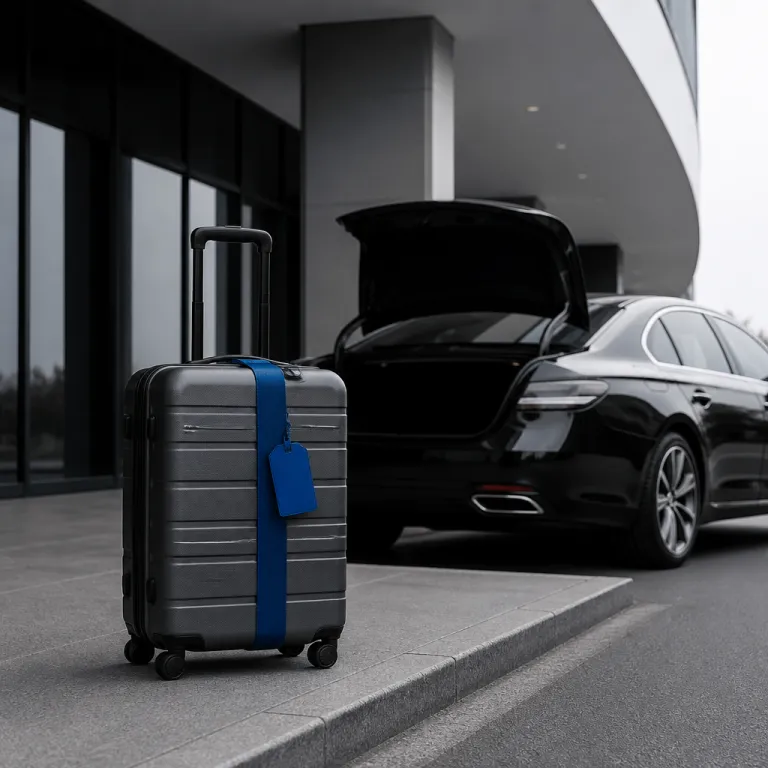
VIP business travel and hotel transfers: from tarmac to lobby
From tarmac to lobby: redefining VIP business travel transfers
For corporate travelers, the most fragile part of any trip is often the transfer between airport, station, and hotel. When this short segment fails, the entire VIP business travel schedule, meeting agenda, and executive focus can collapse in minutes. A seamless airport-to-hotel transfer service becomes the quiet backbone of every business trip, especially for elite executive travel where time is the most valuable currency.
Airlines, rail operators, mobility providers, transfer platforms, travel managers, and hoteliers now treat the journey to the hotel as a strategic element of corporate travel, not a simple commodity. They design integrated travel services where VIP travel, ground transportation, and hotel check-in are orchestrated as one continuous travel experience, supported by real-time data and proactive travel management. In this model, business travelers expect premium comfort, reliable access to information, and personal support that anticipates disruptions before they even appear.
Specialized partners such as VIP Business Class, BCD Travel, and Adelman Travel have built service business models around this expectation. Their corporate travel and VIP service offerings include private aviation, luxury travel transfers, and dedicated travel concierge teams that coordinate with hotels and mobility partners. When these actors collaborate closely, the result is a VIP business ecosystem where every executive transfer feels curated, efficient, and aligned with the needs of demanding business leaders.
Designing end to end mobility for executive travelers and hotel partners
True VIP business travel starts long before the chauffeur greets the guest at arrivals. It begins with travel management teams mapping the full door-to-door travel program, from home pickup to hotel lobby, and then back again after the last meeting. In this approach, every transfer service is treated as a critical touchpoint in the overall VIP journey, not as a generic commodity.
Corporate travel managers work with airlines, rail companies, and mobility platforms to guarantee exclusive access to fast-track lanes, priority boarding, and premium rail cabins that align with the same level of luxury as the hotel. They then connect these segments to executive travel transfers that offer personal concierge services, multilingual drivers, and real-time support for last-minute itinerary changes. When the hotel participates actively, the travel experience becomes a single, orchestrated VIP travel narrative instead of a series of disconnected services.
Technology reinforces this integrated model of VIP business mobility. Advanced booking platforms, API connections, and digital travel concierge tools allow travel service providers to share data on arrival times, delays, and guest preferences with hoteliers and transfer partners. For a deeper look at how onboard amenities support this, the article on enhancing the travel experience for modern passengers shows how connectivity and power access are now baseline expectations for business travelers. When these capabilities extend seamlessly from aircraft or train to car and hotel, the entire business travel chain gains resilience and perceived value.
VIP concierge and travel concierge as the new control tower
In high-stakes VIP business travel, the most decisive asset is not the car model or the suite category, but the human and digital concierge layer that connects them. A dedicated VIP concierge or travel concierge team acts as a control tower, coordinating every service from flight changes to late-night hotel arrivals. This concierge services layer transforms fragmented travel into a coherent executive travel experience where one point of contact manages the entire business trip.
Agencies such as VIP Business Class, BCD Travel, and Adelman Travel have built specialized VIP travel desks for corporate clients, with 24/7 support and proactive disruption management. Their teams monitor flight and rail data, traffic patterns, and hotel occupancy in real time, then adjust transfer services and check-in details before the traveler even asks. This level of management ensures that a missed connection does not become a missed board meeting, preserving both time and the perceived value of the overall travel program.
A concrete illustration comes from a global consulting firm that partnered with a specialized agency to centralize VIP airport-to-hotel transfers in three major business hubs. By routing all executive transfers through a dedicated concierge desk, the company reduced late arrivals to client meetings by more than 30% over twelve months and increased traveler satisfaction scores for ground transportation by double digits, according to its internal travel program review in 2023. When such VIP service capabilities are tightly linked to hotel mobility, business travelers experience a level of continuity that justifies the premium positioning of VIP business solutions.
Health, safety, and productivity as pillars of luxury travel transfers
Executives no longer define luxury only through leather seats and branded amenities. For VIP business travel, the real luxury lies in safety, predictability, and the ability to work without interruption during every segment of the trip. This is especially true for the transfer between airport or station and hotel, where perceived risk and uncertainty can be highest.
Corporate travel policies now integrate strict standards for vetted drivers, insured vehicles, and compliant mobility partners to protect business travelers and corporate reputations. Mobility actors and transfer platforms are expected to provide transparent data on safety records, driver training, and vehicle maintenance, while hoteliers must ensure that their recommended services align with these corporate travel requirements. When travel management teams can demonstrate such rigor, they strengthen trust in the entire travel services ecosystem and justify investment in premium or VIP travel options.
Productivity is the other non-negotiable pillar of modern executive travel. Vehicles used for VIP service transfers increasingly offer Wi-Fi, power outlets, and quiet cabins that mirror the working environment of a business class cabin or premium rail coach. This allows business travelers to turn transfer time into effective work time, whether they are preparing for a business presentation or debriefing a day of meetings. In this sense, the transfer service becomes an extension of the office, and a core component of the overall travel experience rather than a dead zone between two more visible stages of the journey.
Data driven travel management and the economics of VIP business mobility
Behind every polished VIP business travel experience lies a rigorous layer of data, analytics, and cost control. Industry benchmarks from corporate travel associations show that premium executive trips can reach several thousand US dollars per itinerary, which forces companies to justify each element of the travel program through measurable outcomes. Travel management teams therefore track not only direct costs, but also the impact of VIP travel on executive productivity, deal outcomes, and employee loyalty.
Corporate travel managers use KPIs such as on-time arrival rates at key meetings, traveler satisfaction scores, and incident resolution times to evaluate mobility partners and hotel transfer services. When a particular transfer service consistently reduces delays or stress for business travelers, it gains a strong case for preferred supplier status despite a higher unit cost. Conversely, service providers that fail to meet agreed service levels quickly lose their place in curated VIP business portfolios, regardless of their initial price advantage.
Data also shapes how airlines, rail operators, and hoteliers design bundled offers for executive travel. By analyzing booking patterns, connection times, and hotel check-in peaks, they can propose integrated travel services that guarantee exclusive access to priority lanes, coordinated pickup times, and flexible cancellation policies. Over time, this data-driven approach allows travel service providers to refine their VIP concierge and travel concierge offerings, ensuring that each new iteration of the travel experience delivers better results for both travelers and corporate stakeholders.
Building collaborative ecosystems between airlines, rail, mobility, and hotels
The most advanced VIP business travel programs no longer treat each provider as a separate vendor. Instead, they build collaborative ecosystems where airlines, rail companies, mobility actors, transfer platforms, and hotels share responsibility for the full journey from booking to post-trip feedback. In such ecosystems, the transfer to the hotel is not an afterthought, but a shared KPI across all partners.
Joint service design workshops between travel management companies, hoteliers, and mobility providers help align expectations on service levels, communication protocols, and escalation paths. For example, a corporate travel manager might require that any delay of more than fifteen minutes triggers automatic notifications to the hotel, the driver, and the traveler, along with proposed alternatives. When these rules are embedded into travel services contracts and supported by integrated technology, business travelers experience a consistent VIP service standard regardless of the city or country.
Partnerships with specialized agencies often act as the glue in these ecosystems. Their expertise in executive travel and VIP business requirements allows them to coordinate exclusive access arrangements, negotiate premium benefits, and maintain a single point of accountability for the entire VIP travel chain. Over time, this collaborative model elevates the perceived value of corporate travel, turning each business trip into a carefully managed asset rather than a necessary expense.
Key figures shaping VIP business travel and hotel transfers
- Industry analyses from global business travel associations indicate that the average cost of a premium executive trip often reaches several thousand US dollars, which pushes companies to focus VIP service spending on segments that directly protect executive time and productivity.
- Corporate travel surveys report that a significant share of senior executives now use some form of VIP travel services, highlighting how premium mobility and hotel transfer solutions have moved from niche perks to mainstream expectations among business leaders.
- Market observations point to a sustained increase in demand for personalized services and concierge services, especially for airport and station to hotel transfers, as companies seek to reduce stress and improve the overall travel experience for business travelers.
- Growth in private jet charters and high-end ground transportation partners reflects a broader shift toward luxury travel ecosystems, where exclusive access and tightly managed travel programs are seen as strategic tools for attracting and retaining top executive talent.
- Continuous emphasis on health and safety measures in corporate travel has elevated the role of vetted mobility actors and hotel-recommended transfer services, making compliance and risk management central criteria in travel management decisions.
FAQ about VIP business travel and transfers to the hotel
What services are typically included in VIP business travel for hotel transfers ?
VIP business travel packages for transfers usually combine private or chauffeured vehicles, coordinated pickup aligned with flight or train schedules, and direct communication between driver, hotel, and travel management. Many programs add concierge services such as luggage handling, fast-track immigration where available, and guaranteed late check-in at partner hotels. For executives, this integrated service reduces uncertainty and preserves time for preparation or rest.
How can companies book reliable VIP travel services for executives ?
Most organizations secure VIP travel and transfer services through specialized travel agencies or corporate travel management companies that have vetted networks of mobility and hotel partners. Agencies such as VIP Business Class, BCD Travel, and Adelman Travel offer dedicated executive travel desks that coordinate flights, rail, transfers, and hotel stays under a single travel program. Centralizing bookings in this way simplifies reporting, improves duty of care, and ensures consistent service standards for business travelers.
Are VIP travel and concierge services available globally for hotel transfers ?
Yes, many providers operate global networks that cover major business hubs, secondary cities, and key rail corridors. Through partnerships with local mobility actors, luxury hotels, and high-end transportation services, they can offer consistent VIP service standards across regions. However, travel managers should still verify coverage, response times, and safety protocols in each destination before including a provider in the official corporate travel policy.
How do VIP concierge and travel concierge teams handle disruptions during transfers ?
VIP concierge and travel concierge teams monitor flight, rail, and traffic data in real time, then proactively adjust pickup times, routes, and hotel notifications when disruptions occur. They coordinate with drivers, hotel front desks, and sometimes meeting organizers to minimize the impact on the executive’s schedule. This proactive management turns potential delays into manageable schedule shifts rather than full-blown crises for business leaders.
Why should airlines, rail operators, and hoteliers invest in premium transfer services ?
Investing in premium transfer services strengthens the overall travel experience and differentiates brands in a competitive corporate travel market. When airlines, rail operators, and hotels can guarantee smooth, safe, and efficient transfers, they increase traveler satisfaction, encourage repeat bookings, and justify higher-yield VIP business products. For corporate clients, these integrated solutions translate directly into better use of executive time and improved outcomes from each business trip.
