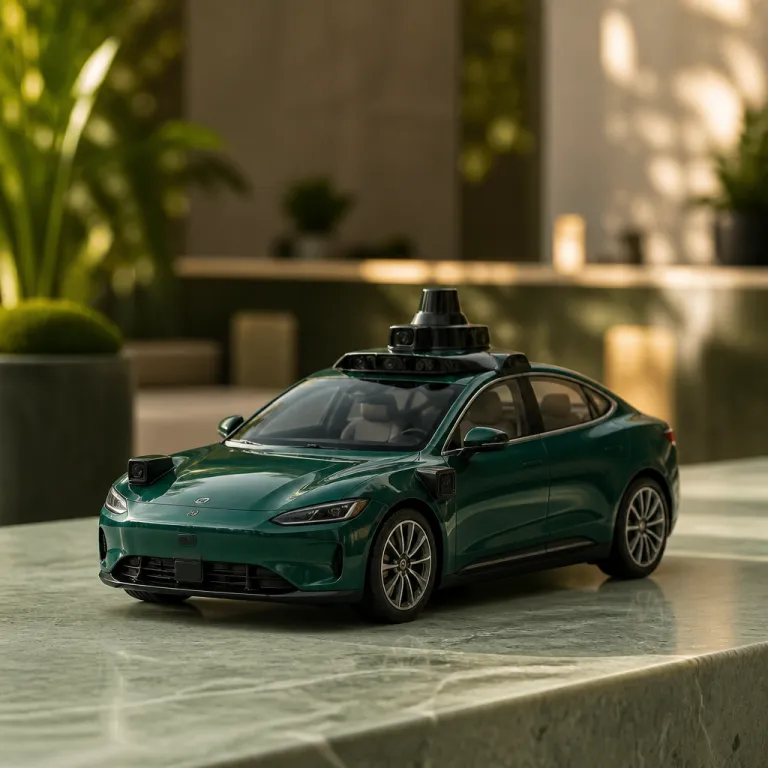
Why uber autonomous hotel transport will be built on a platform, not a car
Uber autonomous hotel transport will not be defined by a shiny new vehicle in the porte cochère. It will be defined by how a hotel, an airline, a rail operator, and a mobility company orchestrate a ride from airport to lobby with almost no human intervention. For senior leaders, the strategic question is not whether autonomous vehicles arrive, but how your brands will plug into the Uber platform that coordinates them.
Uber chose a platform model for autonomous vehicles because the company already manages millions of ride transactions, app users, and drivers in real time across global cities. That same Uber app will become the control layer for self-driving fleets, while partners such as Waabi, WeRide, and Wayve focus on the hard engineering of perception, simulation, and driving policy. In practice, next-generation hotel transfers mean your guest taps the Uber app, selects curated ride options linked to hotel bookings, and the platform allocates an autonomous ride that your team never has to dispatch manually.
For hotel groups, this separation between platform and vehicle manufacturing is critical, because it keeps capital expenditure off your balance sheet while still reshaping hotel operations. Uber Autonomous Solutions is building three pillars that matter directly to hotels manage guest mobility: infrastructure from billions of trips, user experience inside Uber vehicles, and fleet operations with AV Mission Control and remote assistance. When a robotaxi serving your hotel has an issue during a trip, remote assistance and specialized insurance programs on the Uber business side will handle the incident, rather than your concierge improvising a solution at peak time.
Each autonomous partner brings a different strength to Uber’s driverless ecosystem for hotels, and understanding these differences helps mobility planners negotiate smarter agreements. Waabi is known for advanced simulation that can train autonomous vehicles at scale, which should translate into more reliable ride performance in complex airport access roads and hotel forecourts. WeRide already operates robotaxis in the United Arab Emirates, including services in Abu Dhabi and Dubai since 2023, while Wayve focuses on artificial intelligence that learns from real world driving, with on-road testing in cities such as London and Newcastle. Hotel executives should therefore expect different deployment timelines and service levels across regions.
For airlines, rail companies, and transfer platforms, the same Uber platform will knit together airport, station, and hotel nodes into a single mobility fabric. A traveller can land at an airport, open the Uber app, and see ride options that include both human driven and autonomous vehicles, with estimated arrival time and hotel drop off zones clearly indicated. Over time, bookings Uber will not only refer to rides, but to bundled offers where a hotel, an airline, and a mobility company share data to deliver a seamless door to door experience.
Food and parcel delivery services will quietly reinforce this ecosystem for hotels. The same autonomous vehicles that handle a late night ride from the airport may, during off peak periods, support delivery services that bring amenities or partner restaurant meals to the hotel, using the Uber Eats network as a template. As Uber Eats and the core ride platform converge technologically, hotel operations can use tools including unified dashboards to monitor both guest transport and external delivery in real time.
Some executives still frame Uber autonomous hotel transport as a distant scenario, anchored in a vague year Uber might finally scale robotaxis. That is a mistake, because pilot programs with Waabi, WeRide, and Wayve are already shaping regulations, insurance norms, and guest expectations in key feeder markets. In 2023, for example, Uber and Waabi announced a 10-year partnership to deploy purpose-built robotaxis in North America, while Uber and WeRide began testing autonomous rides in the UAE. The hotels that treat autonomous mobility as a design brief for the next renovation cycle, rather than a distant future, will be the ones whose brands feel native to this new mode of travel.
Inside uber’s AV ecosystem: what Waabi, WeRide, and Wayve change for the hotel curb
For a hotel, the curb is no longer just a place where a ride begins or ends. It is becoming a micro terminal where autonomous vehicles, human drivers, and delivery vans compete for space, time, and attention. Uber autonomous hotel transport will intensify this pressure, because robotaxis will arrive with high precision and expect the curb to be ready.
Waabi’s simulation driven approach means autonomous vehicles can be trained on thousands of virtual hotel forecourts before they ever approach your property. That matters when a guest ride must navigate tight one way loops, shared valet lanes, and mixed traffic from airport shuttles and rail transfer buses. WeRide’s experience operating robotaxis in the UAE shows that high heat, complex airport access roads, and mixed tourist traffic can all be handled by a mature autonomous service, which is directly relevant for resort hotels and business hotels near major hubs.
Wayve, backed by investment from Uber, focuses on artificial intelligence that learns from real world driving rather than relying only on pre mapped routes. For hotel groups with urban portfolios, this AI first approach could allow autonomous vehicles to adapt quickly when a city closes a street for an event or when a new hotel entrance opens after renovation. In all three cases, Uber autonomous hotel transport depends on a feedback loop where data from every trip, every guest, and every hotel is used to refine the driving model.
For travel managers and airlines, the operational impact is equally concrete. When a corporate traveller books a trip, the company can use Uber for Business to pre configure ride options that prioritize autonomous vehicles for airport to hotel transfers in approved cities. The app will then present those options inside Uber with clear labels, estimated time of arrival, and policy compliant pricing, while the travel manager receives real time reporting on which guests used autonomous rides versus traditional cars.
Rail operators and transfer platforms can integrate with the Uber app through APIs so that a guest stepping off a train sees a pre arranged autonomous ride to the hotel on the same platform. This is where curated executive car experiences, such as those analysed in studies of reliable executive car services in Louisville, offer a useful benchmark for service quality expectations. The difference is that with Uber autonomous hotel transport, the chauffeur is replaced by a combination of software, remote assistance, and carefully designed in car interfaces that must still feel premium for a business class guest.
For hotels, the guest experience inside Uber autonomous vehicles becomes part of the brand, even if the company does not own the cars. In car screens can show hotel information, loyalty offers, or room ready notifications, turning the ride into an extension of the lobby. Over time, hotel bookings may include a guaranteed autonomous transfer window, where the platform commits to deliver a vehicle within a defined time band, backed by capacity from Waabi, WeRide, and Wayve fleets.
One practical implication is that hotels manage curb space and back of house operations differently. Valet teams will need new standard operating procedures for interacting with autonomous vehicles that cannot accept keys, while security will need protocols for identifying the correct robotaxi for each guest. Airlines and airports will face similar adjustments, coordinating stand allocations and signage so that a guest can move from air taxis or electric air shuttles to ground based autonomous rides without confusion.
Liability, safety, and guest communication when the driver is an algorithm
When Uber autonomous hotel transport goes wrong, the question every general counsel will ask is simple. Who is responsible for the incident, and how does that liability intersect with hotel operations, airline contracts, and mobility platform agreements? The answer sits in the layered structure of the Uber platform and its AV partners.
In a traditional ride, liability is shared between the driver, the ride hailing company, and sometimes the hotel if staff actively arranged the service. With autonomous vehicles, the stack expands to include the AV technology provider, such as Waabi, WeRide, or Wayve, and specialized insurance programs that Uber is already developing for robotaxis. For hotel groups, this means that contracts for preferred mobility partners must explicitly define when the hotel is simply a pickup point and when it is acting as an agent that could share responsibility for the guest experience.
Safety perceptions will be shaped long before a guest ever steps into a robotaxi serving your hotel. Public guidance already frames the debate with statements such as “Are robotaxis safe? They are designed with advanced safety features, but concerns remain.” For hospitality brands that trade on trust, the communication challenge is to acknowledge those concerns while explaining clearly how Uber autonomous hotel transport is monitored in real time by AV Mission Control and remote assistance teams.
Guest communication should be treated as a new service design discipline, not an afterthought. When a guest books a trip that includes an autonomous ride from the airport, the confirmation email and the app will need to explain where to meet the vehicle, how to verify the correct car, and what to do if the guest feels uncomfortable during the ride. Hotels can use the Uber app and their own mobile app in tandem, so that app users receive consistent messaging from both the mobility platform and the hotel company.
Inside Uber autonomous vehicles, the interface must carry part of this reassurance burden. Clear prompts about seat belts, emergency stops, and two way communication with remote assistance can make the experience feel controlled rather than experimental. For premium guests, especially those used to chauffeur services integrated through high end transfer partners, hotels should work with Uber business teams to align in car messaging with brand tone, so that the ride feels like a natural extension of a luxury stay.
Liability also intersects with data governance, because Uber autonomous hotel transport will rely heavily on artificial intelligence trained on billions of kilometres of travel. Hotels will want to know how guest data from bookings Uber is used, how long it is stored, and whether it can be shared back to hotels manage loyalty profiles or personalize offers. Clear data sharing agreements can turn this from a risk into an asset, allowing a hotel to know, for example, that a frequent guest always prefers a quiet ride with no in car marketing.
Finally, executives should not ignore the reputational dimension of safety. A single high profile incident involving autonomous vehicles at a flagship hotel could overshadow years of careful brand building, even if the legal liability sits with the mobility company. Proactive crisis playbooks, joint statements with Uber and AV partners, and staff training on how to respond if a guest reports an issue during an autonomous trip are now part of the risk management toolkit for any serious hotel group.
From pilot to portfolio: how hotel groups can operationalize uber autonomous hotel transport
The shift from a pilot robotaxi at one airport to a portfolio wide Uber autonomous hotel transport strategy will not happen by accident. It requires hotel groups, airlines, rail operators, and transfer platforms to treat autonomous mobility as core infrastructure, not a marketing stunt. The most effective leaders are already mapping where Waabi, WeRide, and Wayve are likely to deploy first, and aligning their development pipelines accordingly.
Operational readiness starts with the curb, the lobby, and the back office. Hotels need clear wayfinding so that a guest arriving in an autonomous ride can find the entrance quickly, while staff know exactly where autonomous vehicles will stop and how long they will dwell. For complex properties, especially resorts or convention hotels near airports, it may be worth redesigning drop off zones so that autonomous vehicles have dedicated lanes, while human driven taxis, buses, and air taxis shuttles use separate areas.
Digital readiness is just as important, because Uber autonomous hotel transport will be orchestrated through apps and platforms rather than phone calls to the concierge. Hotels should audit how their own mobile app will interact with the Uber app, whether through deep links, QR codes, or embedded booking flows. Resources such as analyses of contactless guest transportation models show how QR booking, app based dispatch, and self service kiosks can reduce friction when guests arrange rides without staff intervention.
For corporate travel and meetings, integrating Uber for Business into hotel sales proposals can turn mobility into a differentiator. A hotel can offer bundled packages where a certain number of autonomous rides between airport, rail station, and hotel are included, with clear service level agreements on maximum wait time and vehicle type. Over time, this could extend to electric air connections, where Joby Aviation or similar providers handle short haul air taxis while Uber coordinates the ground leg, creating a fully integrated multimodal trip for high value guests.
Food and parcel logistics should not be overlooked, because the same platform that powers Uber autonomous hotel transport will also support delivery services. Hotels can use Uber Eats style integrations to deliver meals from on site restaurants to local customers, or to move items between properties in a cluster, using autonomous vehicles during off peak passenger periods. This can help smooth demand across the fleet and generate incremental revenue, while the company gains operational data on how autonomous vehicles perform in different traffic and weather conditions.
As robotaxis scale, premium segments will evolve as well. Analyses of luxury ride integrations, such as those examining what a Blacklane style integration means for high end hotel transfers, show that guests are willing to pay for certainty, comfort, and brand alignment. Uber autonomous hotel transport will need to offer differentiated ride options, from standard autonomous sedans to premium vehicles with enhanced interiors, so that hotels can match the ride to the room category and the overall guest experience.
Finally, governance must keep pace with innovation. Hotel groups should establish cross functional mobility steering committees that include operations, legal, IT, and brand teams, tasked with reviewing performance data from bookings Uber, guest feedback on autonomous rides, and incident reports from AV partners. Those committees can then refine standards for signage, staff training, guest communication, and partnership terms, turning early experiments into a repeatable playbook that scales across hundreds of hotels without losing control of the guest experience.
Key figures shaping uber autonomous hotel transport
- Uber and Waabi have announced plans for a large scale robotaxi deployment in coming years, signalling serious intent to make autonomous vehicles a mainstream ride option for hotel transfers rather than a niche pilot (TechCrunch reporting on the Uber–Waabi partnership in 2023, including a 10-year commercial agreement and a purpose-built robotaxi based on the Volvo XC90 platform).
- WeRide already operates a robotaxi fleet in the United Arab Emirates, demonstrating that autonomous rides can function in harsh climates and complex airport environments that are directly relevant for resort and transit hotels in the region (Uber and WeRide press information on services in Abu Dhabi’s Yas Island and Saadiyat Island, and trials in Dubai).
- Wayve is preparing robotaxi rollouts across multiple cities, indicating that AI first autonomous driving will not be confined to a single market and that hotel groups with global portfolios must plan for uneven but widespread adoption (Uber and Wayve partnership announcements referencing testing on public roads in the UK and plans to scale to additional urban markets).
- Guidance for travellers already emphasizes the need to “Stay informed about robotaxi availability in your area” and to “Understand how to request autonomous rides via Uber”, which means guest expectations around app based, on demand autonomous transport are being shaped before many hotels have formal strategies in place.
Sources
- Hotel Technology News – analysis of Uber’s autonomous strategy and its implications for hotel guest mobility, including discussion of curb management, guest experience, and integration with hotel apps.
- TechCrunch – reporting on the Uber–Waabi collaboration and planned robotaxi deployment scale, with details on the 10-year agreement, vehicle platform, and North American pilot locations.
- Uber official press materials – updates on partnerships with WeRide and Wayve and robotaxi pilots in key markets such as the UAE and the UK, including statements on safety oversight, AV Mission Control, and insurance frameworks.