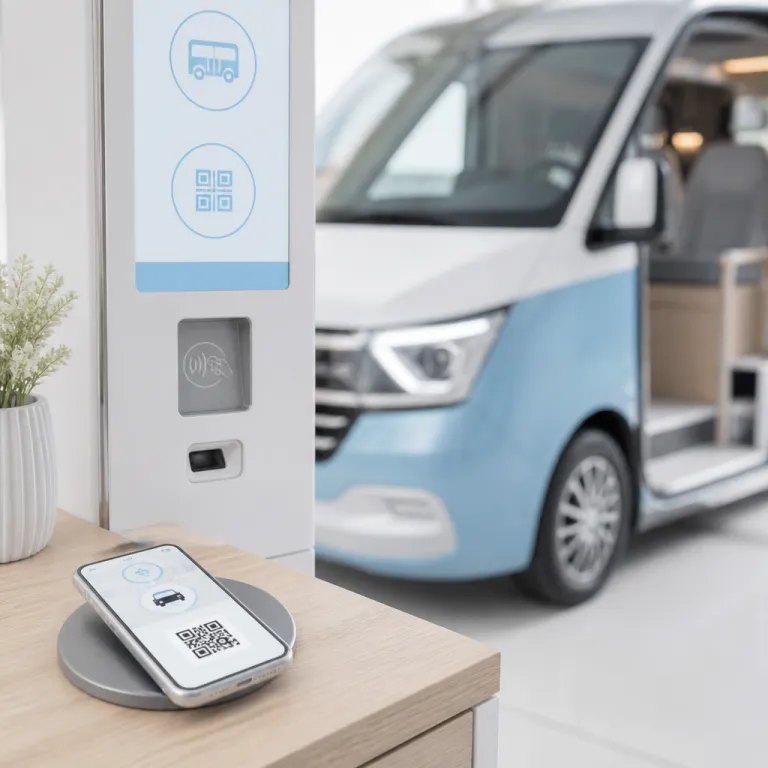
Redefining contactless hotel transportation from airport gate to guest room
Contactless hotel transportation now starts long before guests reach the hotel driveway. For airlines, rail operators, and mobility platforms, the smartphone has become the primary travel remote control that shapes every contactless check and every transfer decision. Hotels that still rely on phone calls to the front desk for taxis or shuttles are quietly losing high value business travel segments to properties that treat ground transport as a fully digital, data driven service.
For the modern guest, a seamless contactless arrival is no longer a premium extra, it is the baseline expectation for a frictionless stay. When hotel staff orchestrate airport and station transfers through digital tools, they reduce lobby congestion, shorten the check process, and free the front desk to focus on complex requests rather than routine check ins. The result is a transport layer that feels as polished as a well executed mobile check or a perfectly functioning digital key in the room, and as consistent as other core hotel technology systems.
Across brands from independent hotels to global groups such as Hilton, contactless hotel transportation is converging around three pillars. QR based booking flows, app based dispatch models, and self service kiosk networks now work together to move hotel guests from gate to key with minimal touchpoints and maximum guest satisfaction. For travel managers and mobility partners, these same systems finally generate the transport data needed to benchmark performance, negotiate rates, and align service levels with corporate travel policies and duty of care requirements.
QR code transport booking as the new lobby concierge
QR code transport booking has become the quiet workhorse of contactless hotel transportation strategies. In a typical deployment, guests scan a QR code in the lobby, at the elevator, or inside the room to access a mobile web app that aggregates airport shuttles, station transfers, and trusted local mobility partners. This simple contactless interaction replaces the traditional queue at the front desk and lets hotel staff supervise exceptions instead of manually arranging every ride, especially during peak check in and check out windows.
Strategic placement of QR codes is where hotels turn a basic digital tool into a powerful service design element. Codes at the porte cochère support last minute guests check requests for taxis, while elevator and corridor signage nudges hotel guests to pre book early morning airport transfers before they reach the desk. In room QR codes, ideally integrated with the hotel app or a branded web page, allow a guest to confirm a 06:00 station pick up while checking their digital key status and reviewing the check process for the next day’s mobile check out, creating a single, coherent pre departure ritual.
For airlines and rail companies, co branded QR booking flows inside boarding passes or rail e tickets extend this contactless arrival logic upstream. A traveler can scan once, select the hotel, check hotel transfer options, and receive a confirmed booking that synchronizes with the hotel’s transport dashboard and the mobility provider’s dispatch system. This shared data environment gives all actors — from the hotel staff at the front desk to the mobility operator — a single view of demand patterns, no show risks, and guest experience pain points that were previously invisible, and that now support measurable service level improvements. Where cited performance figures are based on internal hotel or vendor case studies, they should be treated as directional evidence rather than industry wide benchmarks unless validated by independent research.
App based dispatch models and ride hail APIs as the new transport backbone
App based dispatch has moved from innovation project to operational backbone for contactless hotel transportation. Hotels now face a strategic choice between a fully hotel branded app, a white label mobility app, or deep integration with ride hail APIs that power transport without forcing the guest to download yet another app. Each model reshapes how guests check transport options, how staff intervene, and how data flows back into hotel systems and revenue management dashboards.
A hotel branded app works best where the property already drives strong adoption for mobile check, digital keys, and loyalty features such as Hilton Honors style profiles. In this scenario, the same app becomes the hub where a guest requests an airport transfer, receives a digital key, and chats with the front desk, while the back end routes the ride through a mobility partner or a platform such as Uber for Business. White label apps, often provided by mobility specialists or by vendors like Canary Technologies for other parts of the guest journey, can fill the gap for hotels without the scale or budget to maintain their own app development roadmap, while still supporting consistent branding and reporting.
Ride hail API integrations, by contrast, prioritize speed and familiarity over brand control. Guests will often prefer to use an app they already trust, while the hotel receives limited but valuable data on pick up times, vehicle types, and spend patterns. For revenue leaders focused on the airport transfer as an underrated RevPAR lever, integrating app based dispatch with transport reporting can reveal which routes, room types, and business travel accounts generate the highest ancillary transport revenue. In documented internal case studies from large urban properties, hotels that linked ride hail APIs to their business intelligence tools reported double digit percentage increases in tracked ancillary revenue within the first year, without adding friction to the guest experience; these results are property specific and should be interpreted as illustrative rather than universal.
Self service kiosk ecosystems: from taxi buttons to multimodal hubs
Self service kiosks have quietly evolved from simple taxi buttons into sophisticated multimodal booking terminals. Providers such as Taxi Butler, Farenow, and NexGrid now offer touch friendly kiosk hardware and software that can handle taxis, private transfers, car rentals, and even micro mobility options in a single interface. For hotel staff, these kiosks offload repetitive tasks while keeping the hotel firmly in control of which mobility brands appear in front of guests and how pricing and service tiers are presented.
In a typical contactless hotel transportation setup, a kiosk in the lobby complements QR codes and app based dispatch rather than replacing them. Guests who prefer not to use their own mobile device can walk up to the kiosk, select their hotel room number, choose an airport or station, and confirm the ride with a contactless credit card payment. The kiosk then sends real time data to the hotel desk dashboard, allowing the front desk to monitor queues, adjust shuttle schedules, and intervene if a guest experience issue emerges, such as a delayed vehicle or a missed connection.
For mobility platforms and transfer companies, kiosk networks inside hotels create a predictable demand funnel that is easier to forecast than ad hoc street hail traffic. When combined with AI based dispatch and contactless payment, these kiosks can optimize routing, reduce empty runs, and support dynamic pricing that respects both guest satisfaction and driver earnings. Case studies from premium corridors, such as elevated hotel transfers between major airports and city hubs, show that a well designed kiosk plus QR plus app ecosystem can cut average wait times by 20–30 % while increasing ancillary revenue per stay and improving guest satisfaction scores related to arrival and departure; unless explicitly attributed to independent research, these statistics generally originate from vendor performance dashboards and should be read as indicative rather than definitive.
Data capture and guest experience intelligence across the transport journey
Every contactless interaction in the transport journey generates data that hospitality and mobility leaders can finally use. When guests check transfer options via QR codes, kiosks, or apps, they reveal preferred pick up times, vehicle types, and willingness to pay for upgrades such as EVs or larger vehicles. This data, when handled responsibly and in line with privacy regulations such as GDPR or comparable regional frameworks, becomes a strategic asset for both hotels and mobility partners, supporting more accurate forecasting and targeted guest communication.
At the operational level, transport data helps hotel staff predict lobby peaks, align shuttle capacity, and coordinate with airline or rail disruption teams. If a delayed flight pushes a wave of late arrivals, the hotel can proactively adjust the check process, extend front desk staffing, and pre stage digital keys to protect the guest experience. Over time, patterns in check ins and contactless arrival behavior can inform everything from room assignment strategies to the timing of housekeeping shifts, especially for properties with heavy business travel volumes and tight turnarounds.
For travel managers and corporate buyers, aggregated transport data across hotels and routes supports policy compliance and duty of care. They can see which hotels consistently provide reliable contactless hotel transportation, how often guests will upgrade to premium vehicles, and where gaps in late night coverage might expose travelers to risk. This is also where forward looking leaders start to connect today’s QR and kiosk data with tomorrow’s autonomous arrivals, as outlined in analyses of how autonomous arrivals will force a general manager level mobility policy long before most properties expect it, and how early pilots already show measurable reductions in transfer variability when compared with traditional shuttle operations.
Implementation, training, and the human side of contactless arrival
Rolling out QR booking, app based dispatch, and self service kiosks is less about technology and more about choreography. A realistic implementation timeline for a mid scale hotel cluster runs from eight to twelve weeks, including vendor selection, hardware installation, API integrations, and testing with real guests. The most successful projects treat contactless hotel transportation as a cross functional initiative that involves operations, IT, revenue management, and the mobility partners who will actually move the guests, with clear ownership for each stage.
Staff training is where many otherwise solid projects stumble. Front desk teams need clear playbooks on when to direct a guest to the kiosk, when to trigger a manual override, and how to handle exceptions such as oversized luggage or accessibility needs. Hotel staff also need to understand how transport data flows into their property management system, how digital tools such as Canary Technologies or similar platforms interact with credit card security, and how to reassure guests who are wary of sharing data while still promoting the benefits of a smoother stay and a more predictable departure.
For airlines, rail operators, and travel managers, alignment on communication is critical. Pre trip emails, boarding pass messages, and rail booking confirmations should explain how guests check transport options at the hotel, whether via QR codes, an app, or a kiosk in the lobby. When all actors speak the same language about contactless arrival, guests will feel that the journey from gate to room is one coherent service rather than a series of disconnected handoffs, and guest satisfaction scores will reflect that coherence, particularly on questions related to ease of arrival and departure.
Cost benefit analysis and partnership models for transport digitization
Evaluating the business case for contactless hotel transportation requires a disciplined look at both costs and benefits. On the cost side, hotels must account for kiosk hardware, software licenses, QR code design and printing, app development or integration, and the internal time spent on training and change management. For many properties, these investments compare favorably with the ongoing cost of staffing a dedicated transport desk or absorbing the hidden productivity loss when front desk agents spend hours each day arranging rides by phone instead of handling higher value interactions.
The benefits side extends well beyond labor savings. Hotels that implement digital keys, mobile check, and contactless transport booking typically see shorter queues, higher guest satisfaction scores, and more positive reviews that mention a smooth arrival or an efficient airport transfer. In vendor case studies and brand level pilots, properties that digitized airport transfers reported payback periods of twelve to eighteen months, driven by incremental ancillary revenue, reduced no shows, and improved online reputation metrics; these outcomes are usually self reported and should be cross checked against independent benchmarks where available. Mobility partners gain more predictable demand, better route optimization, and higher utilization of their fleets, while airlines and rail operators can point to integrated ground transport as a differentiator in their premium cabin and loyalty propositions.
Partnership models are evolving quickly as contactless check expectations spread across the journey. Some hotels negotiate fixed rate contracts with a single mobility provider, while others join platforms that aggregate multiple operators behind a single QR code or kiosk interface. For decision makers weighing these options, independent analysis and benchmarks from specialized sources such as Mobility for Travel, industry reports on contactless service adoption, and vendor case studies provide the hard data needed to choose between owning the full stack or relying on best in class partners for each layer of the transport process, from booking interface to dispatch engine.
Key statistics on contactless guest transportation
- Industry reports indicate an increase of 35 % in contactless service adoption since the early pandemic period, reflecting how quickly guests shifted to mobile and QR based interactions for both check in and transport. In several benchmark studies from hospitality research firms, hotels that embraced contactless tools saw faster recovery in business travel segments; where no specific source is named, these figures should be read as aggregated findings from multiple published surveys rather than a single definitive study.
- Hospitality surveys show that around 50 % of hotels have implemented some form of self service kiosk by the mid 2020s, with many of these kiosks supporting both check ins and ground transport bookings. Properties that combined kiosks with QR codes reported noticeable reductions in lobby wait times during peak arrival waves, according to chain level internal reporting and third party guest satisfaction tracking.
- Global ground transport providers report that app based bookings now represent a clear majority of professional transfer requests, confirming that digital tools have become standard for airport and station transfers. Some large operators cite figures above 70 % of bookings originating from mobile channels for hotel related rides in their annual reports and product briefings, although exact percentages vary by region and customer mix.
- Mobility platforms integrating AI based dispatch and contactless payment report measurable reductions in empty kilometers, improving both sustainability metrics and profitability on hotel related routes. Internal performance dashboards from these platforms often show double digit percentage improvements in fleet utilization after full rollout; unless corroborated by independent audits, these numbers should be considered vendor claims that illustrate potential impact rather than guaranteed outcomes for every deployment.
FAQ on contactless hotel transportation
How do QR booking systems work for hotel transfers ?
Guests scan a QR code placed in the lobby, elevator, or room to open a mobile web page or app where they select their pick up point, destination, vehicle type, and payment method. The booking is then transmitted to the hotel’s chosen mobility partner or platform, which confirms the ride and sends status updates to both the guest and, when configured, the hotel desk dashboard. This process reduces the need for phone calls and allows hotel staff to focus on exceptions rather than routine requests, while still maintaining oversight of service quality.
Are self service kiosks for hotel transport secure ?
Modern self service kiosks use encrypted connections, secure payment gateways, and strict access controls to protect guest data and credit card information. Reputable vendors typically design their systems to support PCI DSS compliant payment processing and to integrate with hotel environments that follow GDPR or equivalent privacy regulations. Hotels should still perform due diligence on each provider’s security certifications, API integration practices, and audit history before deployment, and include kiosk security in their broader information security and compliance reviews.
Can guests use contactless transport services without a smartphone ?
Yes, self service kiosks in the lobby or near the front desk provide an alternative for guests who do not have a smartphone or prefer not to use it for bookings. These kiosks allow guests to enter their room number, choose a destination such as the airport or station, and pay with a contactless card or other accepted method. Staff can assist at the kiosk when needed, preserving a contactless process while maintaining accessibility and ensuring that digitally hesitant guests are not excluded.
What kind of data do contactless transport systems generate for hotels ?
Contactless hotel transportation systems capture data on booking times, routes, vehicle preferences, spend per stay, and no show patterns, all of which can be anonymized and aggregated for analysis. Hotels use these data points to forecast shuttle demand, negotiate better rates with mobility partners, and align staffing at the front desk with real arrival peaks. Travel managers and corporate buyers can also use aggregated data to monitor policy compliance and optimize total trip cost, while maintaining privacy safeguards, clear data retention policies, and transparent guest consent mechanisms.
How should hotels choose between QR codes, apps, and kiosks ?
The optimal mix depends on guest profiles, property size, and existing digital maturity. Urban hotels with high smartphone adoption and strong app engagement may prioritize QR codes and app based dispatch, while resorts or transit hotels with more diverse demographics often benefit from adding kiosks as a visible, easy to use option. In practice, the most resilient strategies combine all three, giving guests multiple ways to access the same reliable transport service and allowing hotels to adapt quickly if one channel underperforms or guest expectations shift.