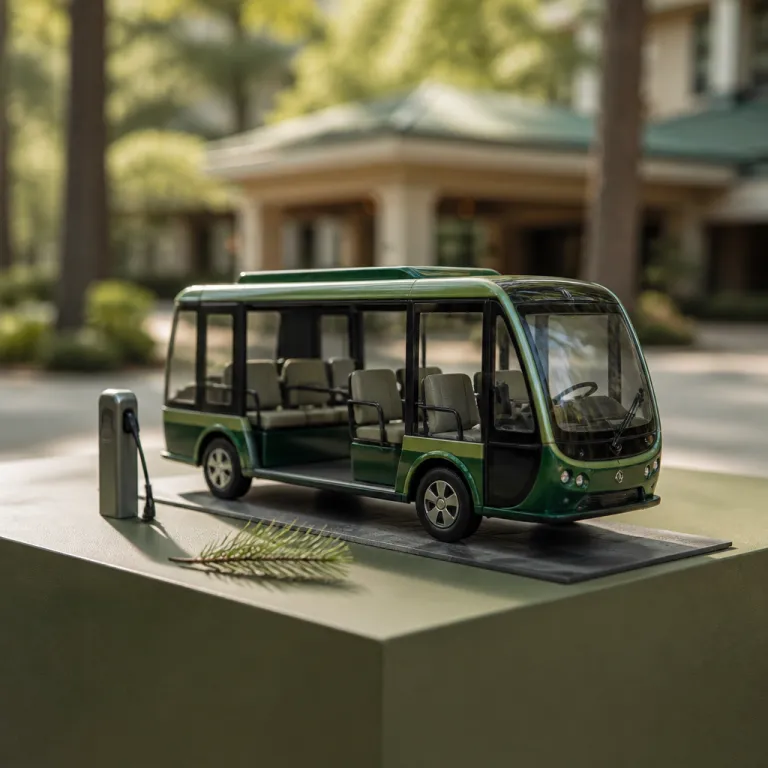
From resort trolley to hotel mobility blueprint
The complimentary Sea Pines Trolley operating inside Sea Pines Resort on Hilton Head Island offers a powerful template for hotel ground transport. By linking the resort’s Beach Club, Harbour Town, Plantation Club and South Beach areas, this trolley service shows how a compact island network can rival urban systems. For airlines, rail operators and mobility platforms, the way this trolley integrates routes, guest flows and resort operations is directly transferable to airport hotel corridors.
Sea Pines Community Services Associates (CSA) manages the trolley fleet and its scheduled operations with the discipline of a public transit authority. According to CSA’s published service information, the organization oversees routing, seasonal timetables and safety standards across the resort. Their objective is clear: reduce private car use inside Sea Pines, improve safety along Greenwood Drive and provide a frictionless connection between accommodation, shops and leisure facilities. For travel managers designing multimodal journeys to a resort or city hotel, the same logic can align airport shuttles, town trolley loops and shared mobility offers into one coherent network.
The Sea Pines Trolley runs as a seasonal service, but its design principles apply all year to hotel districts worldwide. Clear signage at each stop, predictable times and a simple Harbour Town–to–South Beach route make the system intuitive even for first-time visitors. As one Hilton Head hotel sales director put it, “When guests realize they can park once and ride everywhere on the trolley, the whole stay feels easier and safer.” When airlines and rail companies co-design similar hotel transfer networks with resorts, they can extend the seamless journey promise far beyond the terminal or station concourse.
Designing shuttle and shared mobility networks around resort anchors
What makes the Sea Pines Trolley especially relevant for hospitality stakeholders is its anchor-based network design. Every route is structured around high-demand nodes such as the Beach Club, Harbour Town Marina, Plantation Club and key clusters of villas and shops. This mirrors how hotel districts near airports or rail hubs can use major properties, convention centers and retail zones as natural anchors for shuttle loops and town trolley-style circulators.
On Hilton Head Island, the trolley’s South Beach loop connects beach access points and the main resort center without forcing guests to use private cars. For airlines and rail operators promoting Hilton Head as a low-carbon destination, being able to say that guests can land on the island, transfer once and then rely on a free trolley service is a strong commercial argument. It also supports partnerships with mobility platforms that can integrate last-kilometer options from the airport to Sea Pines, then hand over to the internal trolley network.
Regional case studies from Hilton Head to Savannah already show how shared mobility can reshape hotel access in coastal destinations. For stakeholders evaluating new hotel shuttle concepts in the Lowcountry, analysing how the Sea Pines Trolley connects Harbour Town, retail clusters and the wider resort can inform corridor design between city centers and beachfront properties. A detailed review of integrated Lowcountry hotel shuttles is available in this analysis on rethinking hotel shuttles and shared mobility in the Lowcountry, which complements the Sea Pines example.
Real time data, tracking and guest facing information
The innovation that turns the Sea Pines Trolley from a simple shuttle into a strategic asset is its real-time tracking system. Guests can check trolley times in advance, then use a mobile interface to follow the vehicle in real time between Harbour Town, the Beach Club, Plantation Club and other stops. For airlines, rail companies and transfer platforms, this level of transparency is now a baseline expectation for any trolley service or hotel shuttle.
When a resort on Hilton Head or another island publishes clear route maps, stop locations and details of each route online, travel managers can integrate that information directly into corporate travel policies. They can show travellers exactly how to move from the airport to the hotel, then from the hotel to shops, restaurants and meetings without relying on taxis. This reduces perceived complexity and increases adoption of shared mobility options such as a town trolley or internal shuttle that circulates between resort centers, villas and conference venues.
Building such an information-rich ecosystem requires close collaboration between hoteliers, mobility platforms and transport operators, from airlines to coach companies. A practical framework for this collaboration is outlined in this guide on building a seamless mobility journey to the hotel, which aligns well with the Sea Pines approach. When every actor shares accurate data about times, capacity and seasonal variations, the guest can move across the entire journey with the same confidence they feel when watching the Sea Pines Trolley icon advance on their screen.
Operational governance and partnerships behind the trolley model
Behind the visible comfort of the Sea Pines Trolley lies a robust governance model that hospitality leaders can emulate. Sea Pines CSA operates the trolley service, coordinates with local businesses and resort facilities, and manages communication with guests and residents. For hotel groups and airport authorities, creating a similar central entity to oversee shuttle and shared mobility operations can unlock consistent standards across multiple properties and routes.
In Sea Pines, the operator balances three strategic objectives: improving mobility, enhancing guest satisfaction and promoting eco-friendly transport across the resort. This means aligning South Beach loops, Harbour Town connections and Beach Club access with broader sustainability goals, such as reducing private vehicle traffic along Greenwood Drive and within residential areas. Airlines and rail companies can plug into this framework by co-branding services, sharing demand data and aligning flight or train schedules with trolley times at key interchange points.
Partnerships also extend to technology providers that support real-time tracking and to mobility platforms that aggregate options for travellers. When a guest searches for how to reach villas or the Plantation Club from Hilton Head airport, they should see a coherent chain of options that includes both external transfers and the internal trolley network. As one CSA manager noted in a local tourism briefing, “Our goal is that visitors never feel stranded at any point in their stay.” For hoteliers, participating actively in such partnerships is no longer optional; it is a prerequisite for remaining visible in a landscape where guests expect integrated, app-based mobility from arrival to resort lobby.
Guest experience, safety and policy design
The guest experience on the Sea Pines Trolley is shaped as much by policy as by hardware. Clear rules state that the service is complimentary, that only service animals are permitted and that coolers or bulky beach accessories are not allowed on board. These guidelines protect safety, comfort and operational efficiency, and they offer a useful benchmark for hotel shuttle and town trolley policies worldwide.
For travel managers, being able to brief travellers on such rules in advance reduces friction at boarding and aligns expectations with reality. When a corporate traveller knows that the trolley service between Harbour Town, the Beach Club and beach access points is free but limited to hand luggage, they can plan transfers from Hilton Head airport or the rail station accordingly. Airlines and rail operators can integrate these details into pre-trip communications, ensuring that the transition from aircraft or train to resort trolley feels seamless rather than improvised.
Safety is also reinforced by predictable route patterns, well-lit stops and trained staff who understand both mobility and hospitality standards. Hoteliers should treat trolley drivers and ground staff as part of the guest-facing team, investing in service training that matches front desk expectations. When the first human interaction on Hilton Head Island is with a courteous Sea Pines Trolley driver offering a reassuring view of the route ahead, the perceived quality of the entire resort or hotel cluster rises immediately.
Scaling the sea pines trolley logic to wider hotel ecosystems
The principles behind the Sea Pines Trolley can be scaled far beyond a single resort on Hilton Head Island. Any hotel cluster near an airport, rail station or cruise harbour can map its own equivalent of Harbour Town, Beach Club, Plantation Club and central resort anchors. From there, planners can design a South Beach-style loop, a town trolley connector and targeted branches that link key hotels, shops and meeting venues.
For mobility platforms and transfer operators, this creates a structured canvas on which to layer services such as shared shuttles, on-demand vans and micromobility. They can integrate real-time data feeds from hotel trolleys, publish details of each route and offer dynamic routing when seasonal peaks or events change demand patterns. Airlines and rail companies can then market these integrated networks as part of their product, positioning certain destinations as exemplars of low-stress, low-emission ground access.
Hoteliers who want to move in this direction should start by auditing existing flows between their properties, nearby retail districts and leisure areas such as beaches or golf clubs. They can then explore how a motor coach or trolley service, as analysed in this article on how booking a motor coach reshapes hotel ground transport strategies, might complement or replace fragmented transfers. When the resulting network offers the same clarity and reliability as the Sea Pines Trolley, guests will naturally shift from private cars to shared mobility, delivering both higher satisfaction and stronger sustainability outcomes.
Key statistics and performance indicators for trolley based hotel mobility
- Sea Pines Resort reports welcoming more than two million visitors per year in recent seasons, according to figures shared by local tourism authorities, which means that even a modest shift from private cars to the Sea Pines Trolley can remove hundreds of thousands of individual vehicle trips from Greenwood Drive and internal resort roads.
- The trolley operates as a seasonal service during the main visitor period, concentrating capacity when demand is highest and illustrating how hotel districts can align shuttle frequencies with occupancy curves to optimise both costs and emissions.
- With multiple scheduled trolley routes connecting Harbour Town, the Beach Club, Plantation Club and other nodes, the resort demonstrates how a compact network can provide full coverage without duplicating services or overserving low-demand segments.
- Publicly available service descriptions indicate that trolleys run at regular headways during peak hours, giving planners a reference point for designing hotel shuttles with predictable intervals rather than ad hoc departures.
- The introduction of a real-time tracking app for the Sea Pines Trolley responds directly to a growing market expectation for live information, and it positions the resort in line with best practices used by urban transit agencies and leading mobility platforms.
- By offering the trolley as a complimentary service, Sea Pines shifts the perceived value of mobility from a separate paid add-on to an integrated part of the resort experience, a model that airlines, rail operators and hoteliers can replicate through bundled ground transport packages.
FAQ about the sea pines trolley and hotel mobility strategies
Is the Sea Pines Trolley free?
Yes, it is a complimentary service. For hotel and airline partners, this means they can confidently promote the Sea Pines Trolley as an included benefit when marketing packages to Hilton Head Island, without needing to manage fare collection or reimbursements.
Are pets allowed on the trolley?
No, only service animals are permitted. This policy balances accessibility with comfort for all guests and provides a clear reference point for hoteliers and mobility operators designing their own shuttle rules.
Can I bring beach gear on the trolley?
No, coolers and large beach accessories are not allowed. For travel managers, this detail is important when advising guests who plan to use the trolley service between accommodation, beach access points and the Beach Club.
How should travellers plan around trolley times and routes?
Travellers are advised to check trolley schedules in advance, use real-time tracking for updates and follow trolley rules for safety. Airlines, rail operators and transfer platforms can integrate these recommendations into pre-trip communications to ensure smooth connections between flights, trains and the Sea Pines Trolley network.
What operational lessons can hotels take from the Sea Pines Trolley?
Hotels can learn the value of clear route design, seasonal capacity planning, real-time information and strong governance through a central operating entity. By applying these principles, they can build shuttle and shared mobility systems that match the reliability and guest satisfaction levels achieved at Sea Pines Resort on Hilton Head Island.