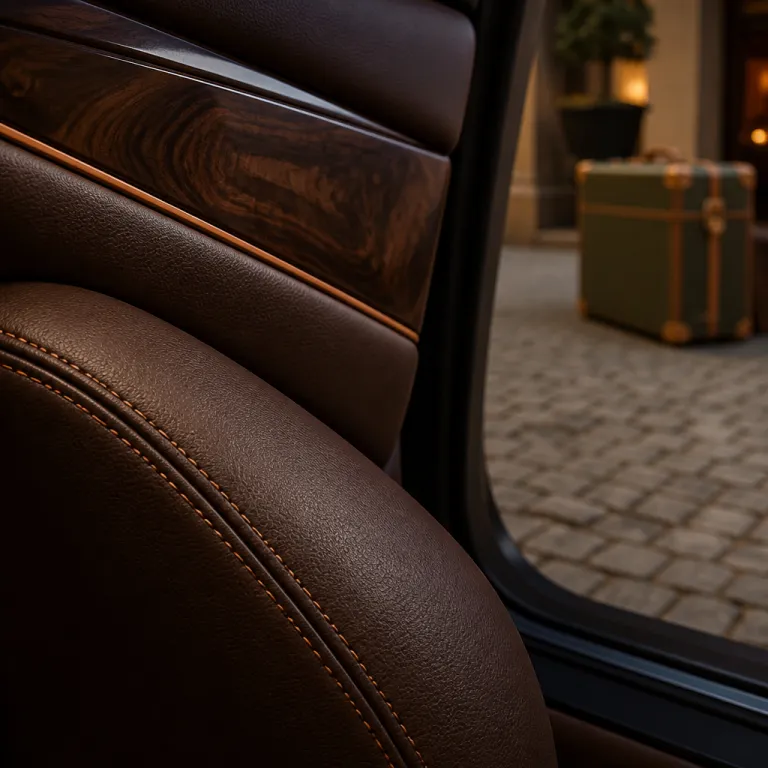
From corridor route to guest experience: why Boston to New York car service matters
Between Boston and New York City, the hotel journey often starts long before check-in. For airlines, rail operators, and mobility platforms, the 215-mile distance between Boston and New York City is now a strategic corridor where ground transportation defines the overall travel experience. A well-designed Boston to New York car service can turn a stressful long-distance trip into a controlled, premium extension of the cabin or rail compartment.
Travel managers working on the Boston–NYC axis see that every car, limo, or black car assigned to this route becomes part of the brand promise. When a guest lands at the airport or steps off a train in either city, the next ride to the hotel must feel seamless, regardless of whether the trip is a one-way transfer or a round-trip corporate itinerary. This is why airlines and hoteliers increasingly treat long-distance limousine transportation as a core hospitality service rather than a peripheral add-on.
Specialized operators such as Long Ride Limo, East Coast Limousine Transportation, and Boston Executive Limo Service have built offerings around this specific corridor. Their Boston to New York car service products combine flat-rate pricing, professional chauffeurs, and luxury vehicles to guarantee predictable timing and comfort for both leisure and corporate travel. For mobility providers, partnering with such limousine and chauffeur service companies is now a way to secure consistent quality across the entire Boston–New York and New York–Boston flow, with service levels that can be benchmarked against publicly stated fleet standards and customer satisfaction scores.
Designing door to door transfers for airlines, rail, and hotels on the Boston–NYC axis
For airlines and rail companies, the Boston to New York car service is no longer just a transfer; it is a door-to-door product that must integrate with schedules, loyalty programs, and disruption management. When a flight into Boston Logan International Airport is delayed or an Amtrak service into New York Penn Station is rescheduled, the connected car services must automatically adapt, protecting the guest from operational chaos. This requires APIs between airline, rail, and chauffeur platforms, as well as clear service level agreements on wait time and rebooking rules that can be tracked through on-time performance dashboards.
Travel managers booking corporate services on the Boston–NYC corridor increasingly request bundled offers that include the long-distance ride, hotel night, and flexible return options. A curated New York car or limo fleet, with guaranteed Wi‑Fi and work-friendly interiors, turns the three-and-a-half-hour distance into productive time for executives. In one internal case study shared by a global hotel group, travellers using integrated door-to-door transport between New York and regional hubs like Baltimore and Washington reported a double-digit increase in satisfaction scores, offering a useful blueprint for similar Boston to New York City operations.
For hoteliers, integrating a preferred Boston to New York car service into pre-arrival communication helps secure direct bookings and higher ancillary revenue. Guests can book a black car or limousine directly from the hotel confirmation page, choosing between one-way and round-trip options that match their flight or rail times. When hotels coordinate with transfer platforms and local transportation partners, they can guarantee that every ride from Boston to NYC or from NYC back home feels like a coherent extension of the property’s service culture, supported by measurable indicators such as average response time and guest feedback scores.
Ride hailing versus chauffeur: when luxury and predictability win the corridor
On the Boston to New York corridor, ride-hailing apps compete with traditional chauffeur and limo service providers for both leisure and corporate segments. For short city hops, on-demand ride hailing works well, but over a long distance of more than 300 kilometres, predictability and comfort quickly become decisive. A pre-booked Boston to New York car service with a professional chauffeur, fixed price, and guaranteed vehicle category usually delivers a more stable guest experience and clearer expectations for travel managers.
Luxury-oriented travellers and VIP corporate clients often prefer a dedicated limousine or black car with consistent standards, rather than a random allocation from a ride-hailing pool. Operators such as East Coast Limousine Transportation and Boston Executive Limo Service position their limousine services as rolling lounges, with space to work, rest, or hold confidential conversations during the trip. One frequent business traveller described the difference as “the gap between hoping the car will be quiet enough for a call and knowing you can run a full video meeting on the way,” illustrating how far luxury car interiors can now support hospitality-grade comfort.
For mobility platforms and travel managers, the choice is not binary; they can combine flexible ride hailing in the city with pre-arranged limo car or New York car transfers for the long-distance segment. A guest might use a standard ride to reach the departure point in Boston, then switch to a chauffeur-driven car service for the main Boston–New York leg, and finally use another local ride in New York City. The key is to orchestrate these services under one booking flow, one payment, and one set of service guarantees, so that the guest perceives a single, coherent journey and partners can monitor corridor-wide KPIs such as missed-pickup rate or average wait time.
Operational excellence on a 3.5 hour corridor: time, safety, and flat rate strategy
The average travel time by car between Boston and New York is around three and a half hours under normal traffic conditions. For airlines, rail operators, and hotels, this duration is long enough to justify a full-service approach to the Boston to New York car service, with clear standards on safety, comfort, and productivity. Long-distance operations also require robust driver scheduling, rest policies, and vehicle maintenance routines to protect both guests and chauffeurs, often documented in internal safety manuals and compliance audits.
Professional operators on the Boston–NYC route increasingly use flat-rate pricing to simplify communication with travel managers and corporate buyers. Instead of variable metered fares, a fixed price per trip or per round trip allows precise budgeting and easier comparison with air or rail alternatives. Publicly advertised examples on provider pages often show tiered flat rates by vehicle class, which helps companies align car service policies with per-trip budget caps and demonstrate cost control in their travel programs.
Safety expectations are high on this corridor, especially for late-night airport pickups or early-morning departures from New York City hotels. Verified chauffeurs, GPS-tracked vehicles, and clear escalation procedures are now standard requirements for any serious car service Boston to NYC offer. As one set of frequently asked questions from travellers puts it very clearly: “How much does a car service from Boston to New York cost? Prices vary; contact providers for quotes. Are car services available 24/7? Yes, most services operate 24/7. Can I book a one-way trip? Yes, one-way trips are available.” These direct concerns, which frequently appear in online reviews and provider FAQs, should shape how mobility actors design and communicate their services.
Digital orchestration: booking flows, QR journeys, and verified guest feedback
For travel managers and platforms, the Boston to New York car service only scales efficiently when booking flows are fully digital. Corporate clients want to book a ride, modify a trip, or arrange a round trip in a few clicks, with instant confirmation and clear service options from New York to Boston and back. Integrating online booking and phone reservations into one CRM view helps airlines, rail operators, and hotels track every ride linked to a passenger record and analyse corridor performance over time.
Contactless guest transportation tools, such as QR-based booking and self-service kiosks, are becoming central to this orchestration. A traveller arriving at Boston Logan can scan a code, select a black car or limousine, and instantly book ride options for both the immediate transfer and the later return from NYC to Boston. For hotels, connecting these tools to their own systems allows them to push preferred car services and limo service partners while keeping full visibility on guest movements and ensuring that service promises match what is actually delivered.
Trust in any Boston to New York car service also depends on transparent feedback mechanisms. Corporate buyers and hoteliers increasingly rely on a mix of internal evaluations and external signals such as a detailed review on Google, a structured review from a travel management company, or an industry report that verifies operational data from an original source. When these feedback loops are integrated into the booking platforms, underperforming services can be quickly identified, while high-performing limo car and New York car partners can be rewarded with more volume and highlighted in preferred-supplier lists.
Building strategic partnerships along the Boston–NYC hospitality corridor
On the Boston to New York corridor, no single actor can deliver a flawless guest journey alone. Airlines, rail operators, mobility platforms, and hotels must align on shared standards for car, limo, and limousine operations, from vehicle age to chauffeur training. This alignment transforms a simple transportation link into a branded corridor where every ride reinforces loyalty and supports measurable improvements in guest satisfaction.
Service providers such as Long Ride Limo, East Coast Limousine Transportation, and Boston Executive Limo Service illustrate how specialized expertise can anchor these partnerships. They focus on long-distance Boston to New York car service operations, while airlines and hotels contribute passenger data, demand forecasts, and loyalty integration. Together, they can design tiered services ranging from efficient corporate transfers to ultra-luxury black car experiences for VIP guests, with each tier defined by clear service descriptions and target performance metrics.
For travel managers and hoteliers, the strategic question is how to structure these collaborations over time. Framework agreements can define capacity guarantees on peak days, shared marketing for Boston–New York and New York–Boston offers, and joint service recovery protocols when disruptions occur. When such agreements are supported by clear KPIs, verified guest feedback, and transparent financial data from each provider’s own reporting systems, the Boston to New York corridor becomes not only a transportation route but a competitive hospitality asset.
Key figures shaping Boston–New York hotel ground transportation
- The road distance between Boston and New York is approximately 215 miles, which positions the corridor as a viable alternative to short-haul flights for many travellers (based on routing data commonly used by limousine operators on this route and public mapping tools).
- The average travel time by car between the two cities is about 3.5 hours in typical traffic, making it long enough to justify full-service chauffeur offerings with work-friendly interiors and amenities (same industry data set and travel-time estimates published by navigation providers).
- Most professional Boston to New York car service providers operate 24/7, which allows airlines and rail operators to offer guaranteed ground transfers for early-morning and late-night arrivals without relying on ad hoc taxis, as reflected in standard operating hours listed on many provider pages.
- Flat-rate pricing models are increasingly used on the Boston–NYC corridor, reducing fare uncertainty for corporate travel managers and simplifying comparison with air or rail alternatives; sample rate cards published by operators typically show fixed prices by vehicle type and route.
FAQ about Boston–New York car services for hospitality partners
How long does a typical Boston to New York car service trip take ?
Under normal traffic conditions, a professional chauffeur-driven car will usually cover the distance between Boston and New York in around three and a half hours. Travel time can vary with weather, congestion, and specific pickup or drop-off points in each city. Travel managers should therefore plan some buffer time when connecting with flights or long-distance rail services, especially during peak travel periods.
Are Boston–NYC car services available around the clock for hotel guests ?
Most specialized operators on the Boston–NYC corridor offer 24/7 availability, including night-time and early-morning departures. This continuous service is essential for airlines and hoteliers managing late arrivals or irregular operations at the airport. It also allows corporate travellers to schedule trips based on business needs rather than public transport timetables, while maintaining access to support teams if plans change at short notice.
Can guests book one way or round trip transfers between Boston and New York ?
Guests can usually choose between one-way and round-trip options when they book a ride on this corridor. One-way trips are common for travellers combining a car service in one direction with rail or air in the other. Round-trip bookings, however, give travel managers better price visibility and help operators plan long-distance fleet utilisation, which can translate into more reliable availability on busy days.
What type of vehicles are typically used for Boston to New York hotel transfers ?
Operators on this route generally deploy a mix of sedans, SUVs, and dedicated limousine vehicles, often marketed as black car or limo service products. Corporate clients tend to favour sedans and SUVs with strong Wi‑Fi and power options, while luxury leisure travellers may request larger limousine models. Fleet diversity allows mobility platforms and hotels to match each guest profile with an appropriate level of comfort and cost, while still maintaining consistent safety and service standards.
How should airlines and hotels evaluate potential Boston–NYC car service partners ?
Evaluation should combine operational metrics such as on-time performance and safety records with qualitative feedback from guests and travel managers. External signals, including a detailed review on Google or a structured review from a trusted travel management company, help verify performance claims from each provider. Cross-checking these elements against data from the operator’s own reporting systems ensures that partnerships rest on verified, not anecdotal, information and supports more robust, long-term collaboration.
