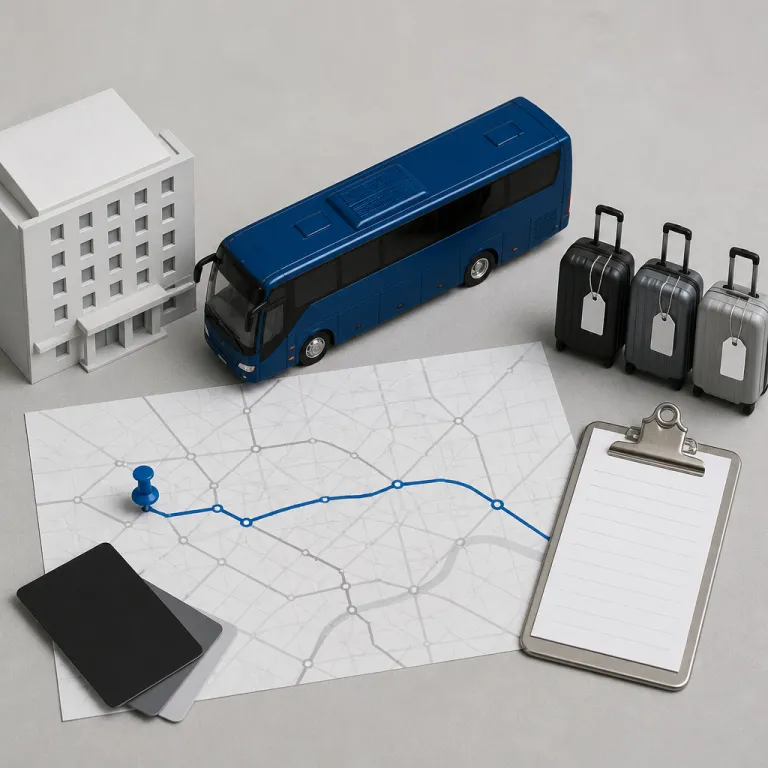
Reframing airport to hotel mobility through strategic motor coach bookings
For airlines, rail operators, and hoteliers, booking a motor coach is no longer a simple group transfer decision. It has become a core lever in the wider airport to resort mobility strategy, shaping how guests perceive the entire travel journey from runway to hotel lobby. When a coach or a fleet of motor coaches is aligned with flight and train schedules, the ground segment quietly upgrades from basic transport to curated luxury travel and brand-controlled hospitality.
Motor coach rental and charter solutions now sit at the crossroads between hospitality, mobility, and tourism, especially when large groups must reach hotels spread across a metropolitan area or resort region. Airlines and compagnies ferroviaires use coach rental contracts to protect punctuality and brand standards when irregular operations disrupt the air or rail network, while hôteliers rely on the same vehicles to consolidate arrivals into efficient night shuttles. In this context, booking a motor coach is less about a single vehicle and more about orchestrating a resilient, multi segment road experience that keeps the entire open road ecosystem synchronized and visibly under operational control.
Specialist providers such as Village Coach, JDK Transportation, and Windstar Lines illustrate how professionalized this segment has become for group travel. Village Coach focuses on nationwide motor coach leasing for entertainers and political campaigns, while JDK Transportation positions its coach rentals for sports teams and corporate trip planners who need reliable pickup delivery at multiple terminals. Windstar Lines, which emphasizes safe and comfortable motorcoach travel, shows how a well specified vehicle with Wi Fi, restrooms, and reclining seats can transform a long road trip into a premium class experience that rivals short haul flights, as reflected in its published fleet descriptions and customer FAQs.
On demand versus pre booked : redefining control in hotel transfers
Ground transport to the hotel has long oscillated between on demand taxis and pre booked shuttles, yet booking a motor coach introduces a different scale of control. When a travel manager secures a coach rental or a series of motor coaches in advance, they lock in capacity, comfort standards, and roadside assistance conditions that on demand ride hailing simply cannot guarantee. This is particularly critical for late night arrivals, where a pre booked night service ensures that every guest, family, and crew member reaches the hotel safely without scrambling for individual vehicles or coping with surge pricing.
The debate between on demand and pre booked transfers is explored in depth in analyses of how excursions reshape hotel ground transport models. For airlines and rail operators, the choice is not binary ; they often combine on demand options for individual travellers with charter rentals for high value groups, loyalty programme members, or disrupted passengers. Hôteliers, especially resorts near national parks or remote destinations, increasingly favour pre booked coach rental and motorhome style services for staff rotations, conference groups, and family vacation packages, because these rentals stabilise both cost per seat and service quality across multiple operating seasons.
On demand platforms still play a role, particularly for last minute travel trailer style needs, such as small teams requiring flexible rvs or camper vehicles for site inspections. Yet when the objective is to move 40 to 56 people in one motor coach, the economics of pre booked rentals are compelling, with average hourly costs around 100 USD for a full size vehicle, according to published USA market data from Buslane and similar industry sources. For travel managers, the ability to request quote options, negotiate free miles, and define pickup delivery windows in advance turns booking a motor coach into a strategic procurement decision rather than a tactical transport fix, especially when budgets must be justified line by line.
Designing guest centric journeys with motor coach fleets
Guest expectations around ground travel have shifted, and booking a motor coach now intersects directly with brand positioning for airlines, railways, and hotels. A well branded coach or motorcoach, equipped to a consistent comfort standard, extends the cabin or carriage experience onto the road, especially when luxury travel is part of the promise. When a family or corporate group steps from aircraft or train into a coordinated coach rental, the transition feels like a single continuous trip rather than a fragmented adventure across multiple modes and providers.
Analyses of pre booked versus on demand transfers as a question of brand control are particularly relevant here. Airlines that invest in charter contracts for motor coaches can align seat pitch, onboard amenities, and service rituals with their premium cabins, while hôteliers can mirror lobby aesthetics through curated interiors and lighting. For rail operators, integrating coach rentals and rvs style vehicles into through ticketing allows passengers to book a single journey that includes both train and road trip segments, with guaranteed pickup delivery at the station and hotel and clear service level commitments.
From a hospitality perspective, the vehicle itself becomes a mobile extension of the property, whether it is a standard motor coach, a luxury motorhome, or a small fleet of camper units for incentive trips. Amenities such as Wi Fi, power outlets, and restrooms are no longer optional extras ; they are baseline expectations for any serious coach rental or rentals portfolio. When travel managers can request quote packages that bundle roadside assistance, free miles, and flexible night operations, they gain the tools to design seamless, resilient journeys that keep guests comfortable even when the open road throws up delays, diversions, or weather related schedule changes.
Operational realities : capacity, safety, and scheduling for hotel transfers
Behind every elegant guest journey sits a complex operational puzzle, and booking a motor coach is one of the most powerful ways to solve it. A full size coach typically carries up to 56 passengers, which allows airlines and rail operators to consolidate multiple arrivals into a single vehicle while still respecting hotel check in windows. For hôteliers, this capacity means fewer separate arrivals at the porte cochère, smoother luggage handling, and more predictable staffing for night shifts and early morning departures.
Safety and reliability are non negotiable, especially when transfers run along mountain roads to resorts or through congested urban corridors at night. Professional providers such as Village Coach, JDK Transportation, and Windstar Lines invest heavily in driver training, vehicle maintenance, and advanced safety features, which is why travel managers are advised to verify safety records before confirming any coach rental. As one industry FAQ from Windstar Lines puts it clearly, “A motor coach rental is hiring a large, luxury vehicle for group transportation.”
Scheduling is equally critical, and the most successful programmes treat booking a motor coach as a timeline driven project rather than a last minute rental. Best practice is to confirm dates several weeks in advance, align pickup delivery times with flight and train schedules, and build buffers for road congestion or weather. When travel planners integrate roadside assistance, backup motor coaches, and contingency rental options into their contracts, they protect both the guest experience and the brand, ensuring that even an unexpected road trip detour feels like part of a planned adventure rather than a service failure. A typical case might involve a 50 kilometre airport to resort route with a 90 minute scheduled transfer, 45 passengers on board, and a total charter cost of around 250 USD, which equates to just over 5 USD per traveller for a controlled, end to end experience.
From group charters to experiential journeys : expanding the product mix
Once the basics of hotel transfers are under control, airlines, rail operators, and hotels can use booking a motor coach to expand into higher margin experiential products. Group charter services to national parks, wine regions, or cultural sites turn a simple transfer into a curated road trip that deepens the relationship between traveller and brand. For families, a dedicated motor coach or a small convoy of motorhome and rvs style vehicles can transform a standard family vacation into a shared open road adventure that begins at the arrivals hall and continues all the way to the resort.
Some hospitality groups now package coach rental with themed itineraries, such as night panoramic drives, culinary routes, or wellness retreats that start on board. In these concepts, the vehicle is not just a means of transport ; it is a moving lounge where guests enjoy ultimate luxury touches, from curated playlists to onboard tastings, while the landscape rolls past the windows. Travel managers can request quote options that combine motorhome units, camper add ons, and rvs support vehicles, creating flexible fleets that adapt to different group sizes and preferences without sacrificing comfort or safety.
For mobility platforms and acteurs de mobilité, this opens a new frontier in rentals and rental products that sit between traditional coach charters and individual car hire. They can offer pickup delivery at airports, stations, and hotels, bundle free miles for longer itineraries, and guarantee roadside assistance across the entire route. When these services are integrated into airline and hotel booking flows, booking a motor coach or related vehicles becomes as natural as selecting a seat class, reinforcing the perception that the brand manages every kilometre of the journey with the same care and attention as the flight or rail segment.
Data, sustainability, and the future of hotel bound motor coach services
As sustainability and data driven decision making reshape hospitality, booking a motor coach is emerging as a powerful lever for both environmental and commercial performance. A single fully occupied coach can replace dozens of individual vehicles on the road, cutting emissions per passenger and easing congestion around airports, stations, and hotels. For airlines and rail operators under pressure to decarbonise, shifting disrupted passengers or crew transfers from taxis to motor coaches is an immediate, measurable win that can be tracked in annual sustainability reports.
Digital platforms now allow travel managers to compare rentals, request quote options in real time, and track vehicle utilisation, which supports more accurate forecasting and better ROI on charter contracts. Innovation in this space includes online tools that streamline the entire process from initial enquiry to pickup delivery, while also capturing data on load factors, journey times, and guest satisfaction. When these datasets are shared responsibly between airlines, rail operators, mobility platforms, and hôteliers, they enable continuous optimisation of routes, schedules, and fleet mix, including when to deploy standard motor coaches versus motorhome or camper units for specific segments.
Looking ahead, the convergence of electric motors, connected vehicles, and hospitality grade service design will further elevate the experience of booking a motor coach for hotel transfers. We are already seeing increased demand for eco friendly vehicles, enhanced onboard entertainment, and more flexible roadside assistance packages that keep trips running smoothly even in remote national parks or along challenging sections of the open road. For brands that embrace this shift, the humble coach rental becomes a strategic asset, turning every road trip, family vacation, or corporate adventure into a signature experience that begins and ends at the hotel door and is documented through reliable operational data.
Key figures shaping motor coach based hotel transfers
- Average hourly cost for a full size motor coach rental is around 100 USD, which allows travel managers to benchmark group transfer budgets against multiple taxis or ride hailing options for the same route (Buslane, USA market data and comparable industry benchmarks).
- A standard coach typically accommodates up to 56 passengers, enabling airlines and rail operators to consolidate several flight or train arrivals into a single vehicle while maintaining schedule discipline for hotel check in (Windstar Lines operational data and provider specifications).
- Booking a motor coach several weeks in advance is widely recommended by nationwide providers, because peak periods and major events can quickly exhaust available rentals and charter capacity across regions.
- Industry trends show rising demand for eco friendly coaches, advanced safety features, and enhanced onboard entertainment, reflecting guest expectations that ground transfers should match the comfort and technology of modern aircraft and trains.
FAQ about booking a motor coach for hotel transfers
What is a motor coach rental in the hotel transfer context ?
In the context of hotel transfers, a motor coach rental means hiring a large, luxury vehicle with a professional driver to move a group, typically up to 56 passengers, between airports, stations, and hotels in a single coordinated trip. This approach replaces multiple smaller vehicles, simplifies luggage handling, and allows airlines, rail operators, and hôteliers to control service standards. It is especially valuable for conferences, tour groups, and disrupted passengers who must travel together under tight time constraints.
How far in advance should I book a motor coach for group arrivals ?
For predictable events such as conferences or seasonal peaks, booking a motor coach several weeks in advance is advisable to secure the right capacity, comfort level, and schedule. Large hubs with frequent events can see high demand for rentals and charter services, so early reservations help avoid last minute compromises on vehicle quality or pickup delivery times. Travel managers should confirm final passenger counts and luggage volumes a few days before departure to allow providers to fine tune the vehicle allocation and staffing.
Which amenities should airlines and hotels require on board ?
For most airport or station to hotel transfers, core amenities should include comfortable reclining seats, air conditioning, Wi Fi, power outlets, and an onboard restroom, especially for journeys longer than one hour. These features align the coach experience with modern aircraft cabins and rail carriages, supporting a seamless perception of class and comfort across the entire journey. For premium or luxury travel segments, brands may also specify entertainment systems, refreshments, and branding elements that extend the hotel or airline identity onto the vehicle.
How do costs compare with taxis or ride hailing for large groups ?
When moving 40 to 56 passengers, a single motor coach rental at around 100 USD per hour often proves more economical than booking multiple taxis or ride hailing vehicles, particularly on longer routes. Consolidating guests into one vehicle reduces coordination complexity, lowers per passenger costs, and simplifies billing for airlines, rail operators, or event organisers. The ability to request quote packages with free miles and bundled roadside assistance further improves cost predictability and supports transparent budgeting.
What safety checks should be done before confirming a coach rental ?
Before confirming any booking, travel managers should review the provider’s safety record, maintenance schedules, driver training standards, and insurance coverage. Reputable companies such as Village Coach, JDK Transportation, and Windstar Lines publish clear safety information and welcome detailed operational questions from corporate clients. Verifying these elements in advance ensures that the road segment of the journey meets the same safety expectations as the air or rail legs and supports internal duty of care obligations.
References
- Buslane – market data on average hourly costs for motor coach rentals in the USA, supported by comparable pricing in industry surveys.
- Windstar Lines – operational information on passenger capacity and safety practices for motorcoach travel, including published FAQs and fleet specifications.
- Village Coach and JDK Transportation – provider documentation on nationwide motor coach leasing and group charter services, outlining typical use cases and service standards.