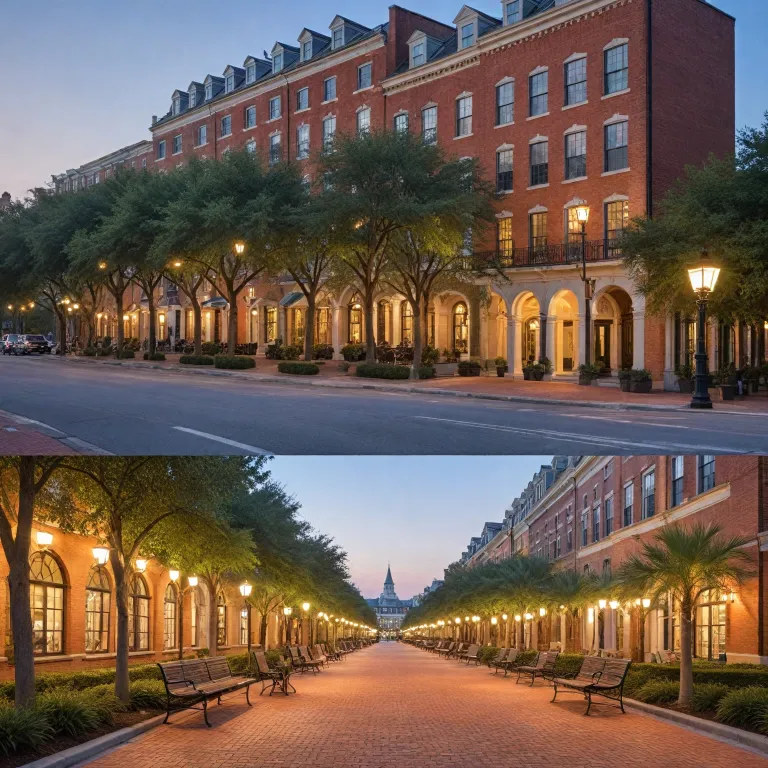
Understanding the Charleston to Savannah distance for hotel centric mobility
The Charleston to Savannah distance may appear modest, yet it shapes every hotel focused mobility decision. Between Charleston, South Carolina and Savannah, Georgia the driving distance is roughly 172 kilometres, which translates into about 2 hours and 17 minutes of driving time in normal conditions. For travel managers and hoteliers, this short corridor between two historic cities is long enough to require planning, but compact enough to enable efficient same day movements.
In practice, the Charleston Savannah axis functions as a single leisure ecosystem, where guests often split a trip between both cities. Many travellers plan a day trip from one city to the other, combining a morning drive with an afternoon check in at a hotel near a historic district or waterfront. Because the distance Charleston visitors must cover is limited, they can comfortably add a second city to their itinerary without extending the overall stay by several days.
From an operational standpoint, the air distance between Charleston and Savannah is shorter still, around 139 kilometres, which influences flight distance calculations and potential regional aviation strategies. While direct flight options remain limited, airports in Charleston South Carolina and Savannah Georgia still play a role in multimodal itineraries that combine flight, train, bus and car. For hospitality stakeholders, understanding both the driving distance and the air distance is essential to anticipate arrival times, manage early check in requests and coordinate transfers.
As travel between the two cities continues to grow, the Charleston to Savannah distance becomes a strategic metric rather than a simple number on a map. It informs road trip marketing, shuttle design, and even how concierges describe a trip Charleston guests might add at the last minute. Ultimately, this compact corridor is where mobility, guest experience and hotel revenue intersect.
Designing multimodal transfers between Charleston and Savannah hotels
For airlines, rail operators, mobility platforms and hoteliers, the Charleston to Savannah distance invites a multimodal approach. Travellers may land after a flight into one city, then continue their trip by train, bus, car or private transfer to a hotel in the other. Each mode has different driving time implications, which directly affect perceived comfort, fatigue and the likelihood of extending a stay by an extra day.
Although there is currently no direct intercity train between Charleston and Savannah, rail still shapes the broader network. Passengers arriving by train to one city often complete the remaining distance by bus, car or chauffeur service, turning the last 172 kilometres into a curated road trip experience. For mobility platforms, integrating real time data from each bus station, airport and car fleet is crucial to keep total travel time under three hours door to door.
Scheduled bus services, including a dedicated Charleston bus or Savannah bus route, can stabilise demand and support predictable check in patterns for hotels. When a bus arrives at regular intervals, front office teams can align staffing, while travel managers can guarantee that a group trip Savannah or trip Charleston will reach the hotel within a defined window of minutes. This reliability is especially important for meetings and incentives, where a missed connection can compromise an entire day.
Car based options remain dominant, with many guests choosing to drive a rental car between the two cities. Here, the driving distance and driving time must be communicated clearly, including recommendations to check traffic conditions, consider weather and plan rest stops. When hotels and mobility partners jointly frame the Charleston Savannah corridor as an easy, scenic drive rather than a logistical hurdle, they elevate both the journey and the arrival.
Optimising guest experience along the Charleston Savannah corridor
The relatively short Charleston to Savannah distance allows hotels to treat the journey itself as part of the guest experience. A curated road trip between Charleston South Carolina and Savannah Georgia can include suggested stops, scenic detours and restaurant recommendations that transform two hours of driving into a memorable part of the stay. Travel managers increasingly request such content for corporate travellers who want to combine efficiency with a sense of place.
Within Savannah, the historic district and Forsyth Park are natural anchors for hotel centric mobility planning. Guests who complete the drive from Charleston often want to drop their car quickly, check in, and then continue the trip on foot, by bike or via a short bus ride. By mapping the distance between key landmarks, hotels can advise whether a transfer by car is necessary or whether a ten to fifteen minutes walk will be more pleasant.
Similarly, in Charleston city neighbourhoods, from the peninsula to Charleston South beaches, the last kilometre matters as much as the intercity distance. A guest arriving by Savannah bus or after a flight into Charleston airports expects a seamless transition from station or terminal to hotel lobby. Coordinated shuttles, clear signage and pre booked car services reduce perceived travel time and help guests feel that the trip is under control.
For both cities, day trip patterns are increasingly common, especially among repeat visitors who already know the main attractions. A guest may base their stay in Charleston city, then schedule a day Savannah excursion focused on Forsyth Park and the riverfront, returning by car in the evening. When hotels anticipate these movements and provide accurate information on driving distance, driving time and parking, they position themselves as trusted mobility advisors rather than passive accommodation providers.
Operational implications for airlines, airports and mobility providers
The Charleston to Savannah distance also carries operational consequences for airlines, airports and mobility providers serving the hospitality sector. Because the air distance is only about 139 kilometres, regional flight time between the two cities would be short, but turnaround and ground handling would dominate total travel time. As a result, airports tend to focus on feeding longer haul routes, while ground transport covers the intercity segment.
For airlines and travel managers, this means that a typical itinerary might involve a flight into Charleston South or Savannah Georgia, followed by a car or bus transfer to the final hotel. The key is to minimise layover time and align arrival waves with ground transport schedules, so that the overall trip duration remains competitive with a direct drive. When executed well, this multimodal chain can keep total door to door time under half a day, even for international travellers.
Bus operators and mobility platforms can leverage the predictable driving distance to design high reliability services. A Charleston bus route that consistently completes the distance Charleston to Savannah in around 2 hours and 17 minutes becomes a backbone for both leisure and corporate travel. Similarly, a Savannah bus service timed to meet inbound flights can channel passengers directly from airport to city hotel, reducing the need for individual car rentals.
For more detailed planning of a refined trip between these two cities, stakeholders can refer to specialised resources such as planning a refined trip to Charleston from Savannah for hotel focused mobility. As travel information providers note, "Approximately 107.2 miles." and "About 2 hours and 17 minutes." and "Approximately 86.2 miles." are the key reference figures that underpin these operational models. With such precise benchmarks, mobility actors can calibrate schedules, capacity and pricing with confidence.
Leveraging the Charleston Savannah axis for hotel revenue and positioning
For hoteliers, the Charleston to Savannah distance is not only a logistical parameter ; it is a commercial opportunity. By promoting twin city itineraries, properties in both cities can encourage guests to extend a stay by one or two nights, splitting their time between different neighbourhoods and atmospheres. A carefully structured trip Charleston followed by a trip Savannah can feel like a single, coherent journey rather than two separate vacations.
Revenue managers can build packages that incorporate transport, such as bundled car rentals, curated road trip maps or negotiated bus tickets. When the driving distance is transparent and the driving time is framed as comfortable, guests are more willing to prepay for such options, improving cash flow and forecasting. Hotels near airports can also position themselves as ideal first night or last night bases for travellers who will drive the remaining distance the next day.
In marketing communications, emphasising the manageable distance Charleston to Savannah helps reduce perceived effort for international visitors unfamiliar with south Carolina and Georgia geography. Visual maps, clear references to flight distance and realistic estimates in minutes and hours all contribute to trust. Travel managers booking for groups appreciate this clarity, as it allows them to justify a day trip or multi city programme to their corporate stakeholders.
Finally, hotels that integrate real time mobility information into their CRM and guest messaging can differentiate themselves in a competitive market. Proactive updates about traffic, weather along the route, or alternative bus station options in each city transform a standard stay into a supported journey. In this way, the Charleston Savannah corridor becomes a living example of how mobility, data and hospitality can work together to elevate the overall travel experience.
Future oriented mobility strategies between two historic cities
Looking ahead, the Charleston to Savannah distance will continue to influence strategic decisions across the hospitality and mobility ecosystem. As demand grows between these two historic cities, pressure will increase for more sustainable options, from higher occupancy buses to potential rail enhancements. Any future train solution would need to balance infrastructure costs with the relatively short distance and existing driving time advantages.
In the meantime, incremental improvements can significantly enhance the guest journey. Better integration between airports, bus operators and hotels can shorten effective travel time, even without changing the physical distance. Digital platforms that aggregate options for car rentals, Charleston bus services, Savannah bus routes and private transfers allow travellers to compare driving distance, driving time and price in a single interface.
For mobility providers, the corridor is an ideal testing ground for demand responsive transport, especially for off peak day trip patterns. A flexible service that adapts to real time bookings could connect smaller hotels outside the main historic district areas to central bus station hubs in each city. This would extend the benefits of increased travel between Charleston city and Savannah city beyond the most touristic zones.
For hoteliers and travel managers, the priority is to keep the guest at the centre of every mobility decision. Whether the traveller chooses to drive a car, board a bus, or combine a long haul flight with a short regional transfer, the aim is to make the Charleston Savannah journey feel effortless. By treating the modest distance Charleston to Savannah as a canvas for innovation rather than a constraint, the industry can create a model of hotel focused mobility that other city pairs will want to emulate.
Key quantitative insights on the Charleston to Savannah distance
- Driving distance between Charleston, South Carolina and Savannah, Georgia is approximately 172 kilometres.
- Typical driving time between the two cities is about 2 hours and 17 minutes in normal traffic.
- Air distance between Charleston and Savannah is roughly 139 kilometres, shorter than the road route.
- These figures support efficient same day movements and frequent day trip patterns for travellers.
Frequently asked questions about travel between Charleston and Savannah
What is the driving distance from Charleston to Savannah ?
The driving distance from Charleston to Savannah is approximately 172 kilometres, following the most commonly used highway route between the two cities. This distance supports comfortable same day transfers by car, bus or private shuttle. Travellers should still check traffic and weather conditions before departure.
How long does it take to drive from Charleston to Savannah ?
It typically takes about 2 hours and 17 minutes to drive from Charleston to Savannah in standard traffic. This driving time can vary slightly depending on departure hour, season and any planned rest stops. Travel managers often recommend allowing a small buffer of extra minutes for unforeseen delays.
What is the air distance between Charleston and Savannah ?
The air distance between Charleston and Savannah is roughly 139 kilometres, shorter than the road route. This figure is useful for airlines, airports and travel planners when modelling potential regional flight options. However, ground transfers currently remain the dominant mode between the two cities.
Is a day trip between Charleston and Savannah realistic for hotel guests ?
Yes, a day trip between Charleston and Savannah is realistic for many hotel guests, thanks to the relatively short driving distance and manageable driving time. Travellers can leave one city in the morning, spend several hours exploring the other, and return by evening. Hotels often provide tailored itineraries to maximise the value of such a day trip.
How should hotels communicate the Charleston to Savannah distance to international travellers ?
Hotels should communicate the Charleston to Savannah distance using clear kilometre figures, realistic driving time estimates and simple maps. Providing both road and air distance helps guests understand the scale of the trip, especially if they are unfamiliar with south Carolina and Georgia geography. Transparent information builds trust and encourages guests to include both cities in a single itinerary.
