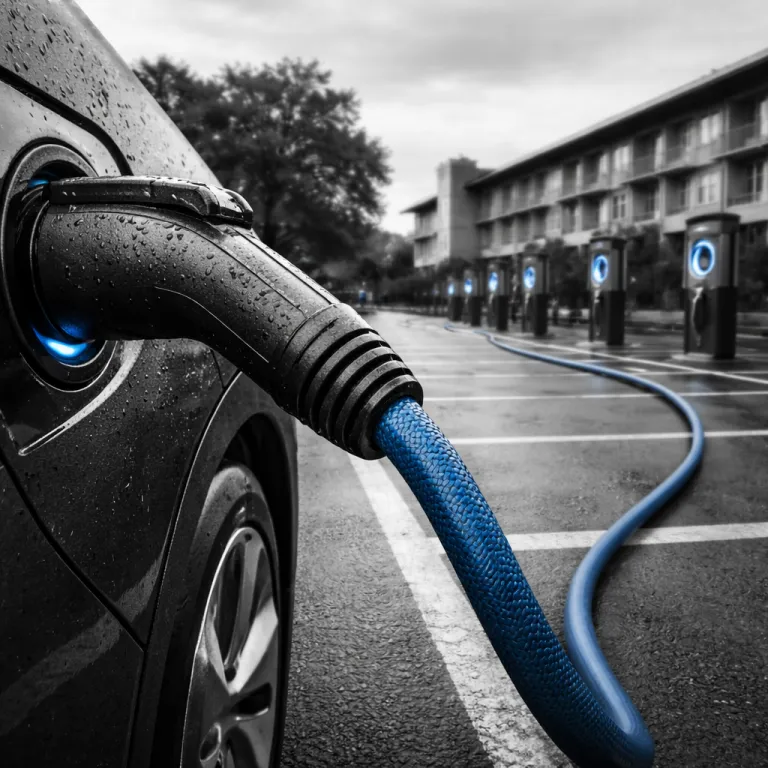
The Austin case: when EV charging turns a hotel into a mobility asset
EV charging hotels are no longer a sustainability side project. A 200 room business property in a secondary United States city installed twelve Level 2 charging stations and two DC fast chargers, and the payback arrived in under two years. The headline is attractive, but the real story is how that stay charge revenue mixed with room nights and guest behaviour to reshape the asset.
The project cost sat around 186 000 dollars, including trenching, utility upgrades, software, and permitting over a six month timeline. Direct charging brought roughly 4 200 dollars per month, but the hotel also saw a 9 percent booking uplift from EV business travellers who used apps such as PlugShare to find hotels with chargers and then filtered by EV charging hotels on brand sites. Review scores climbed by 0.3 points on major platforms, and that rating lift translated into higher RevPAR, especially in peak city demand weeks.
For mobility partners, this is not just about a few cables in a north corner of the park level. Airlines and rail operators can treat such hotels charging infrastructure as an extension of their own ground product, especially when the property is already a transfer node between airport, station, and business district. When a travel manager negotiates a preferred agreement with inn suites or embassy suites brands that offer charging, the conversation now includes guaranteed charging stations access, pricing, and data sharing on charge car sessions. That is the level of detail where EV charging hotels start to look like smart mobility hubs rather than static accommodation.
Deconstructing ROI: where the return really comes from
The Austin numbers show that direct charging revenue is only one layer of the ROI stack. The hotel’s EV guests stayed 12 to 20 percent longer and ate on site more often, which meant higher total spend per stay and better utilisation of restaurants, bars, and meeting spaces. National Car Charging data indicates that EV guests return at 2.1 times the average rate, while properties without EV charging hotels infrastructure lose 8 to 14 percent of EV driving bookings to competitors.
For a 200 room property, that retention gap is not theoretical ; it is a structural shift in demand. When EV travellers can view listing details that clearly state hotels offer charging, they are more likely to book direct, enrol through member login, and consolidate their trips with one brand. That loyalty effect compounds over time, especially for frequent flyers and rail passengers who treat a familiar hampton inn or hilton near the airport as their default inn suites option.
There is also a reputational dividend that matters for mobility partners. A clear view of chargers on a hotel’s map, integrated into airline or rail booking flows, reassures travellers that their charge car needs will be met without detours across the city. When a property in colorado springs or near bryce canyon positions itself as one of the EV charging hotels along a scenic route, it captures both overnight stays and daytime charging stops from road trippers heading north or towards the lake and beach destinations. Over a few years, that blend of direct charge revenue, incremental bookings, and review lift can outperform many traditional capital projects.
Guest behaviour: why EV households reshape the on property journey
EV drivers tend to be higher income, time sensitive travellers who plan their journeys around reliable charging. For airlines, rail operators, and transfer platforms, partnering with EV charging hotels means offering a seamless chain from gate or platform to room and back to the airport or station. These guests often arrive with a clear plan to charge while they sleep, dine, or attend meetings, and they expect the hotel to manage that choreography without friction.
Data from Hilton Hotels and Marriott Hotels portfolios shows a rapid expansion of EV charging hotels locations across the United States, with more than one thousand four hundred hilton properties and over one hundred Marriott hotels in Texas alone already equipped. Guests use tools such as PlugShare to find hotels and then confirm details when they contact hotels directly, often asking about the number of chargers, whether charging is free or paid, and how to reserve a slot. “Use apps like PlugShare to find EV-friendly hotels. Confirm charger availability directly with the hotel. Plan charging stops along your route.”
On property, these travellers behave differently from a traditional transient guest. They are more likely to stay charge on site, choosing to work in the lobby, visit the spa, or book suites with a better view while their vehicle charges in the park level or at the edge of the grand entrance. Resorts near a lake, beach, or grand island style setting can programme experiences around that dwell time, from sunset cocktails to early springs hikes, turning a necessary charging stop into a memorable part of the trip. For mobility partners, that means the transfer is not just a ride ; it is the start of a curated, energy aware stay.
Designing smart mobility ecosystems around EV charging hotels
For a hotel group VP or C suite, the strategic question is how EV charging hotels fit into a broader smart mobility ecosystem. The most effective properties treat chargers as part of a network that includes airport shuttles, rail station transfers, ride hail partnerships, and sometimes micro mobility options such as e bikes. The goal is a seamless journey where the guest never has to ask whether their vehicle, or their shuttle, will have enough charge to complete the trip.
In practice, that means specifying hardware and software that can integrate with airline and rail APIs, loyalty systems, and mobility as a service platforms. A hilton or hampton inn near a major hub can, for example, allow EV shuttle vans to charge between airport runs, with the schedule visible to travel managers through a secure member login style portal. Embassy suites properties in dense city locations such as san francisco can add charging bays for ride hail fleets, aligning charging stations availability with peak arrival waves from evening flights and late trains.
Resort style EV charging hotels near natural attractions like bryce canyon or colorado springs can go further, coordinating with national park authorities and regional mobility actors to manage flows into sensitive areas. By publishing a clear view listing of hotels chargers capacity, pricing, and time limits, they help distribute demand across north and south entrances, lake access points, and island ferry terminals. For airlines and rail companies, these partnerships create a differentiated ground product that extends the brand promise beyond the aircraft or train into the last kilometre of the journey.
Where the math works, where it fails, and how to decide
Not every property should rush into a large scale EV charging hotels project. The business case is strongest where there is a clear corridor of EV traffic, a mix of corporate and leisure demand, and supportive incentives from federal, state, or municipal programmes. In some regions, tax credits and utility rebates can cover between 80 and 100 percent of installation costs, dramatically shortening the payback period.
Urban properties near airports, rail hubs, or high income suburbs usually see the fastest ROI because EV penetration among guests is already high. A city centre inn or inn suites asset with limited parking may still justify a smaller number of chargers if it can command a premium from corporate accounts that require hotels charging as part of their sustainability commitments. Conversely, a remote roadside inn with low occupancy and minimal EV traffic might be better served by a phased approach, starting with one or two chargers and monitoring utilisation before deciding to add charging capacity.
Decision makers should map their catchment area, analysing airline and rail schedules, corporate account locations, and EV registration data to estimate demand. They should also benchmark competitors, from hampton inn to independent beach resorts, to see which hotels offer charging and how they price it, whether as a free amenity or a paid service. When the numbers align, EV charging hotels become not just a green gesture but a core part of the asset’s mobility strategy, supporting higher RevPAR, stronger loyalty, and a more resilient position in the united hospitality and transport ecosystem.
Key statistics on EV charging hotels and mobility ROI
- Hilton Hotels operates more than 1 400 locations with EV charging stations across the United States, signalling that large chains now treat EV charging hotels as a standard amenity in many markets.
- Marriott Hotels offers EV charging at over 100 properties in Texas alone, showing how regional clusters of EV charging hotels can support both road trip corridors and major city hubs.
- In a documented Austin case, a 200 room hotel invested approximately 186 000 dollars in EV charging infrastructure and achieved payback in under two years through a mix of direct charging revenue, a 9 percent booking increase, and a 0.3 point rating lift.
- Industry data indicates that EV guests stay 12 to 20 percent longer and return at more than twice the average rate, which means EV charging hotels can capture higher lifetime value per guest than comparable properties without chargers.
- Some incentive programmes allow hotel owners to offset between 80 and 100 percent of EV charging installation costs through tax credits and rebates, significantly improving the ROI profile for EV charging hotels projects.
Frequently asked questions about EV charging hotels and transport to the hotel
How can airlines and rail operators integrate EV charging hotels into their customer journey ?
Airlines and rail operators can integrate EV charging hotels by incorporating EV amenity filters into their booking flows and post booking communications. They can highlight partner hotels that provide guaranteed charging stations, clear pricing, and real time availability, turning these properties into preferred ground mobility hubs. This integration helps travellers align flight or train schedules with charging windows, reducing anxiety and improving the overall journey.
Are hotel EV charging stations usually free for guests, and how should pricing be structured ?
Policies vary widely ; some EV charging hotels offer free charging as a loyalty benefit, while others charge per kilowatt hour, per session, or per hour of parking. For business heavy properties, a hybrid model often works best, with a certain number of free hours for elite members and transparent paid options for other guests. The key is to avoid opaque fees and to communicate pricing clearly in the view listing, pre arrival emails, and at the physical chargers.
What role do travel managers play in selecting EV charging hotels for corporate programmes ?
Travel managers increasingly treat EV charging capability as a mandatory criterion when they find hotels for corporate travellers who drive electric vehicles. They negotiate contracts that specify the number of chargers, reservation rules, and whether charging is included or billed back, aligning these terms with corporate sustainability targets. By doing so, they ensure that employees can charge car vehicles reliably while also supporting emissions reduction goals.
How can smaller inns and independent hotels compete with large chains on EV charging ?
Smaller inns and independent hotels can compete by focusing on reliability, service design, and local partnerships rather than sheer charger volume. A well managed inn or inn suites property that offers a few high quality chargers, clear instructions, and flexible support from staff can outperform larger brands with poorly maintained infrastructure. Partnering with regional mobility providers, such as airport transfer companies or park and ride operators, can further enhance their position as credible EV charging hotels.
What are the main risks when investing in EV charging infrastructure at hotels ?
The main risks include overestimating demand, underestimating grid upgrade costs, and choosing hardware or software that cannot integrate with future mobility platforms. Hotels should conduct a thorough feasibility study, including utility consultations and demand projections, before committing to large installations. They should also plan for phased expansion, allowing them to add charging capacity as utilisation grows and as partnerships with airlines, rail operators, and transfer platforms mature.
Sources
- Hilton Hotels corporate information on EV charging locations in the United States
- Marriott Hotels destination data on EV charging hotels in Texas
- National Car Charging industry reports on EV guest behaviour and hotel ROI
