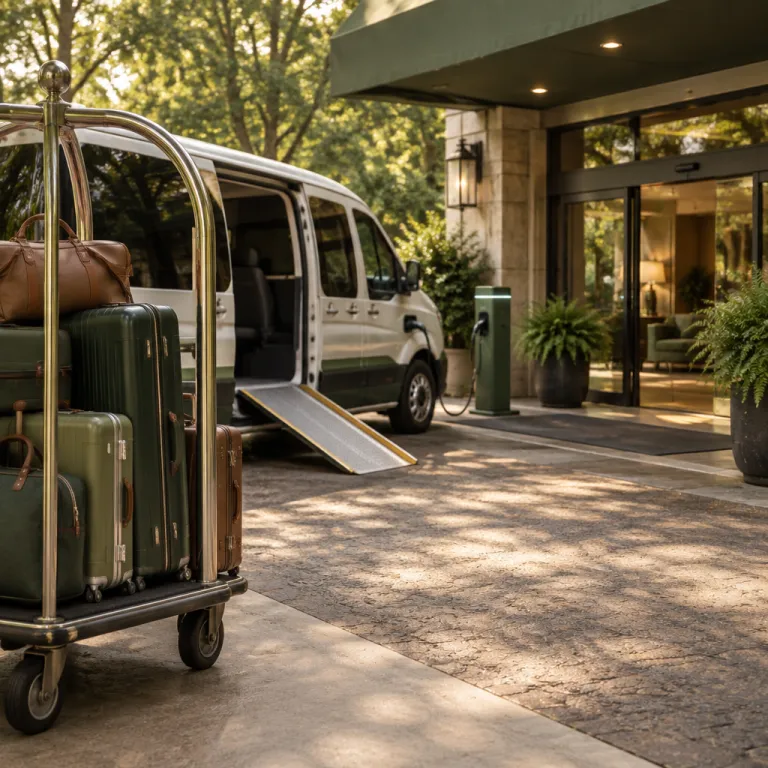
Corporate transport services as a strategic extension of the hotel experience
For airlines, rail operators, and hoteliers, corporate transport services now shape the first and last impression of every business travel programme. When a corporate transportation strategy connects airport, station, and hotel seamlessly, the guest experience becomes as consistent as an airline cabin or a premium rail class. This shift turns what was once a simple transfer into a branded, measurable touchpoint for every passenger.
In major hubs such as New York City, a corporate mobility programme often starts before the traveller even lands. Travel managers can book a car service or corporate shuttle directly from the airline or hotel app, aligning airport transfers with flight and rail schedules in real time. The same logic applies in any large city where a corporate car or executive sedan fleet must integrate with hotel inventory, loyalty programmes, and corporate event calendars.
For hospitality leaders, the goal is no longer to provide a basic shuttle service between airport and hotel. The ambition is to orchestrate transportation services that mirror the hotel’s positioning, whether that means a premium sedan class, a van for group transportation, or a mid-size bus for a large corporate event. When these services are designed as part of a structured corporate mobility programme, they support both guest satisfaction and operational efficiency. As one New York hotel operations director put it after consolidating three separate shuttle contracts into a single corporate transportation partner, “Guests stopped talking about the transfer and started talking about how easy the whole trip felt.”
Designing airport to hotel journeys for corporate travellers and crews
Airlines and rail companies rely on corporate transport services to move crews, premium passengers, and disrupted travellers between airport, station, and hotel with minimal friction. In a complex hub such as New York, airport transfers between JFK, LaGuardia, and a Manhattan hotel must be synchronised with irregular operations and last minute schedule changes. A robust transportation service here is not a luxury; it is a resilience tool for the entire corporate travel ecosystem.
When a carrier partners with a specialised car service provider, the New York corporate mobility chain can include executive sedans, passenger vans, and charter bus options under a single contract. This allows travel managers to allocate the right class of vehicle to each passenger profile, from a solo executive in a premium car to a full crew in a shuttle bus or corporate coach. Such integrated transportation services reduce waiting time at the airport and improve duty of care compliance for both airline and hotel partners.
For hoteliers, aligning airport transfers with room inventory and meeting space availability is equally critical. A hotel that controls its own shuttle service or works with a dedicated corporate transportation partner can time arrivals to match check in flows, reducing lobby congestion and improving perceived service quality. Case studies shared at Hotel Technology Next Generation (HTNG) conferences describe properties that cut average check in queues by several minutes simply by coordinating airport shuttle timetables with expected arrival peaks.
Corporate mobility programmes for meetings, incentives, and large events
When a city hosts a major corporate event, transportation becomes as strategic as venue selection or room blocks. Airlines, rail operators, and mobility platforms must coordinate group transportation so that hundreds of delegates reach their hotels and meeting venues on time. In this context, event transportation is no longer a side topic; it is a core pillar of risk management and guest satisfaction.
A well designed programme will combine a charter bus fleet, a flexible pool of mid-size buses, and a set of vans and corporate car options for VIPs and speakers. Travel managers can book each transportation service type according to attendee profile, time of day, and distance between airport, station, and hotel. For hoteliers, offering a branded corporate shuttle or shuttle service during peak arrival windows can differentiate the property in a crowded New York City or European gateway market.
Event planners increasingly expect detailed drivers’ manifests, live tracking, and clear communication for every passenger and every vehicle. This is where mobility platforms and transfer marketplaces can add value by aggregating car service, corporate transportation, and group transportation capacity under a single interface. In one large incentive programme reported by the Global Business Travel Association (GBTA), consolidating all airport transfers and hotel shuttles through a unified mobility platform reduced no show rates and late arrivals by double digit percentages while improving satisfaction scores for ground transportation.
From point to point transfers to integrated corporate mobility ecosystems
Corporate transport services are evolving from isolated point to point transfers into integrated mobility ecosystems that span the entire city. Airlines, rail operators, and hotels now expect transportation services to plug into their CRM, payment, and duty of care systems. This integration allows every car, bus, or van movement to generate usable data for both operational planning and guest experience design.
In practice, a New York corporate mobility ecosystem might connect airport transfers from JFK or LaGuardia with hotel check in, meeting schedules, and even restaurant reservations. A corporate shuttle can be dynamically reassigned from an early morning airport run to a midday transfer between New York City offices and partner hotels, optimising both cost and utilisation. When corporate transportation is managed this way, every passenger movement becomes part of a coherent business travel narrative rather than a series of disconnected rides.
For hospitality brands, adopting a luxury travel concierge mindset can transform how transportation is perceived internally. Instead of treating a car service or shuttle service as a commodity, hoteliers and travel managers can curate executive cars, premium vehicles, and group transport options that reflect the brand’s positioning. Internal benchmarking from several international hotel groups shows that properties which treat corporate mobility as a concierge level service often record higher net promoter scores for the overall stay, even when room product and amenities remain unchanged.
Operational excellence, safety, and data for corporate transport services
For corporate buyers and hospitality partners, the quality of corporate transport services is measured in punctuality, safety, and passenger satisfaction. Detailed drivers’ training, rigorous vehicle maintenance, and clear service level agreements are non negotiable foundations. When airlines and hotels share data on delays, occupancy, and guest feedback, they can refine transportation services continuously.
In a dense city such as New York, managing a mixed fleet of sedans, executive cars, vans, and charter bus vehicles requires precise planning. Travel managers must balance the need for rapid airport transfers from JFK or LaGuardia with congestion constraints and sustainability targets. Group transportation for a corporate event may call for a mid-size bus solution on narrow streets, while a larger coach is reserved for highway segments between airport and suburban hotels.
Safety and duty of care expectations are rising across all segments of business travel. Corporate transportation providers are increasingly asked to share real time tracking, driver identity, and incident reporting with airlines, rail operators, and hotels. When a car service or corporate shuttle partner can supply this level of transparency, it strengthens trust and positions transportation as a strategic asset rather than a simple cost centre.
Aligning commercial models and partnerships across the mobility value chain
Building effective corporate transport services for hotel access requires aligned incentives across airlines, rail companies, mobility platforms, and hoteliers. Traditional per ride contracts for car service or shuttle service are giving way to longer term frameworks that reward reliability, sustainability, and guest satisfaction. This shift encourages providers to invest in better vehicles, more detailed drivers’ training, and smarter routing technologies.
In markets like New York City, a corporate mobility partnership might bundle airport transfers, city to city shuttles, and event transportation into a single commercial agreement. Airlines can guarantee capacity for disrupted passengers, while hotels secure priority access to executive sedans, premium vehicles, and group transportation assets during peak periods. Rail operators can integrate the same transportation services into their first and last mile offers, creating a coherent experience from platform to pillow.
For travel managers, the ability to book every passenger movement through one interface simplifies policy enforcement and reporting. They can compare the performance of each corporate car, mid-size bus, or van category against KPIs such as on time performance, cost per trip, and satisfaction scores. Over time, this data driven approach allows corporate transportation programmes to evolve from reactive problem solving to proactive, guest centric design.
Key statistics on corporate transport services and hotel access
- According to the Global Business Travel Association’s 2023 Business Travel Index Outlook, ground transportation typically represents between 5% and 10% of total corporate travel spend, which makes optimised corporate transport services a significant lever for cost control and guest experience. The GBTA report highlights that even small efficiency gains in airport transfers and hotel shuttles can translate into substantial annual savings for large travel programmes.
- Data from the Port Authority of New York and New Jersey show that JFK and LaGuardia airports handled more than 79 million passengers in 2023, underlining the scale of airport transfers required for airlines, rail operators, and hotels serving the New York City market. These volumes illustrate why coordinated corporate transportation and reliable car service capacity are essential for both routine operations and disruption management.
- Industry surveys from the Hotel Technology Next Generation association in 2022 indicate that more than half of upscale and luxury hotels now integrate some form of pre booked transportation service into their guest journey, reflecting the strategic role of mobility in hospitality. HTNG members report that pre arranged airport transfers and corporate shuttle options are increasingly embedded into booking engines and loyalty programme offers.
- Research from the International Air Transport Association on irregular operations published in 2022 highlights that disruption can increase ground transportation costs by double digits for airlines, which reinforces the value of resilient, pre negotiated corporate transportation partnerships with hotels and mobility providers. IATA case material notes that carriers with established shuttle service and coach contracts recover more quickly from large scale schedule changes.
FAQ – corporate transport services for mobility to the hotel
How can airlines and hotels coordinate airport transfers more effectively ?
Airlines and hotels can share real time flight and room status data with their transportation partners, allowing car, bus, and shuttle allocations to adjust dynamically. Using a common booking platform for airport transfers helps avoid duplication and reduces waiting time for passengers. Clear service level agreements and regular joint reviews ensure that corporate transport services remain aligned with operational needs.
What vehicle mix works best for corporate events in large cities ?
A balanced mix usually includes charter bus vehicles for large groups, mid-size buses and vans for medium sized teams, and executive sedans or premium cars for VIPs. This combination allows travel managers to match capacity and class of service to each attendee profile. In dense urban areas, smaller vehicles often handle hotel area shuttles, while larger buses focus on airport or out of town segments.
How do corporate mobility programmes support duty of care obligations ?
Corporate mobility programmes centralise all transportation services under vetted providers with clear safety standards and detailed drivers’ checks. Real time tracking and digital manifests give travel managers visibility on every passenger movement between airport, station, and hotel. This visibility supports faster response in case of disruption and strengthens compliance with internal duty of care policies.
Why should hotels invest in their own shuttle or car service partnerships ?
Hotels that control or closely manage their shuttle service and car service partnerships can better align arrivals with check in flows and brand standards. A consistent corporate transportation offer also becomes a selling point for travel managers booking large volumes of business travel or corporate events. Over time, the data generated by these services helps hotels refine pricing, staffing, and guest experience strategies.
What role do mobility platforms play in corporate transport services ?
Mobility platforms aggregate multiple transportation providers, from corporate car fleets to group transportation specialists, into a single interface. This aggregation simplifies booking for airlines, rail operators, and hotels while improving utilisation of vehicles such as sedans, vans, and mid-size buses. Platforms can also provide analytics that help optimise routes, reduce empty runs, and improve the overall quality of corporate transport services.