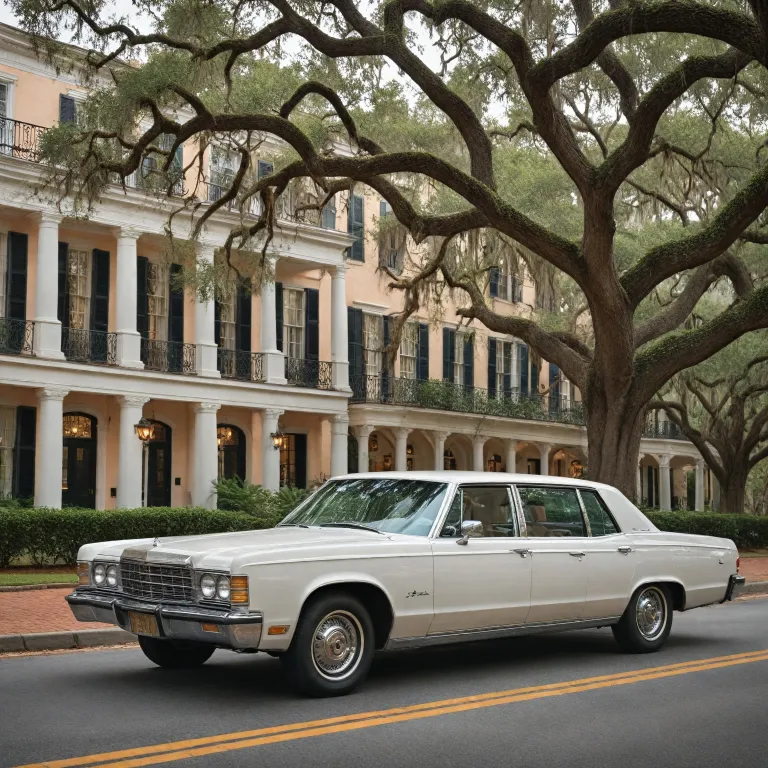
Designing seamless mobility from Charleston to Savannah for hotel guests
The journey from Charleston, South Carolina to Savannah, Georgia has become a strategic testing ground for refined hotel transfer experiences. For airlines, rail operators, mobility platforms, and hoteliers, this short corridor between two historic cities concentrates many of the industry’s current challenges. The distance is modest, yet the expectations around southern hospitality, comfort, and reliability are exceptionally high.
Driving between Charleston and Savannah covers roughly 172 kilometers, usually in just under two hours of road time. That makes the route ideal for integrated road trip products that connect airport arrivals, rail stations, and hotels in both city centers. When a traveler books a trip from Charleston city to the historic district of Savannah, the transfer now shapes their perception of the entire stay.
For hospitality stakeholders, the question is no longer only about the best route along the south corridor. It is about orchestrating a door to door experience that feels bit like a curated itinerary rather than a simple road transfer. From downtown Charleston to hotels Savannah side near Forsyth Park or the waterfront park, every touchpoint can reinforce southern charm and operational excellence.
Because the distance and time are predictable, this Charleston Savannah axis is perfect for testing dynamic pricing, shared shuttles, and luxury car services. Travel managers can benchmark different mobility partners on punctuality, guest satisfaction, and ancillary revenue. In this context, the trip Charleston to Savannah Charleston becomes a living laboratory for future ready beautiful hotel mobility standards.
Aligning airlines, rail, and mobility platforms around the guest journey
For compagnies aériennes and ferroviaires, the Charleston south to Savannah Georgia corridor is an opportunity to extend their service promise beyond the terminal. A coordinated flight and ground transfer strategy can turn a simple trip into a coherent, premium experience. When a passenger lands in South Carolina and steps into a pre arranged car, the transition to the hotel should feel effortless.
Because the flight distance between Charleston and Savannah is short, direct air links are rare and often inefficient compared with road. That reality pushes airlines and travel managers to prioritize high quality road trip solutions with vetted transportation services. Shuttle, bus, and luxury car operators become critical partners in delivering southern hospitality on the ground.
Rail operators and mobility platforms can also leverage this route to pilot multimodal offers. A traveler might combine a regional train into Charleston city, then a curated road segment to Savannah historic district hotels. In both cities, last kilometer options such as electric shuttles, shared car fleets, or on demand vans can be integrated into a single booking flow.
Mobility platforms must therefore manage terms privacy, data sharing, and service level agreements with great care. When a guest books a trip Charleston to hotels Savannah via a corporate tool, they expect transparency and control. Aligning APIs, payment flows, and customer care across Charleston Savannah and Savannah Charleston directions is now a core competency for serious mobility actors.
Optimizing routes, timing, and vehicle choice between the two cities
From an operational perspective, the best route between Charleston, South Carolina and Savannah, Georgia is usually the direct road corridor of about 107 miles. Under normal conditions, the driving time is close to two hours, which is ideal for structured transfer products. This predictable distance and time allow travel managers to design precise service level agreements with mobility partners.
Some operators enrich the trip by including a stop in Beaufort, a historic town that adds narrative depth to the journey. For leisure travelers, this transforms a simple road trip into a curated day experience through the Lowcountry. For corporate guests, the same route can be optimized for productivity, with Wi Fi, power outlets, and quiet zones on board.
Vehicle choice is central to the perceived quality of the Charleston Savannah transfer. A standard car may suit individual travelers, while minibuses or coaches are better for groups heading to downtown conferences or waterfront park events. Luxury car fleets can target high yield guests staying in boutique properties in the historic district of either city.
Operators should also consider nautical miles when marketing coastal extensions to nearby island resorts. While the core Charleston south to Carolina Savannah segment is by road, some itineraries continue by boat to an island property. In all cases, the objective is to align vehicle type, route, and service style with the brand promise of both origin and destination hotels.
Integrating hotel operations, guest expectations, and southern charm
For hoteliers in both Charleston and Savannah, the transfer is increasingly viewed as an extension of the lobby. Southern charm must be evident from the first greeting at the curb in Charleston city to the final farewell outside hotels Savannah side. This requires close coordination between front office teams, mobility providers, and travel managers.
Pre arrival communication is essential when guests travel from Charleston, South Carolina to Savannah, Georgia or in reverse. Clear information about pick up points, estimated time, and any planned stop such as Forsyth Park or waterfront park reduces anxiety. When guests feel informed, the trip Charleston becomes part of the pleasure rather than a logistical hurdle.
Hotel concierges can curate themed transfers that highlight food culture, architecture, or nature along the route. A culinary focused road trip might include recommendations for Lowcountry food in both cities, while a heritage themed ride emphasizes each historic district. These experiences reinforce the perception of authentic southern hospitality and justify premium pricing.
Operationally, hotels must manage terms privacy when sharing guest data with transportation services. Only essential information should be transmitted to car or shuttle operators, and always under clear consent frameworks. By treating mobility data with the same rigor as booking data, Charleston Savannah properties strengthen trust and long term loyalty.
Technology, data, and the future of Charleston–Savannah hotel transfers
Digital platforms now sit at the heart of mobility between Charleston and Savannah for hotel guests. Real time traffic data, predictive travel time models, and integrated booking engines help optimize every trip. Travel managers can monitor performance across the south corridor and adjust preferred suppliers dynamically.
For mobility companies, the Charleston south to Savannah Georgia axis is ideal for testing connected fleet solutions. Telematics can track punctuality, driving behavior, and energy consumption on each road trip. These insights support better route planning, safer operations, and more accurate pricing for both individual and group transfers.
Content and communication also matter, especially when explaining amenities such as onboard power or Wi Fi. Resources that detail how power outlets on charter buses enhance the travel experience for modern passengers can support procurement decisions and guest communication. When travelers understand the comfort level of a Charleston Savannah transfer, they are more willing to choose shared or premium options.
Data governance remains a non negotiable foundation for all these innovations. Platforms must handle terms privacy transparently, especially when combining flight, hotel, and ground mobility data. As Charleston city and Savannah Charleston flows grow, robust consent management and clear opt out options will be essential to maintain guest confidence.
Designing guest centric itineraries around key districts, parks, and islands
Beyond pure logistics, the corridor from Charleston, South Carolina to Savannah, Georgia invites thoughtful itinerary design. Many guests want to experience both a vibrant city break and quieter island or park environments in a single trip. Mobility actors who understand these patterns can build compelling, guest centric products.
In Charleston, the historic district and waterfront park are natural anchors for hotel transfers. In Savannah, the historic district, Forsyth Park, and the riverfront near hotels Savannah side play a similar role. A well designed trip Charleston to Savannah Charleston can link these districts in a way that feels bit like a continuous narrative.
Some itineraries extend beyond the two cities to include an island stay along the coast. Here, the combination of road distance and nautical miles becomes a design parameter for travel managers. Coordinating car, boat, and sometimes even short flight segments requires precise timing and reliable partners.
Food and culture also shape mobility expectations along this south corridor. Guests may request a stop for regional food, a brief walk in a park, or a photo pause in a particularly historic area. By integrating these micro experiences into the best route planning, mobility providers and hoteliers jointly elevate the perception of southern hospitality.
Collaboration models and commercial opportunities for hospitality stakeholders
The Charleston Savannah axis offers fertile ground for new commercial models between hotels, mobility platforms, and transportation services. Bundled products that include room, transfer, and curated experiences can increase average trip value. For corporate clients, travel managers can negotiate corridor wide agreements that cover both cities and multiple hotel brands.
Revenue sharing arrangements are particularly relevant when a road trip includes optional stops or upgrades. A guest traveling from Charleston city to Savannah Georgia might choose a premium car, a guided detour through a historic district, or a food tasting stop. Each element can generate incremental revenue for both mobility partners and hotels Savannah based.
Joint marketing initiatives can highlight the dual city appeal of Charleston south and Carolina Savannah. Campaigns might emphasize southern charm, waterfront park sunsets, or the contrast between lively downtown streets and tranquil island retreats. The key is to present the trip Charleston to Savannah Charleston not as a transfer gap, but as a signature part of the journey.
To sustain these models, all actors must align on service standards, data sharing, and terms privacy. Clear contracts, shared KPIs, and transparent guest communication will underpin long term success along this corridor. In doing so, the hospitality ecosystem between Charleston, South Carolina and Savannah, Georgia can set a benchmark for hotel centric mobility in other regions.
Key statistics for the Charleston–Savannah hotel mobility corridor
- Approximate driving distance between Charleston and Savannah : 107 miles (about 172 kilometers).
- Typical driving time under normal traffic conditions : around 1 hour and 59 minutes.
- Approximate direct flight distance between the two cities : 83 miles.
- Shuttle services on the corridor generally operate with a journey time close to 2 hours 30 minutes, depending on traffic and stops.
- The route is characterized by scenic Lowcountry landscapes, including marshes, rivers, and historic towns such as Beaufort.
Questions travel planners also ask about Charleston–Savannah transfers
What is the driving distance between Charleston and Savannah for hotel guests ?
The driving distance between Charleston, South Carolina and Savannah, Georgia is approximately 107 miles, or about 172 kilometers. For hotel transfers, this distance is short enough to support both private car and shared shuttle models. It also allows operators to maintain reliable schedules, even when including brief comfort or photo stops.
How long does it usually take to drive from Charleston to Savannah ?
Under normal traffic conditions, the drive from Charleston to Savannah takes around 1 hour and 59 minutes. For hospitality planning, most travel managers round this to a two hour transfer window to preserve punctuality at check in or meeting times. This predictable duration makes it easier to coordinate with flight arrivals and hotel housekeeping schedules.
Are shuttle services a viable option between the two cities for hotels ?
Yes, shuttle services operate between Charleston and Savannah and typically require about 2 hours 30 minutes, depending on traffic and intermediate stops. For hotels, shuttles can be an efficient solution for groups, events, or cruise movements. They also support more sustainable mobility strategies by consolidating multiple guests into fewer vehicles.
Which landmarks are most relevant to include in a hotel transfer itinerary ?
Along the route, Beaufort stands out as a historic town that can enrich a hotel transfer with cultural context. Within the cities, Charleston’s waterfront park and Savannah’s Forsyth Park and historic district are frequent reference points for pick up and drop off. Integrating these landmarks into itineraries helps guests orient themselves and enhances the perceived value of the transfer.
How should hotels and mobility partners handle guest data on this corridor ?
Hotels and mobility partners should share only essential data required to operate safe and efficient transfers between Charleston and Savannah. Clear terms privacy, explicit consent, and secure data transmission are fundamental to maintaining guest trust. Many travel managers now include data governance clauses in their contracts with transportation services operating on this corridor.
