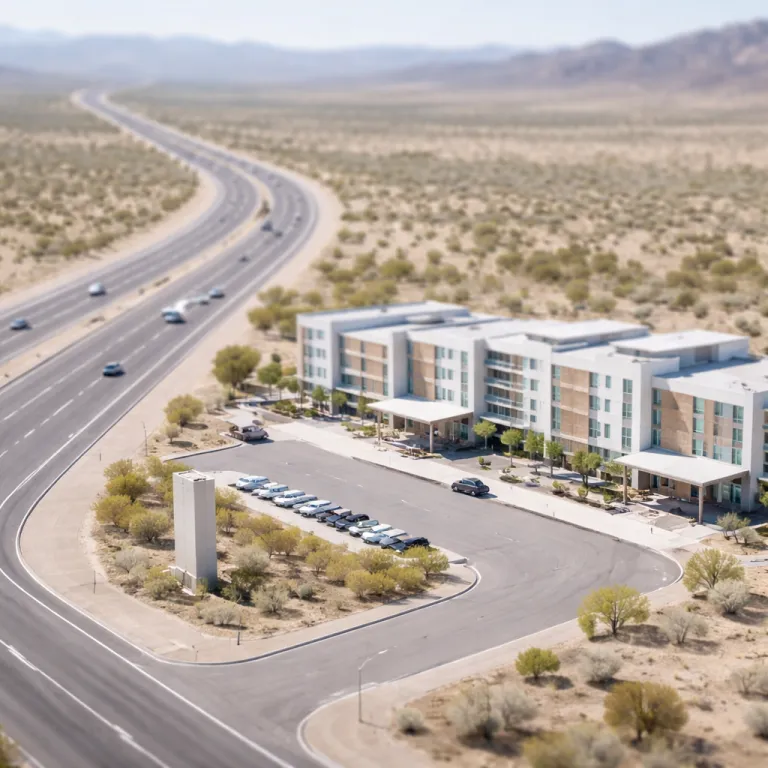
Designing the drive to Las Vegas from Phoenix as a door to door hospitality journey
For hospitality stakeholders, the drive to Las Vegas from Phoenix is more than a leisure escape. It is a strategic corridor where airlines, rail operators, mobility platforms, transfer providers, travel managers, and hoteliers can orchestrate a coherent guest journey across every road segment. When travelers choose a road trip instead of a short flight, they still expect the same level of service continuity and reassurance.
The 302 miles between Phoenix and Las Vegas, with an average drive time of about 4 hours and 40 minutes, form a natural testing ground for integrated mobility to hotel models. The most direct route from Phoenix follows US 60 and US 93, crossing the desert landscapes of central Arizona before entering Nevada State and approaching the Strip. Along this route, the hospitality industry can influence how travelers plan stops, book rooms, and interact with brands long before they reach town.
Travelers increasingly treat each trip from Phoenix as a curated experience, not just a transfer between two points on a map. They use real time navigation tools, compare road trips with short haul flights, and expect transparent information about drive time, safety, and services. For mobility and hotel partners, the challenge is to transform a simple drive from Phoenix into a branded, data informed, and guest centric journey.
Aligning airlines, rail, and mobility actors around the Phoenix Las to Las Vegas corridor
Airlines and rail companies may initially see the drive to Las Vegas from Phoenix as competition, yet it can also become a complementary product. When flights are disrupted or rail capacity is constrained, a structured vegas road alternative can protect the overall travel experience. In this context, coordinated ground mobility to hotel solutions can preserve loyalty and reduce stress for guests.
By mapping the main road trip flows between Phoenix and Las Vegas, carriers can identify where to position preferred partners for car rental, shuttle services, and on demand transfers. The historic route via Wickenburg and Kingman Arizona, for example, offers logical nodes for rest, refueling, and cross selling of accommodation. Airlines and rail operators can integrate these options into their booking paths, turning a simple road trip into a multimodal itinerary.
For travel managers, the corridor from Phoenix to Las Vegas is a practical laboratory for duty of care and cost optimization. Corporate travelers may opt for a break from air travel and choose a drive from Phoenix when schedules are tight or meetings are scattered across Nevada State and northern Arizona. With clear policies on mileage reimbursement, recommended stops, and approved hotels, the vegas drive can remain both safe and financially predictable.
Structuring the route as a curated hospitality and mobility ecosystem
The route between Phoenix and Las Vegas crosses a desert environment that is visually striking but operationally demanding. Hospitality and mobility actors can jointly curate a chain of reliable touchpoints along the road, from fuel and charging stations to branded cafés and partner hotels. This transforms an isolated drive to Las Vegas from Phoenix into a reassuring sequence of predictable services.
Key towns such as Wickenburg, Kingman Arizona, and Boulder City can host micro hubs where visitors find a visitor center, rest areas, and clear information about the next miles. These hubs can highlight nearby attractions like the Hoover Dam, Lake Mead, or even detours toward the Grand Canyon, while still emphasizing safety and realistic drive time. For hoteliers, placing properties near these nodes allows them to capture both overnight stays and short rest breaks.
Digital platforms can overlay this physical network with real time data about traffic, weather, and available rooms along the vegas road. A traveler on a southwest road itinerary could receive prompts suggesting a safe stop after several hours, with pre negotiated rates at partner hotels. In this way, the trip from Phoenix becomes a managed hospitality ecosystem rather than an unstructured road trip.
Integrating iconic stops like Hoover Dam and Grand Canyon into hotel centric itineraries
Many travelers extend the drive to Las Vegas from Phoenix into a broader exploration of the American Southwest. They combine the direct route with detours to the Grand Canyon, Hoover Dam, and Lake Mead, transforming a simple transfer into a multi day road trip. For the hospitality industry, these iconic sites are natural anchors for hotel packages and mobility bundles.
Along the Colorado River near Hoover Dam and Lake Mead, hotels can collaborate with mobility providers to offer timed shuttles, parking solutions, and guided excursions. A well designed vegas drive itinerary might include a night near the Grand Canyon, followed by a scenic segment through Kingman Arizona before reaching Las Vegas. At each stage, a visitor center can act as a bridge between local attractions, road safety information, and hotel services.
As one expert summary notes, "The most direct route is via US-93 North." This simple statement underlines how a clear, reliable route can support complex hospitality offerings built around it. By integrating museum visits, town walks, and desert viewpoints into bookable products, hoteliers and mobility actors can turn road trips into structured, revenue generating experiences that still feel flexible to the guest.
Designing guest centric services for safety, comfort, and productivity on the vegas road
Safety and comfort on the drive to Las Vegas from Phoenix are central concerns for travel managers and hotel partners. The desert environment, long stretches between towns, and variable traffic near Hoover Dam and Las Vegas require careful planning. Corporate and leisure travelers alike benefit when mobility providers and hotels coordinate guidance on optimal drive time, rest intervals, and hydration.
Pre trip communication can include checklists on vehicle condition, tire pressure, and fuel or battery range for electric vehicles. Hospitality brands can embed these guidelines into booking confirmations for a trip from Phoenix, along with curated suggestions for safe stops every 150 to 200 miles. Articles on topics such as enhancing the travel experience for modern passengers illustrate how onboard comfort principles can extend naturally to private cars and shared shuttles.
Hotels at strategic points along the southwest road corridor can offer early check in, flexible check out, and secure parking for guests arriving after several hours of driving. Meeting rooms, quiet lounges, and reliable connectivity allow business travelers to convert a vegas drive into productive time rather than lost hours. By aligning these services with real time navigation data, mobility and hospitality actors can jointly reduce fatigue risks and elevate the perceived value of the entire route.
Leveraging data, partnerships, and sustainability for the Phoenix Las to Las Vegas corridor
The drive to Las Vegas from Phoenix generates valuable operational and behavioral data for airlines, rail operators, mobility platforms, and hotels. Patterns in departure time, average hours on the road, and preferred towns for breaks can inform capacity planning and targeted offers. When anonymized and aggregated, these insights help refine both pricing and service design along the vegas road.
Partnerships between car rental agencies, electric vehicle charging networks, and hotel groups are particularly relevant on this desert corridor. As more travelers choose low emission vehicles for road trips, the availability of charging near Lake Mead, Hoover Dam, and key junctions in Nevada State becomes a competitive differentiator. Hotels that integrate charging into their amenities can attract both leisure guests and corporate travelers seeking a sustainable break from short haul flights.
For mobility and hospitality leaders, the Phoenix Las to Las Vegas axis is also a proving ground for multimodal offers that blend rail, air, and road. A traveler might fly into Phoenix, pick up a rental car for the drive from Phoenix, and then return the vehicle in Las Vegas before continuing by air to another hub. By coordinating loyalty programs, shared visitor center information, and consistent service standards, partners can ensure that every mile of the route feels like part of a single, coherent hospitality experience.
Key quantitative insights on the drive to Las Vegas from Phoenix
- Approximate driving distance between Phoenix and Las Vegas : 302 miles via the most direct highway route.
- Typical continuous driving time on this corridor : around 4.5 to 5 hours in normal traffic conditions.
- Recommended rest frequency for drivers on desert road trips : at least one short break every 2 hours.
- Common vehicle choice for this route : personal cars and rental vehicles equipped with GPS navigation.
- Seasonal variability : higher traffic volumes during holiday periods and major events in Las Vegas.
Questions travel and hospitality professionals also ask
What is the best route from Phoenix to Las Vegas for hotel linked itineraries ?
For most travelers, the best route from Phoenix to Las Vegas follows US 60 and US 93, passing through Wickenburg and Kingman before entering Nevada State. This corridor offers a balance of driving efficiency, scenic desert views, and access to towns with reliable services. For hotel linked itineraries, it also provides logical points to position partner properties and curated rest stops.
How can airlines and rail operators integrate the drive into their offers ?
Airlines and rail operators can treat the drive to Las Vegas from Phoenix as a complementary ground segment within multimodal tickets. By partnering with car rental agencies, shuttle providers, and selected hotels, they can propose bundled products that maintain service continuity when flights or trains are not the optimal choice. Clear communication about mileage, drive time, and recommended stops helps preserve duty of care and guest satisfaction.
Is the drive from Phoenix to Las Vegas considered scenic for international guests ?
Yes, many international guests consider the road trip between Phoenix and Las Vegas to be particularly scenic. The route crosses open desert landscapes, mountain ranges, and viewpoints over the Colorado River near Hoover Dam and Lake Mead. When combined with detours to the Grand Canyon or local museum visits in towns like Kingman, the journey becomes a strong selling point for destination marketing.
What role can hotels play in improving safety on this corridor ?
Hotels can improve safety by positioning properties at strategic intervals along the vegas road and promoting them as planned rest points. By offering flexible check in, secure parking, and amenities such as hydration stations and quiet rooms, they encourage drivers to pause before fatigue becomes a risk. Coordinated messaging with mobility partners about recommended rest patterns reinforces responsible driving behavior.
How should travel managers structure policies for this type of road trip ?
Travel managers should define clear guidelines on when a drive from Phoenix to Las Vegas is acceptable compared with flying, taking into account distance, meeting schedules, and traveler preferences. Policies can specify maximum daily driving hours, mandatory rest breaks, and preferred hotels along the route. Integrating these rules into booking tools ensures that corporate road trips remain both safe and cost effective.
Sources : U.S. Department of Transportation ; Arizona Department of Transportation ; Nevada Department of Transportation.
